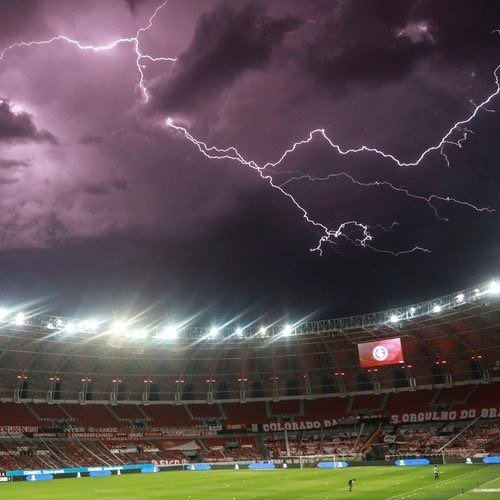
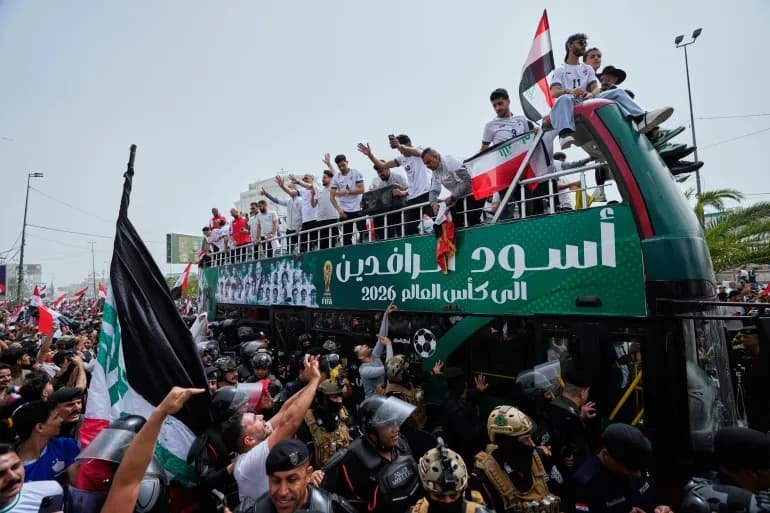
Somewhere in South America right now, a child is kicking a worn-out ball down a dusty street, using two stones as goalposts. He is not simply playing. In his mind, he is already Pelé, Maradona, or Messi. This dream, repeated millions of times across ten nations, is what makes CONMEBOL one of the most powerful forces in world football.
What Is CONMEBOL?
CONMEBOL, short for Confederación Sudamericana de Fútbol, is the governing body of football in South America. It was founded on 9 July 1916 in Buenos Aires, which makes it the oldest continental confederation in the world. Today its headquarters are in Luque, Paraguay, and it has been led by Alejandro Domínguez since 2016.
Although it has only ten members, its influence is enormous. These members are Argentina, Bolivia, Brazil, Chile, Colombia, Ecuador, Paraguay, Peru, Uruguay, and Venezuela. Argentina, Brazil, Chile, and Uruguay founded the confederation, and the rest joined over the following decades. Venezuela was the last to arrive, and it remains the only member that has never qualified for a World Cup.
A Tournament Older Than the Idea of Global Football
The confederation was created for a simple reason: its founders wanted a continental championship. As a result, the South American Championship was first played in 1916. It was later renamed the Copa América, and it is now the oldest international football competition still being played. More than a century later, it still fills stadiums and divides families on match day.
CONMEBOL’s World Cup Legacy
Although CONMEBOL is the smallest confederation by membership, its World Cup record is remarkable. Through 2022, South American nations won 10 of the first 22 tournaments, which is nearly half of all World Cups.
Uruguay began this story by winning the first World Cup in 1930. Twenty years later, they wrote one of the most famous chapters in football history. In 1950, Brazil needed only a draw against Uruguay to win the title at home in the Maracanã, in front of almost 200,000 spectators. However, Uruguay won 2-1, and a stunned nation fell silent. Brazilians still call that day the Maracanazo.
Brazil recovered quickly. Starting in 1958, a golden generation led by Pelé won three titles in four tournaments, and the team later added two more in 1994 and 2002. Meanwhile, Argentina built its own legend through Diego Maradona in 1986 and Lionel Messi in 2022. Brazil is also the only nation to have played in every World Cup ever held.
The Toughest Road to the World Cup
Reaching the World Cup from South America is famously difficult. Instead of splitting into small groups, all ten teams play each other home and away in a single league. Consequently, there are no easy games. Teams must handle high altitude in La Paz and Quito, scorching heat in the north, and passionate crowds everywhere.
For 2026, this format ran for 18 matches between September 2023 and September 2025. Because the World Cup expanded to 48 teams, CONMEBOL received six automatic places, and the seventh-placed team entered an intercontinental playoff. Argentina finished on top and became the first South American team to qualify. They were joined by Brazil, Ecuador, Uruguay, Colombia, and Paraguay, while Bolivia took the playoff route.
South America at the 2026 World Cup
A Strong Group Stage
South America started the tournament with real authority. Argentina won all three of their group matches, beating Algeria 3-0 thanks to a Messi hat-trick, then Austria 2-0 and Jordan 3-1. Brazil began with a 1-1 draw against Morocco but recovered with two 3-0 victories over Haiti and Scotland.
Elsewhere, Colombia opened with a 3-1 win over Uzbekistan and reached the next round. Ecuador then produced one of the shocks of the tournament by beating Germany 2-1, which secured their place among the best third-placed teams. Paraguay had a harder start, losing 4-1 to the United States. Nevertheless, they responded with a 1-0 win over Turkey and kept their hopes alive. Uruguay were the only CONMEBOL team eliminated at this stage.
Most impressively, CONMEBOL teams won all four of their group-stage meetings against European opponents. This proved that South America could stand toe to toe with the continent’s best.
Knockout Drama
Five CONMEBOL sides reached the Round of 32, and four of them went through to the Round of 16. Brazil beat Japan 2-1, and Argentina edged past Cape Verde 3-2 after extra time. In addition, Paraguay stunned Germany in a historic penalty shootout.
The Final
Argentina carried the continent’s hopes all the way to the final, their third in four World Cups. Unfortunately, Spain controlled the match and won the title. It was Lionel Messi’s last World Cup. Even without the trophy, his legacy is already secure, since he leaves the stage as a world champion and one of the greatest players of all time.
What Makes CONMEBOL Football Special?
Three qualities explain why this region produces so many legends. First, football here is a way of life. Fans sing, travel, and suffer with their teams in a way few other places can match. Second, many players learn the game on streets and rough pitches, where tight spaces force them to become creative and fearless. Finally, South American teams rarely fear reputations, and Germany found this out the hard way.
The Challenges Ahead
Despite this success, CONMEBOL faces real challenges. Argentina must now rebuild after Messi, and Brazil is still searching for the identity that made it feared. Several nations are also looking for a reliable goalscorer. Moreover, the best young players leave for Europe early, which weakens domestic leagues and makes it harder to keep talent at home.
Even so, history suggests there is little reason to worry. South America has always produced new geniuses, often when the world least expects them.
Conclusion: Why CONMEBOL Still Rules Football
CONMEBOL may have only ten members, but it has shaped the story of football more than almost any other region. It gave the world Pelé, Maradona, and Messi, along with unforgettable triumphs and heartbreaks. As the next generation rises, the world will keep watching, because somewhere on a dusty street, the next legend is already dreaming.