Two touches. Gone that is Ronaldo Nazário football legend
That is all Ronaldo Nazário needed. Two touches, and defenders were left standing, looking at the space where he used to be.
Ronaldo Nazário football legend status was not built slowly over years of debate. It was confirmed in real time — in stadiums, in World Cup finals, in moments that made entire crowds go completely silent before erupting.
This is the story of R9. The Phenomenon. The greatest natural striker football has ever seen.

| Detail | Info |
|---|---|
| Full Name | Ronaldo Luís Nazário de Lima |
| Known As | Ronaldo, R9, O Fenômeno |
| Born | 18 September 1976, Rio de Janeiro, Brazil |
| Position | Striker |
| Brazil Career | 1994–2011 |
| Brazil Goals | 62 in 98 appearances |
| World Cups Won | 2 — 1994 and 2002 |
| World Cup Goals | 15 across 1998, 2002 and 2006 |
| Ballon d’Or | 2 — 1997 and 2002 |
| FIFA World Player of the Year | 3 — 1996, 1997 and 2002 |
| Major Clubs | Cruzeiro, PSV, Barcelona, Inter Milan, Real Madrid, AC Milan, Corinthians |
Who Was Ronaldo Nazário?

Ronaldo Nazário was a Brazilian striker who played from 1993 to 2011.
He had a low centre of gravity, frightening acceleration, and the ability to finish from any position with either foot.
Most strikers are elite at one thing. Ronaldo was elite at everything a forward needs — all at once, all at full pace.
Early Life and the Road to Stardom

Ronaldo grew up in Bento Ribeiro, a poor neighbourhood in Rio de Janeiro.
Football was everywhere — and he was better than everyone around him from the very beginning. Cruzeiro signed him as a teenager. He scored 44 goals in 47 appearances. At seventeen, he had already outgrown Brazilian football.
The world was next.
Career: From Brazil to the Biggest Clubs in Europe

Cruzeiro gave him his first stage. He scored freely and left quickly.
PSV Eindhoven was where Europe first saw him properly — 54 goals in 58 games. Coaches across the continent started paying attention.
Barcelona signed him for a world record fee in 1996. He scored 47 goals in 49 appearances in his debut season. Won the UEFA Cup and Copa del Rey. He was only 20 years old.
Inter Milan brought him to Serie A in 1997. He won FIFA World Player of the Year. He was unstoppable — until his body started to disagree.
Real Madrid signed him in 2002 as a Galáctico. Despite the injuries that had already taken so much from him, he still managed 104 goals in 177 appearances. He scored a hat-trick at Old Trafford in the Champions League that made the entire crowd — including Manchester United fans — stand and applaud.
Corinthians brought him home to Brazil in 2009 for his final major chapter, where he won two Brazilian national titles before retirement.
Ronaldo Nazário at the World Cup

1994 — The Teenager in the Background
Ronaldo was in Brazil’s 1994 World Cup squad at seventeen. He did not play a single minute. Brazil won the tournament. He received a winner’s medal. He watched. And remembered.
1998 — The Best Player on Earth, Then a Seizure
The 1998 World Cup in France belonged to Ronaldo. He scored four goals and was simply the most dangerous forward in the world across the group stage and knockouts.
Then came the final against France. Hours before kick-off, Ronaldo suffered a convulsive episode. He was initially left off the team sheet. Was put back on. He played. And was visibly not himself. Brazil lost 3-0.
The mystery of what truly happened that night has never been fully resolved.
2002 — The Greatest Individual World Cup Ever
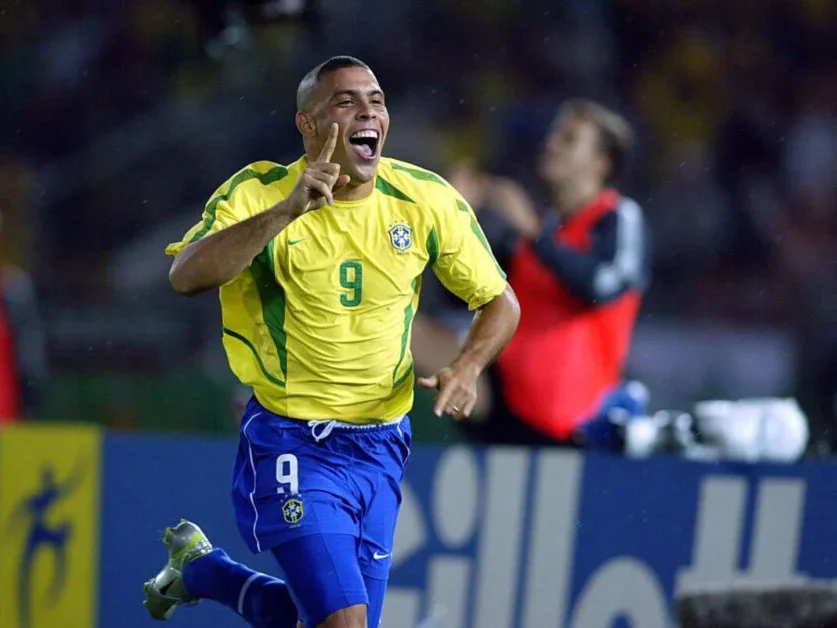
Japan and South Korea. Eight goals. Two in the final against Germany.
Ronaldo was back — physically transformed, mentally hardened, and completely unstoppable. He won the Golden Boot. Brazil won the World Cup. He celebrated with that haircut that the entire world spent three weeks mocking — and then immediately copying.
It was the greatest single World Cup performance by a striker in the modern era. No serious debate.
2006 — One Last Record
Ronaldo played in Germany and scored three goals, taking his World Cup total to 15 — an all-time men’s record at the time.
His body was not what it had been. However, the record was his.
What Made R9 So Impossible to Stop

His first touch directed the ball exactly where he wanted it — already moving, already accelerating, already past the point where a defender could intercept.
His dribbling style at full pace was almost physically unfair. He used his low centre of gravity to change direction faster than anyone could react. He went right. Then left. Then right again. By that point, he was already shooting.
His finishing was cold. Low to the corner. Placed precisely. No wasted power.
And his physical strength meant that even when defenders got a hand on him — he stayed up. He finished anyway.
Goals, Records and Trophies
| Achievement | Detail |
|---|---|
| Brazil goals | 62 in 98 appearances |
| World Cup goals | 15 — men’s record when retired |
| 2002 World Cup Golden Boot | 8 goals in one tournament |
| Ballon d’Or | 1997 and 2002 |
| FIFA World Player of the Year | 1996, 1997 and 2002 |
Club Trophies
| Trophy | Club |
|---|---|
| Copa del Rey | Barcelona |
| UEFA Cup | Barcelona and Inter Milan |
| La Liga | Real Madrid |
| Copa del Rey | Real Madrid |
| Brazilian Championship | Corinthians |
| World Cup | Brazil — 1994 and 2002 |
The Injuries That Stole His Best Years

In November 1999, Ronaldo collapsed on the pitch at Inter Milan during warm-ups with convulsions. The cause was never fully and publicly confirmed.
In 2000, he suffered a severe knee injury — rupturing the patella tendon in his right knee. He was out for almost two full years.
Then in 2002, shortly before the World Cup, he injured his left knee. He recovered just in time.
Then in 2008, another serious knee injury ended his time at AC Milan.
Four major physical crises. Each one took something from him permanently. The player who won the 2002 World Cup was magnificent — but even he was a reduced version of what the world saw at Barcelona in 1996 and 1997.
That is the most painful truth about Ronaldo Nazário football legend — we never truly saw him at his complete, uninjured peak for long enough.
Ronaldo Nazário vs Other Legends

vs Pelé — Pelé won three World Cups and sustained elite performance across two decades. Ronaldo’s peak, when fully fit, was arguably the highest peak any striker has ever reached. Different conversations. Both deserve first place in different arguments.
vs Cristiano Ronaldo — Cristiano owns the records. R9 owns the style. Cristiano built his greatness through relentless work and discipline. R9 was born with his. Two completely different kinds of extraordinary.
vs Lionel Messi — Messi is the more complete football player. Ronaldo was the more dangerous striker in pure finishing and one-on-one situations. Messi creates. R9 destroyed.
vs Thierry Henry — Henry was elegant and clever. Ronaldo was explosive and direct. Henry was arguably more consistent over a longer period. Ronaldo, at his peak, was simply a level above anyone else alive.
Was R9 the Greatest Striker of All Time?
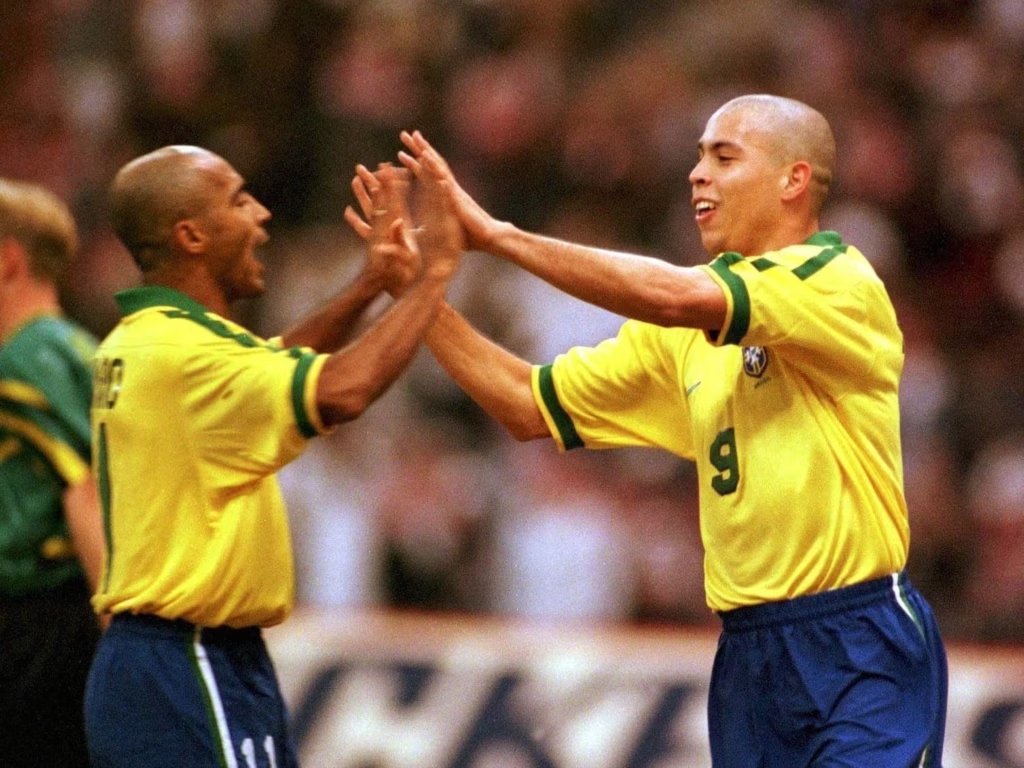
Many coaches and former players say yes.
His combination of pace, dribbling, finishing, and physical strength at his peak produced something football had not seen before and has not fully seen since.
The injuries make the question complicated. If his knees had held — if the 1999 collapse had not happened — nobody can say how far the records would have gone.
What we do know is this: Ronaldo Nazário football legend status is not built on statistics alone. It is built on the memory of watching him play and feeling certain that what you were seeing was not supposed to be possible.
Ronaldo Nazário’s Legacy

He retired in 2011. The goals stopped. The runs stopped. But the conversation never did.
Every young Brazilian striker who grew up in the 2000s and 2010s wanted to be R9 — not just because of the trophies, but because of the feeling of watching him. The joy of it. The sheer entertainment of a man doing things with a football that nobody else could do.
He inspired Mbappe. Inspired Neymar. He inspired a generation of forwards who studied his movement, his dribbling, and his finishing and used it to build their own careers.
Ronaldo Nazário football legend is not just a ranking. It is a reminder of what football looks like at its most thrilling — when one player makes the game feel completely and utterly effortless.
Frequently Asked Questions About Ronaldo Nazário
❓ How many World Cups did Ronaldo Nazário win? Two. Brazil won the 1994 World Cup — Ronaldo was in the squad at seventeen but did not play. He was the central figure in Brazil’s 2002 World Cup triumph, scoring eight goals including two in the final against Germany.
❓ How many goals did Ronaldo Nazário score? Ronaldo scored 62 goals in 98 appearances for Brazil. His World Cup total of 15 goals was a men’s record when he retired. Club-level goal totals vary depending on which competitions are included.
❓ Why was Ronaldo called R9? The number nine was his preferred shirt number and became his identity. “R9” — Ronaldo plus the nine — became shorthand for the most dangerous striker on the planet throughout the late 1990s and early 2000s.
More FAQs
❓ How many Ballon d’Or awards did Ronaldo Nazário win? Two Ballon d’Or awards — in 1997 and 2002. He also won FIFA World Player of the Year three times — in 1996, 1997 and 2002 — making him one of the most individually decorated players of his generation.
❓ Why was Ronaldo Nazário so hard to defend? His low centre of gravity allowed him to change direction at full pace faster than defenders could react. His first touch was perfectly weighted to set up acceleration immediately. He was also physically strong enough to hold off challenges even when defenders made contact. There was genuinely no reliable defensive solution for him.
❓ Did injuries affect Ronaldo Nazário’s career? Significantly. A convulsive episode in 1999, two serious knee injuries in 2000 and 2002, and further physical setbacks later in his career all reduced what he was able to produce. Many coaches believe the fully healthy version of R9 — the player who lit up Barcelona in 1996-97 — was the single greatest striker peak football has ever produced.