
Austria FIFA World Cup 2026 – Alaba, Sabitzer and Das Team’s Return After 28 Years of Waiting
The Austria FIFA World Cup 2026 story is one of football’s most personal coaching tales.
Ralf Rangnick made it publicly clear — if Austria failed to qualify, he would resign immediately. Furthermore, his contract ran only as long as the team remained in World Cup contention. Moreover, the stakes could not have been higher. Austria secured first place in their UEFA qualifying group — recording six victories from eight matches, one draw and one defeat, collecting 19 points. As a result, Das Team topped their group and ended a 28-year World Cup absence at the same time.
Consequently, the celebrations were not just for football. Furthermore, they were for a coach who put his entire career on the line to deliver this moment. Moreover, on their last World Cup outing in 1998, Austria failed to get out of the group stage. As a result, the desire to go further this time — armed with the best generation of Austrian players in decades — gives the entire squad a purpose that goes beyond simply competing.
Nevertheless, Group J is an immediate reality check. Furthermore, Das Team have been drawn against champions Argentina in Group J, along with Algeria and debutants Jordan. Consequently, Rangnick’s squad faces the defending world champions in just their second group match on June 22. Above all, how Austria handle the pressure of facing Messi’s Argentina will define whether this campaign becomes a historic achievement or a painful early exit.
The Austria FIFA World Cup 2026 squad is ready. Das Team have 28 years of waiting behind them — and a golden generation in front of them.
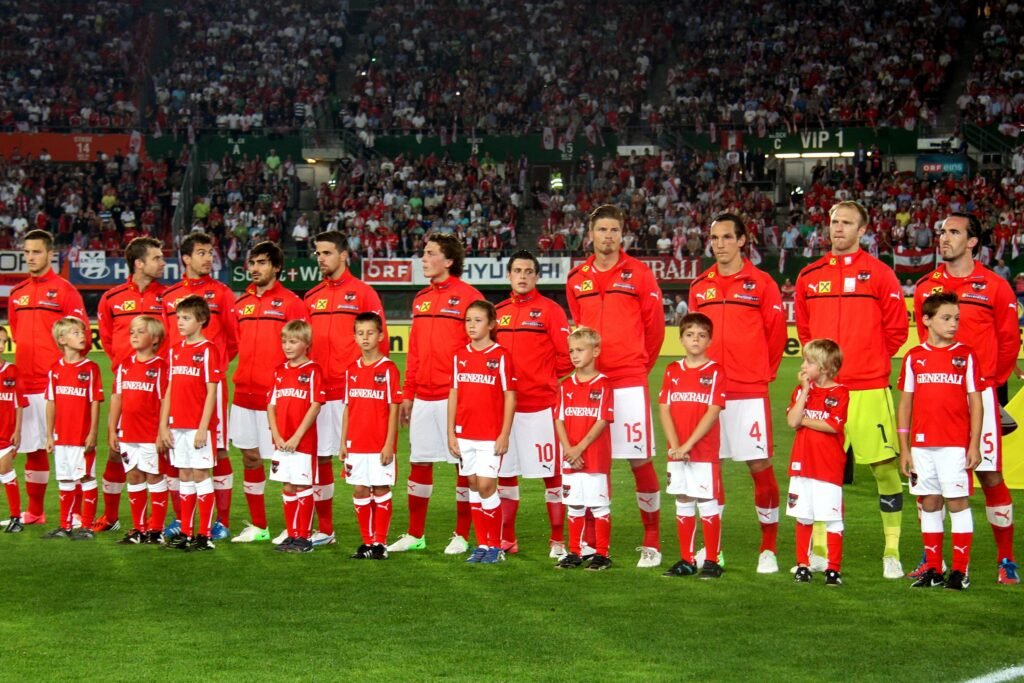
Quick Facts
| FIFA Ranking | #24 | Coach | Ralf Rangnick |
| Group | Group J | Captain | David Alaba |
| World Cup Appearances | 8th | Last Appearance | 1998 — 28 years ago |
| First Match | June 17 vs Jordan | The One to Watch | Christoph Baumgartner |
Austria FIFA World Cup 2026 Key Players
David Alaba — The Captain and Heartbeat of This Entire Campaign
There is Austria. Then there is David Alaba. Furthermore, separating the two is almost impossible — because no player defines Austrian football more than their Real Madrid captain.
Alaba is Austria’s biggest name — a defender who has won the UEFA Champions League four times, twice with Bayern Munich and twice with Real Madrid. Furthermore, his ability to organise a backline, carry the ball from deep and deliver decisive moments in tight matches gives Austria a captain who has performed at the absolute highest level of club football. Moreover, his Real Madrid experience — competing in Champions League finals, El Clásico matches and Champions League knockout rounds — means the pressure of facing Argentina on June 22 will not intimidate him. As a result, Alaba’s composure and leadership gives every player around him a calmness that no tactical instruction can replicate.
Consequently, when Austria are under pressure in Group J — and against Argentina, they will be under significant pressure — Alaba is the figure who steadies the ship. Furthermore, his communication, his defensive organisation and his ability to drive forward at the right moment give Rangnick’s system its most important individual component. Above all, this is his World Cup. His moment. His legacy.
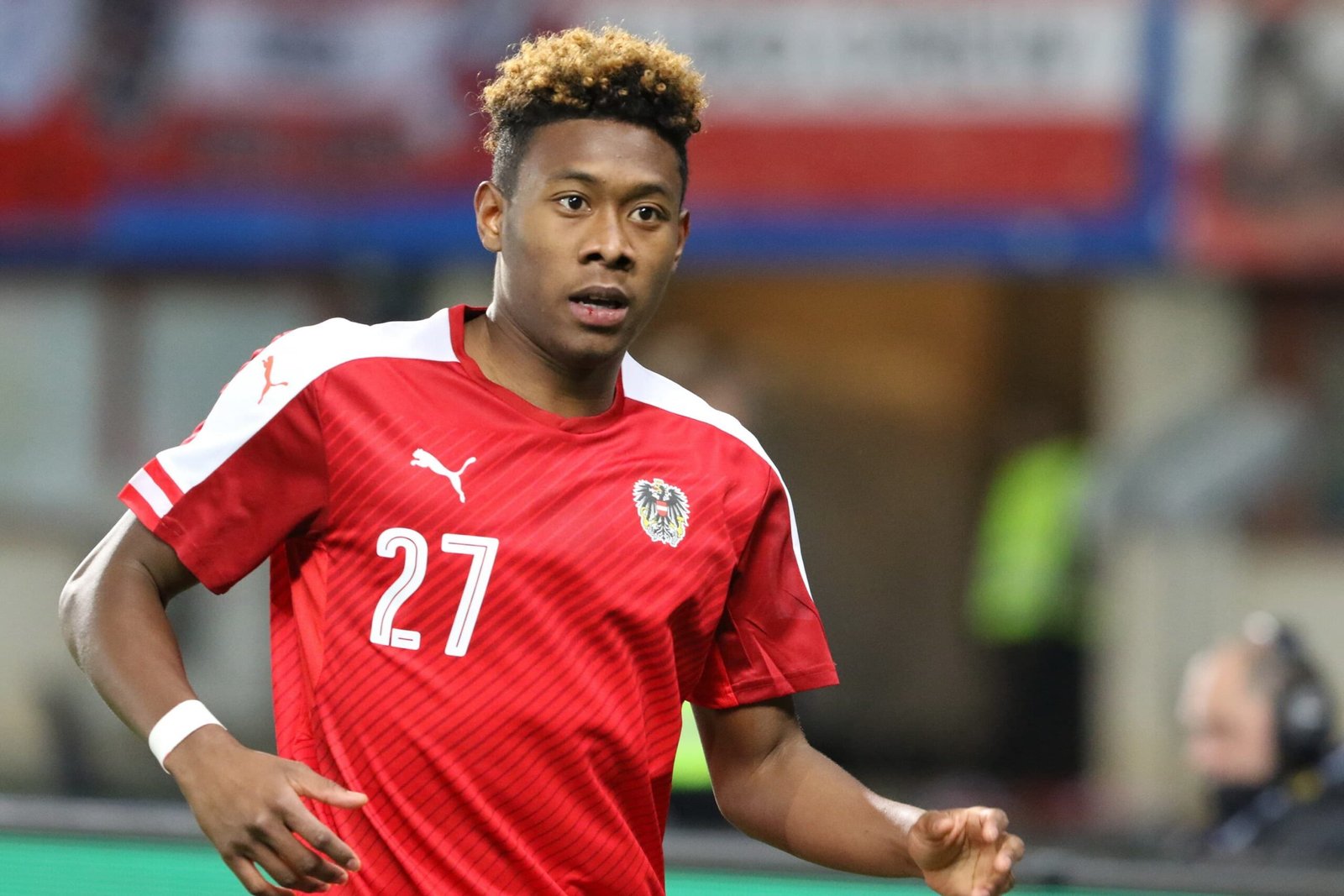
Marcel Sabitzer — The Austria FIFA World Cup 2026 Creative Force
Marcel Sabitzer rounds off the leadership group alongside Alaba and Arnautovic. Furthermore, boasting tenacity, vision and an eye for goal from distance, Sabitzer is a vital cog in Rangnick’s engine room. Moreover, his Borussia Dortmund experience — competing in Champions League football at the highest European level — gives Austria a midfielder who delivers under pressure and in the biggest moments. As a result, Sabitzer is simultaneously Austria’s most dynamic attacking midfielder and their most important creative player.
Consequently, when Austria need a goal against Algeria or Argentina, the ball will find Sabitzer. Furthermore, his ability to shoot from distance — a weapon he has deployed repeatedly in the Bundesliga — gives Das Team a long-range threat that no goalkeeper can be fully prepared for. Moreover, his experience alongside Alaba means the two leaders communicate constantly on and off the pitch. Therefore, the Alaba-Sabitzer partnership is the axis around which Rangnick has built the entire Austria FIFA World Cup 2026 system.
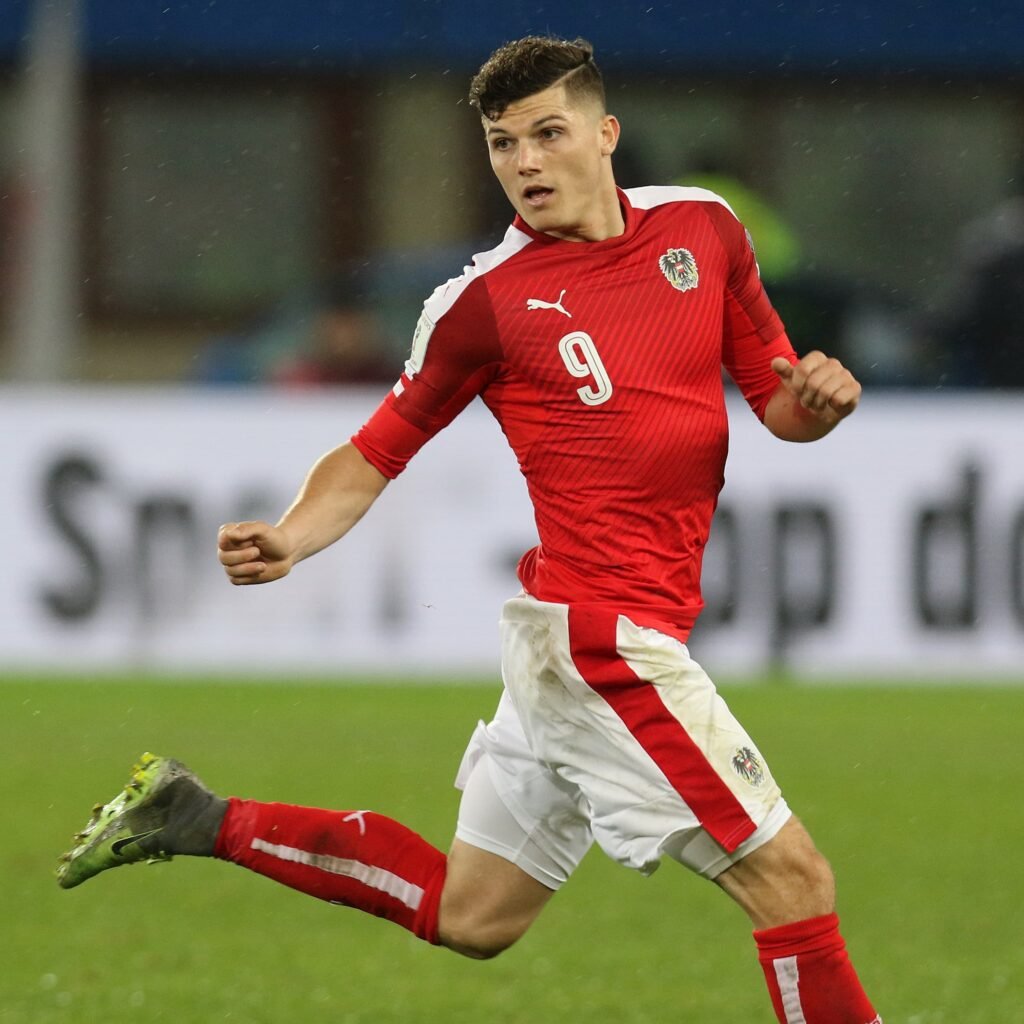
Marko Arnautovic — The Record Goalscorer Returning for a Final Chapter
Marko Arnautovic — once of West Ham and Inter Milan — is the country’s most-capped player and record goalscorer with 47 goals from 132 appearances. Furthermore, at 37 years old, this is almost certainly his final World Cup — making his vice-captaincy role carry enormous emotional weight. Moreover, his physical presence, aerial ability and experience in Premier League and Serie A environments gives Rangnick a striker who knows exactly how to deliver in the biggest moments. As a result, Arnautovic may not be the explosive starter of his peak years — but as a leader, a finisher and an emotional cornerstone of this squad, he remains irreplaceable.
Consequently, Arnautovic serves as Austria’s vice-captain — a role that reflects both his seniority and the trust Rangnick places in his leadership. Furthermore, in the Group J matches against Jordan and Algeria — where Austria need goals from a clinical finisher — his experience could prove decisive.
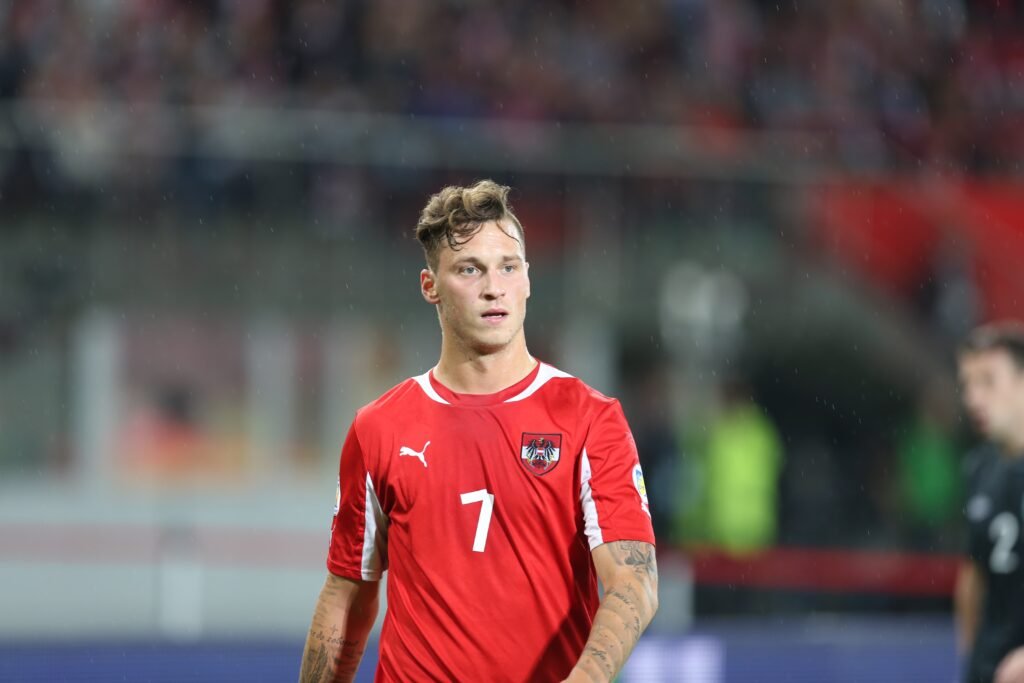
Konrad Laimer — The Bayern Munich Engine Austria FIFA World Cup 2026 Depends On
Konrad Laimer is a starter for Bayern Munich — making him one of the most elite-tested midfielders in this entire Austrian squad. Furthermore, his pressing intensity, his ability to win the ball in tight spaces and his stamina over 90 minutes give Rangnick’s high-press system its most important defensive component in midfield. Moreover, his Champions League experience at Bayern means he is comfortable operating against the technical quality of Argentina and Algeria’s best midfielders. As a result, Laimer is the player who makes Sabitzer and Alaba’s attacking freedom possible — by doing the defensive work that allows them to express themselves.
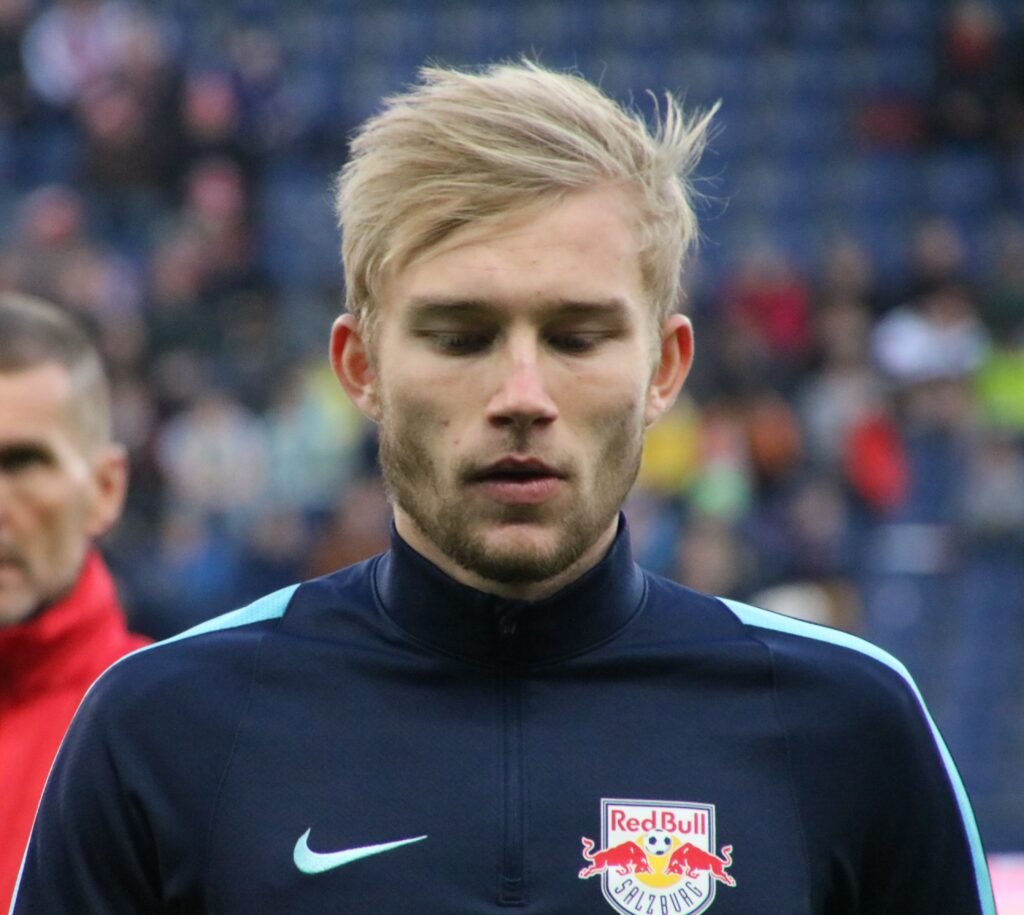
Christoph Baumgartner — The Creative Spark of Das Team
Christoph Baumgartner of RB Leipzig is Austria’s most technically gifted attacking midfielder. Furthermore, his ability to play between the lines, receive the ball under pressure and deliver incisive passes into the forwards gives Rangnick a creative dimension that complements Sabitzer’s directness perfectly. Moreover, at 25 years old, this World Cup is his opportunity to announce himself to a global audience — and his RB Leipzig form shows he is ready. As a result, Baumgartner is the wildcard option that Austria’s opponents will spend the least time preparing for — and that underestimation could be their most dangerous mistake.
Consequently, in the Jordan opener on June 17 — where Austria should dominate possession — Baumgartner will have the most freedom to create. Furthermore, the combination of his creativity with Sabitzer’s dynamism and Arnautovic’s hold-up play gives Rangnick three distinct attacking options from a single possession sequence.
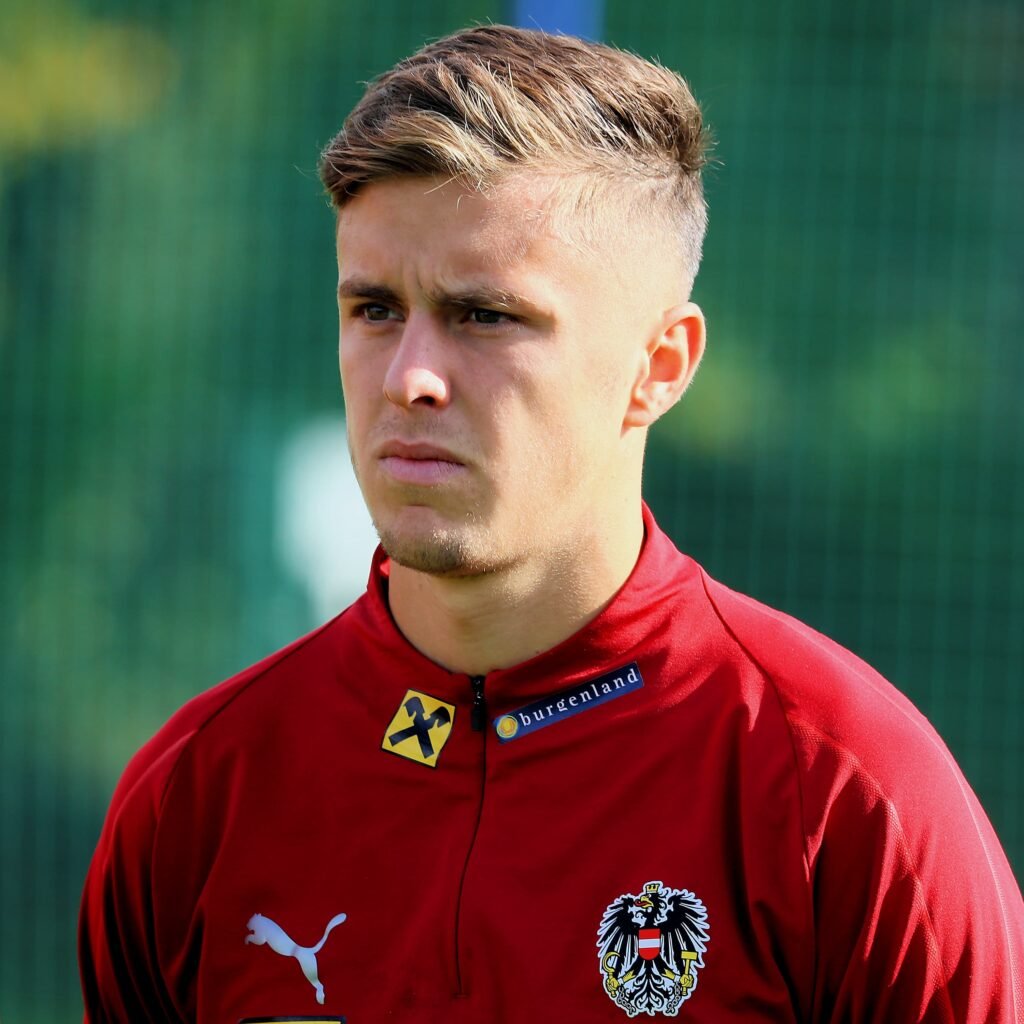
Carney Chukwuemeka — The England Youth Star Now Playing for Austria
Former England youth superstar Carney Chukwuemeka has changed allegiances and will be battling for a spot in midfield with the RB Leipzig trio of Baumgartner, Schlager and Seiwald. Furthermore, his Borussia Dortmund pedigree and the physical dynamism he brings from box to box give Rangnick an additional midfield option that no opponent has had to specifically prepare for. Moreover, his decision to represent Austria — after previously being capped at youth level by England — adds a layer of motivation that purely domestic-based players rarely carry. As a result, Chukwuemeka is the Austria FIFA World Cup 2026 name that the world does not yet fully know — but absolutely will after Group J.
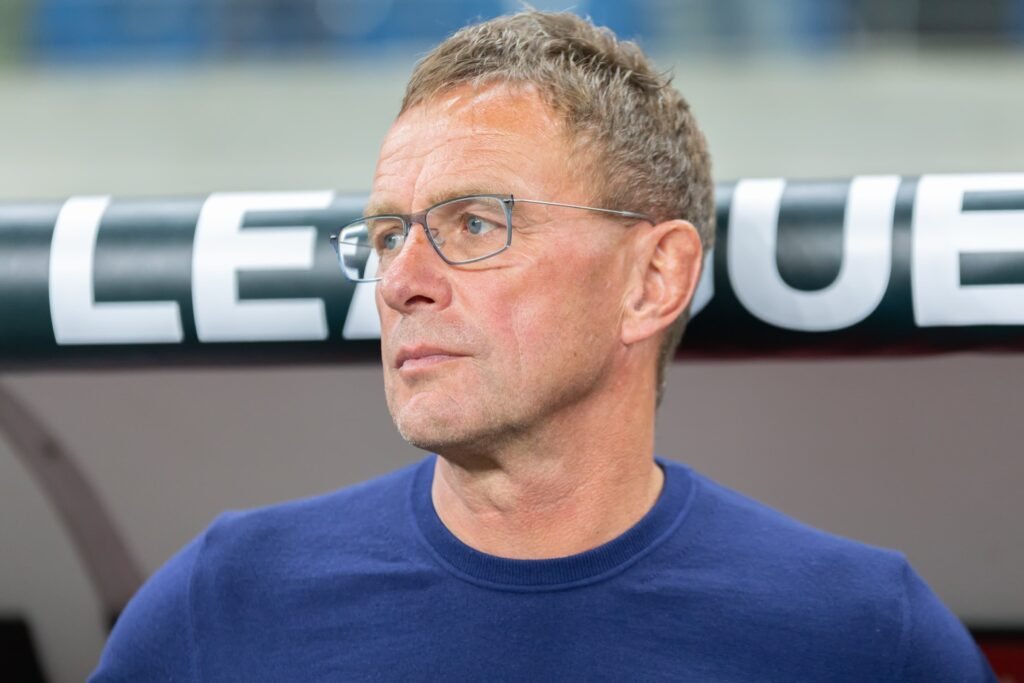
Ralf Rangnick — The Man Who Put His Career on the Line
Having previously enjoyed spells at Stuttgart, Schalke and Leipzig in the Bundesliga, Rangnick was also interim coach at Manchester United for five months before taking the Austria job. Furthermore, his tactical identity — aggressive high press, organised defensive structure, rapid transitions — transformed Austrian football from an underperforming European side into a team that topped their qualifying group. Moreover, his public pledge to resign if Austria failed to qualify created a personal drama around the campaign that united the squad and the nation simultaneously.
As a result, the Austria FIFA World Cup 2026 campaign carries Rangnick’s fingerprints on every aspect — from the squad selection to the tactical system to the collective mentality. Furthermore, he has managed Stuttgart, Hannover, Schalke and Hoffenheim in the Bundesliga and followed an unorthodox path since the turn of the century. Consequently, his experience of building systems, managing big personalities and delivering under pressure makes him one of the most tactically intelligent coaches at this entire tournament. Above all, this is the World Cup that defines Rangnick’s legacy — and he knows it.
Austria FIFA World Cup 2026 Tactics and Formation
Understanding Austria under Rangnick requires, above all, accepting one fundamental tactical truth. Furthermore, this is not a team that sits deep and defends.
Rangnick deploys an aggressive 4-2-3-1 or 4-3-3 built around a high press from the front. Moreover, Alaba organises the defence from left centre-back. Kevin Danso of Tottenham partners him on the right. Furthermore, Laimer and Seiwald provide the midfield double pivot — protecting the backline while pressing opponents in their own half. Sabitzer operates as the number 10 with the freedom to drive into attacking areas. As a result, Austria’s system creates enormous pressure on opponents trying to build from the back.
Consequently, teams that try to play short passes out from defence against Austria will find themselves pressed into errors. Furthermore, Rangnick’s system specifically targets the moment when a defender receives the ball under pressure — and Austria’s press is designed to force exactly that mistake. Moreover, when the press wins the ball high, Baumgartner and Sabitzer are already in positions to create immediately. Therefore, Austria’s most dangerous moments often come not from sustained possession but from turnovers in dangerous areas.
Nevertheless, the concern is clear. Furthermore, Argentina — ranked number one in the world — have the individual quality to play through any press in world football. Moreover, Messi’s ability to find pockets of space between Austria’s midfield and defensive lines gives Argentina a route through Rangnick’s system that no tactical preparation fully solves. Consequently, the June 22 match against Argentina is Austria’s most difficult tactical problem of the tournament.
Group Stage Analysis — Austria FIFA World Cup 2026 Group J
Group J Breakdown
| Team | FIFA Ranking | Strength Level | Key Player | Austria’s Honest Assessment |
|---|---|---|---|---|
| 🇦🇷 Argentina | #1 | ⭐⭐⭐⭐⭐ | Lionel Messi | Defending champions — the June 22 match is Austria’s biggest ever |
| 🇩🇿 Algeria | #35 | ⭐⭐⭐⭐ | Riyad Mahrez | Dangerous, well-organised — Austria’s second-biggest challenge |
| 🇦🇹 Austria | #24 | ⭐⭐⭐⭐ | Marcel Sabitzer | Dark horses — quality squad, elite coach, 28 years of hunger |
| 🇯🇴 Jordan | #87 | ⭐⭐ | Mousa Al-Tamari | Most winnable match — three points expected on June 17 |
Austria FIFA World Cup 2026 Group J Fixtures and Predictions
| Match | Date | Venue | Prediction | Why |
|---|---|---|---|---|
| 🇦🇹 Austria vs 🇯🇴 Jordan | June 17, 2026 | Levi’s Stadium, San Francisco | Austria 2–1 | Austria dominate — but Jordan score a historic World Cup goal |
| 🇦🇷 Argentina vs 🇦🇹 Austria | June 22, 2026 | AT&T Stadium, Dallas | Argentina 2–0 | Messi’s quality too great — but Alaba produces a masterclass in defeat |
| 🇦🇹 Austria vs 🇩🇿 Algeria | June 27, 2026 | Levi’s Stadium, San Francisco | Austria 2–1 | Sabitzer scores twice — Austria advance in second place |
Predicted Group J Standings
| Pos | Team | Played | W | D | L | GF | GA | Pts |
|---|---|---|---|---|---|---|---|---|
| 🥇 1st | 🇦🇷 Argentina | 3 | 3 | 0 | 0 | 8 | 0 | 9 |
| 🥈 2nd | 🇦🇹 Austria | 3 | 2 | 0 | 1 | 5 | 4 | 6 |
| 3rd | 🇩🇿 Algeria | 3 | 1 | 0 | 2 | 4 | 5 | 3 |
| 4th | 🇯🇴 Jordan | 3 | 0 | 0 | 3 | 1 | 9 | 0 |
One-line verdict: Six points — second place in Group J — would be one of the greatest achievements in modern Austrian football history. Furthermore, advancing past the group stage for the first time since 1954 would confirm that Rangnick’s transformation of Das Team is complete.
Strengths and Weaknesses at Austria FIFA World Cup 2026
| ✅ Strengths | ❌ Weaknesses |
|---|---|
| David Alaba — four Champions League titles, Real Madrid captain, the most experienced leader in this squad | Group J contains Argentina — the defending world champions are an almost unsurmountable first-round obstacle |
| Marcel Sabitzer — creative, dynamic, long-range threat, Champions League pedigree at Borussia Dortmund | Austria have never advanced past the group stage in their last four World Cup appearances |
| Ralf Rangnick — one of football’s most tactically innovative coaches, transformed Austrian football in three years | Marko Arnautovic at 37 — questions about his physical sharpness across three matches in 10 days |
| Six wins from eight qualifying matches — consistent performers who topped their group convincingly | Carney Chukwuemeka is untested at this level — his adjustment from youth England to senior Austria is still evolving |
| Laimer at Bayern Munich and Danso at Tottenham — European elite experience throughout the midfield and defence | Set-piece defending was exposed in qualifying — the loss to Romania came from exactly this weakness |
| Most of the squad plays in the German Bundesliga — comfort in a tactical, high-press style that Rangnick demands | 28-year World Cup absence — no current player has World Cup experience entering the tournament |
Austria’s World Cup History — 1954 Bronze and 70 Years of Waiting
Austria had its golden era in the 1930s to 1950s — the so-called Wunderteam of the 1930s — and its best World Cup performance was third place in 1954. Furthermore, that bronze medal — achieved in Switzerland against Uruguay — remains the single greatest achievement in Austrian football history. Moreover, the Wunderteam of the 1930s was considered one of Europe’s most technically advanced sides of the era — making Austria’s subsequent decline all the more painful for a nation with such proud footballing heritage.
Nevertheless, the decades after 1954 produced relative disappointment. Furthermore, on their last World Cup outing in 1998, Austria failed to get out of the group stage. Moreover, the 28-year gap between 1998 and 2026 was not inevitable — it was the product of underperformance from squads that had the quality to qualify but lacked the system and leadership to do so. As a result, Rangnick’s arrival changed everything — bringing the structure, the intensity and the belief that finally delivered qualification.
Above all, the Austria FIFA World Cup 2026 squad carries 70 years of history behind them. Consequently, every single match in North America is about more than points. It is about restoring the pride of a footballing nation that once stood on the podium at the world’s biggest tournament.
Can Austria Advance? — Our Verdict
Yes — and six points from Group J is the realistic and achievable target.
Furthermore, the argument is built on evidence. Moreover, beating Jordan on June 17 is the minimum expected result from a squad of Austria’s quality. As a result, everything from that match becomes a platform — confidence, momentum and the belief that 28 years of waiting has prepared them for exactly this stage.
Nevertheless, Argentina represent a challenge that even the most optimistic Austrian supporter cannot reasonably expect to overcome. Furthermore, Messi — in what could be his final World Cup — will be at his most motivated against every opponent. Consequently, losing 2-0 to Argentina does not damage Austria’s chances of advancing. Winning against Algeria on June 27 does.
However, above all of that, one truth dominates. Rangnick has brought structure and discipline to a team that had long underachieved on the international stage. Furthermore, Alaba’s leadership, Sabitzer’s creativity and Laimer’s engine give Austria the quality to handle Algeria and Jordan with authority. Moreover, this is the best Austria squad since the Wunderteam era in terms of club-level experience. Consequently, Das Team are ready.
Our Prediction: Austria beat Jordan 2-1 on June 17 in San Francisco. Furthermore, they lose 2-0 to Argentina in Dallas on June 22 — Alaba is magnificent in defeat. Moreover, they beat Algeria 2-1 on June 27 back in San Francisco — Sabitzer scores twice, including a stunning long-range goal. Consequently, Austria finish second in Group J with six points. In the Round of 32, they face France. Furthermore, Rangnick’s press creates chaos in the first half. Nevertheless, French quality tells in the second half. Austria lose 2-1 — but they exit the Austria FIFA World Cup 2026 campaign having finally surpassed their 1998 group-stage ceiling.
Twenty-eight years. Six points. Das Team reborn.
Frequently Asked Questions About Austria FIFA World Cup 2026
Q: How did Austria qualify for the Austria FIFA World Cup 2026? Austria finished first in their UEFA qualifying group with 19 points — six wins, one draw and one defeat from eight matches.
Q: Who is Austria’s best player at the Austria FIFA World Cup 2026? David Alaba — a four-time Champions League winner at Bayern Munich and Real Madrid — is Austria’s captain and most important player. Furthermore, Marcel Sabitzer provides the creative and dynamic midfield quality that makes the system function.
Q: What group is Austria in at the Austria FIFA World Cup 2026? Group J — facing Jordan on June 17 in San Francisco, Argentina on June 22 in Dallas, and Algeria on June 27 back in San Francisco.
Q: Who is Austria’s coach at the Austria FIFA World Cup 2026? Ralf Rangnick — who previously managed Stuttgart, Schalke, Leipzig and served as Manchester United interim coach — has been in charge since 2022.
Q: When did Austria last play at the World Cup? Austria last appeared at the World Cup in 1998 — where they failed to advance from the group stage. Furthermore, the 28-year absence makes the Austria FIFA World Cup 2026 return one of the most anticipated in European football.
Q: What is Austria’s best World Cup result? Austria’s best World Cup result is third place in 1954 — achieved during the golden Wunderteam era of Austrian football. Furthermore, matching or surpassing that in 2026 would be the greatest achievement in modern Austrian football history.