Erling Haaland World Cup 2026: Norway’s Great Hope
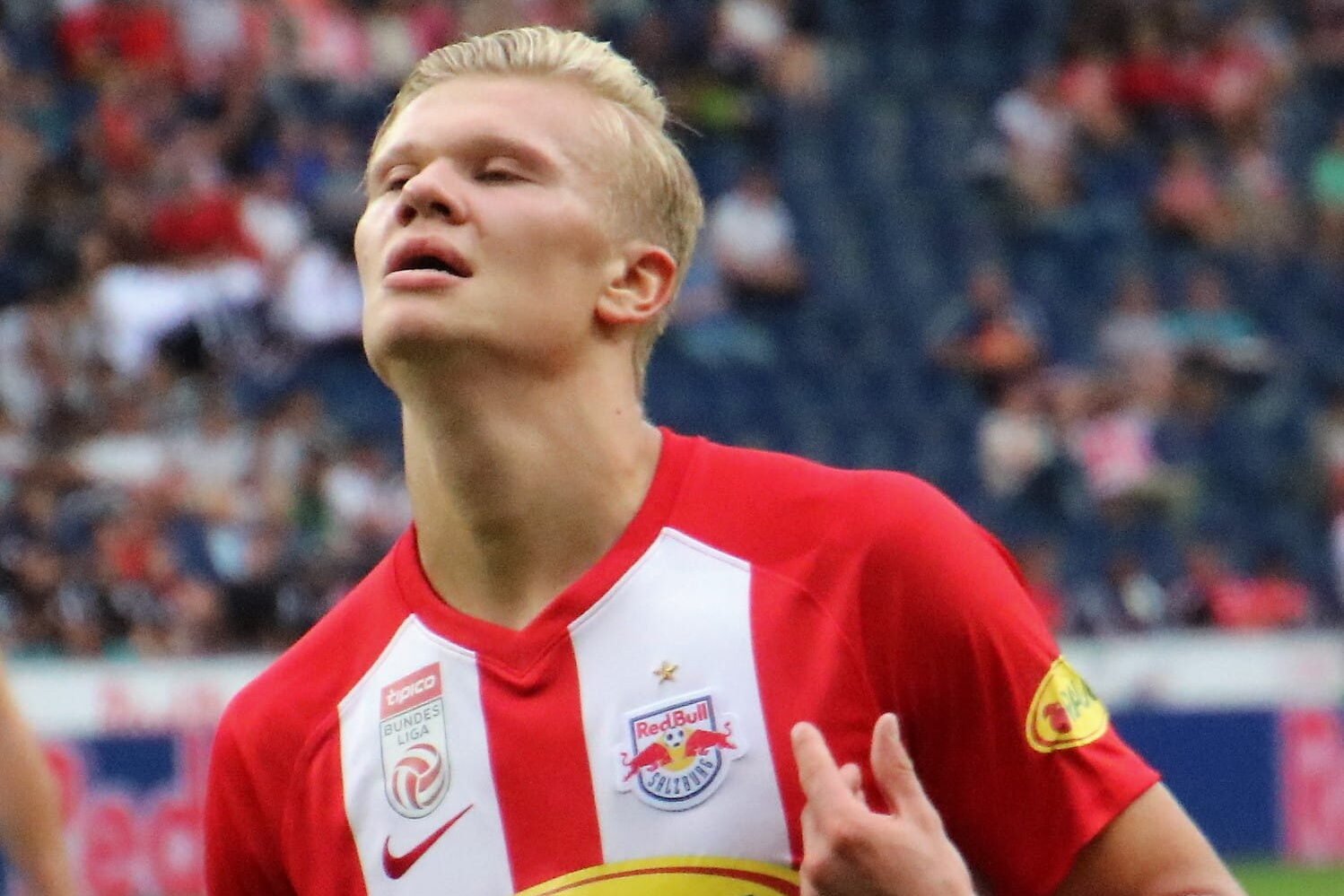
As Norway dreams of making a historic impact on football’s biggest stage, Erling Haaland World Cup 2026: Norway’s Great Hope captures the excitement surrounding one of the world’s most feared strikers. With his extraordinary goal-scoring ability, physical dominance, and relentless hunger for success, Haaland carries the hopes of a nation eager to witness its greatest football achievement.
Quick Facts — Erling Haaland at a Glance
| Detail | Info |
|---|---|
| Full Name | Erling Braut Haaland |
| Date of Birth | July 21, 2000 |
| Age at 2026 World Cup | 25 |
| Birthplace | Leeds, England 🏴 |
| Nationality | Norwegian 🇳🇴 |
| Club | Manchester City |
| Position | Centre Forward / Striker |
| Height | 1.94 m (6’4″) |
| Preferred Foot | Left |
| Norway Jersey Number | #9 |
| Market Value | €204M+ |
| Norway Caps | 80+ |
| International Goals | 55+ |
| World Cup Appearances | 0 (first tournament) |
| World Cup Qualifying Goals | 16 (in 8 games) |
He was born in the year 2000 — two years after Norway played their last World Cup match.
By the time Norway finally qualified again, he had become the man who got them there. Sixteen goals in eight qualifying games. A perfect record. A stunned Italy beaten on their own turf. And a country that had waited 28 years, exhaling for the first time.
Erling Haaland World Cup 2026: Norway’s Great Hope is more than a headline — it’s the defining story of a striker who has broken every record placed in front of him and now faces the one challenge that no statistic can guarantee: leading a small Nordic nation into football’s greatest tournament and making history there.
The stage is North America. The group is brutal — France, Senegal, and Iraq stand between Norway and the knockout rounds. And the most dangerous goalscorer on the planet will be wearing a white jersey with a lion on the crest, playing in his first-ever World Cup at the age of 25.
Some stories write themselves. This one still needs its ending.
Born in Leeds, Built in Norway — Early Life
Erling Haaland was born on July 21, 2000, in Leeds, England — though the city he calls home is a very different one. His father, Alfie Haaland, was a professional footballer who played for Nottingham Forest, Leeds United, and Manchester City in the late 1990s. Erling arrived in the world while Alfie was in England, but the family returned to Bryne, a small town on Norway’s southwestern coast, where he grew up.
Bryne isn’t a football factory. It’s quiet, coastal, working-class — the kind of place where ambitions grow slowly because no one has told you yet that they’re possible. But Haaland grew up understanding effort. His father’s career — abruptly ended by Roy Keane’s infamous tackle in 2001 — gave the family a complex relationship with football. Not bitterness. Something more complicated than that.
From an early age, Erling simply scored. Constantly. At Bryne FK’s youth teams, goals weren’t occasional — they were relentless. There was no mystery about where this was heading. The only question was how fast.
The Career That Rewrote Football — Timeline
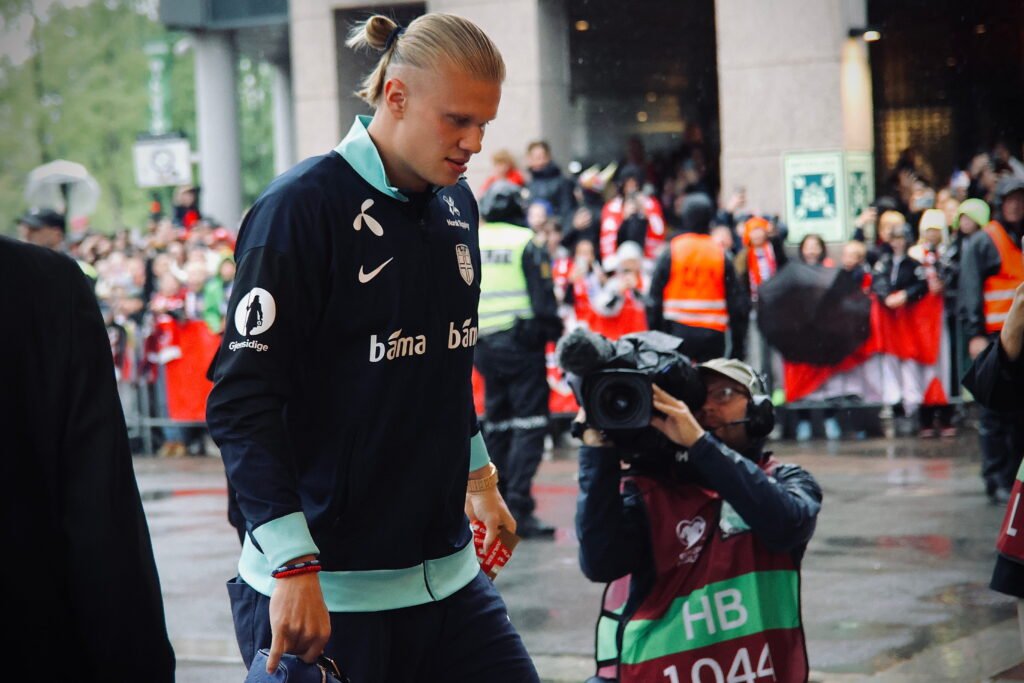
Molde and the Ole Gunnar Solskjær Years
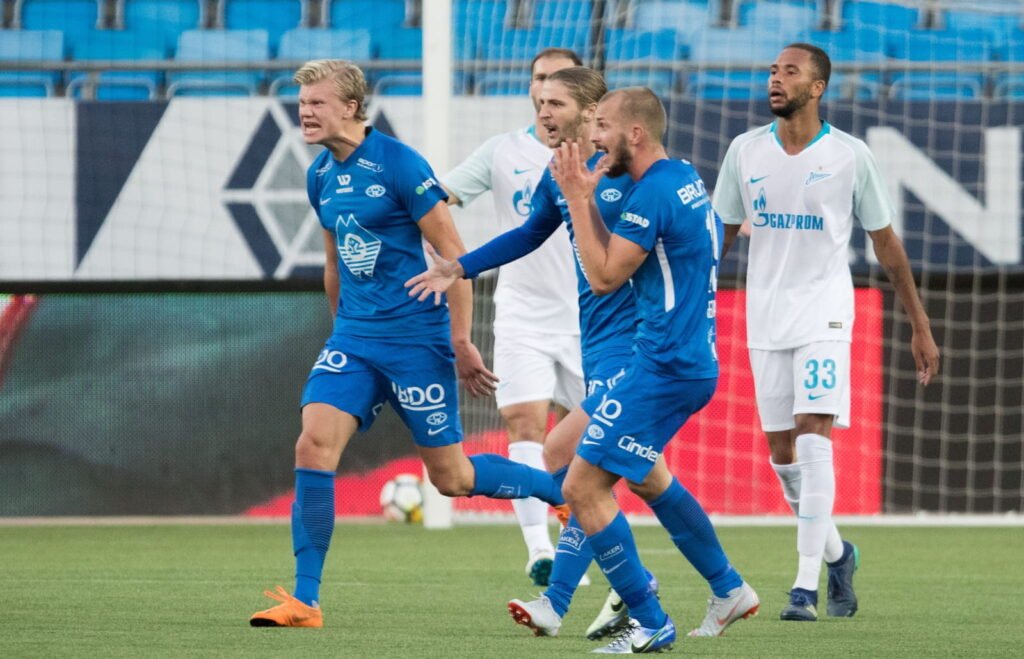
Haaland made his professional debut at Bryne FK before joining Molde — then managed by Ole Gunnar Solskjær — where he developed the tactical understanding that raw pace and athleticism alone could never provide. Under Solskjær, he learned positional discipline, movement off the ball, and how to make runs that defenders couldn’t track.
He scored 20 goals in 50 appearances across all competitions. Numbers good enough for Red Bull Salzburg to come calling.
Red Bull Salzburg — The World Noticed
The 2019-20 season changed everything. Haaland didn’t just arrive at Red Bull Salzburg — he exploded onto the European stage. He scored 8 goals in 6 UEFA Champions League group-stage matches as a teenager, single-handedly announcing himself to every elite club on the continent.
His hat-trick against Liverpool at Anfield in the Champions League — composed, clinical, almost arrogant in its certainty — told the world what kind of player this was.
Borussia Dortmund — The Machine Emerges
He joined Borussia Dortmund in January 2020. Over two and a half seasons in Germany, he scored 86 goals in 89 appearances — numbers so absurd that defenders began approaching games against Dortmund as essentially damage limitation exercises.
He won the DFB-Pokal in 2020-21. And reached a Champions League semifinal. He won back-to-back Bundesliga golden boots. And he did all of it before his 22nd birthday.
Manchester City — Historic
Arriving at Manchester City in the summer of 2022 for a reported €60 million, he made the English game look temporarily inadequate. In his first Premier League season, he scored 36 goals — a single-season record — while also netting in the Champions League Final as City completed an historic treble: Premier League, FA Cup, and UEFA Champions League.
He has since won his third Premier League Golden Boot in four seasons and passed the 150-goal mark for City across all competitions. He has scored 107 Premier League goals in 126 league appearances — the fastest player to ever reach 100 in the English top flight.
The Anatomy of a Goalscorer — Playing Style
There are goalscorers. Then there is Erling Haaland.
The distinction matters because what he does isn’t simply a function of speed or size — though both are exceptional. What makes him extraordinary is the combination of dimensions operating simultaneously.
At 1.94 metres, he is a physical presence that defenders cannot simply outmuscle. Yet he moves like someone ten centimetres shorter — first steps explosive, direction changes sharper than you’d expect from a man his size. His positioning is almost supernatural: he arrives at the right spot at the right moment with a consistency that looks effortless but is built on thousands of hours of deliberate rehearsal.
Strengths:
- Finishing with left foot, right foot, and head — genuinely a three-way threat
- Movement inside the box is among the best of any striker ever
- Elite pressing from the front — disrupts defensive build-up
- Strength in holding up play, linking midfield to attack
- Exceptional penalty record
- Mental coldness in front of goal — no hesitation, no second-guessing
Weaknesses:
- Creative build-up play outside the box is not his primary strength
- In systems where he’s isolated without service, his impact reduces significantly
- His international career has historically depended heavily on the quality around him
That last point is critical for FIFA World Cup 2026. Norway’s success depends not just on Haaland scoring — it depends on Martin Ødegaard, Alexander Sørloth, and the wider squad generating the kind of opportunities his movement creates. Feed him correctly, and he will score. The question is always about the supply chain.
Trophies and Titles — What He’s Already Won
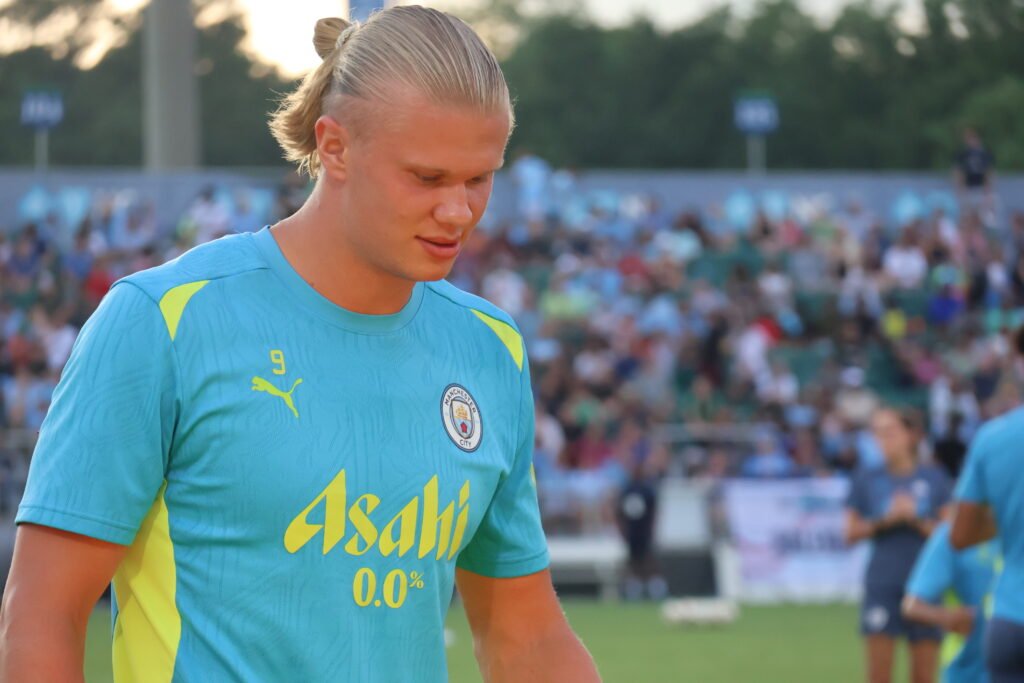
At 25, Haaland’s trophy cabinet is already extraordinary for a player who has never played at a World Cup.
With Manchester City:
| Trophy | Year(s) |
|---|---|
| 🏆 UEFA Champions League | 2022–23 |
| 🏆 Premier League | 2022–23, 2023–24 |
| 🏆 FA Cup | 2022–23, 2025–26 |
| 🏆 EFL Cup | 2025–26 |
| 🏆 UEFA Super Cup | 2023–24 |
| 🏆 FIFA Club World Cup | 2023 |
| 🏆 Community Shield | 2024–25 |
Borussia Dortmund:
| Trophy | Year |
|---|---|
| 🏆 DFB-Pokal (German Cup) | 2020–21 |
With Red Bull Salzburg:
| Trophy | Year |
|---|---|
| 🏆 Austrian Bundesliga | 2018–19 |
| 🏆 Austrian Cup | 2018–19 |
Individual Awards:
- 🥇 Premier League Golden Boot: 2022–23, 2023–24, 2025–26
- 🥇 UEFA Champions League Top Scorer: 2022–23
- 🥇 Multiple Bundesliga Top Scorer awards at Dortmund
The only gap — the only trophy that doesn’t yet exist in this collection — is an international one. Which is why FIFA World Cup 2026 isn’t just another tournament for him. It’s the final frontier.
Injuries That Have Tested the Machine
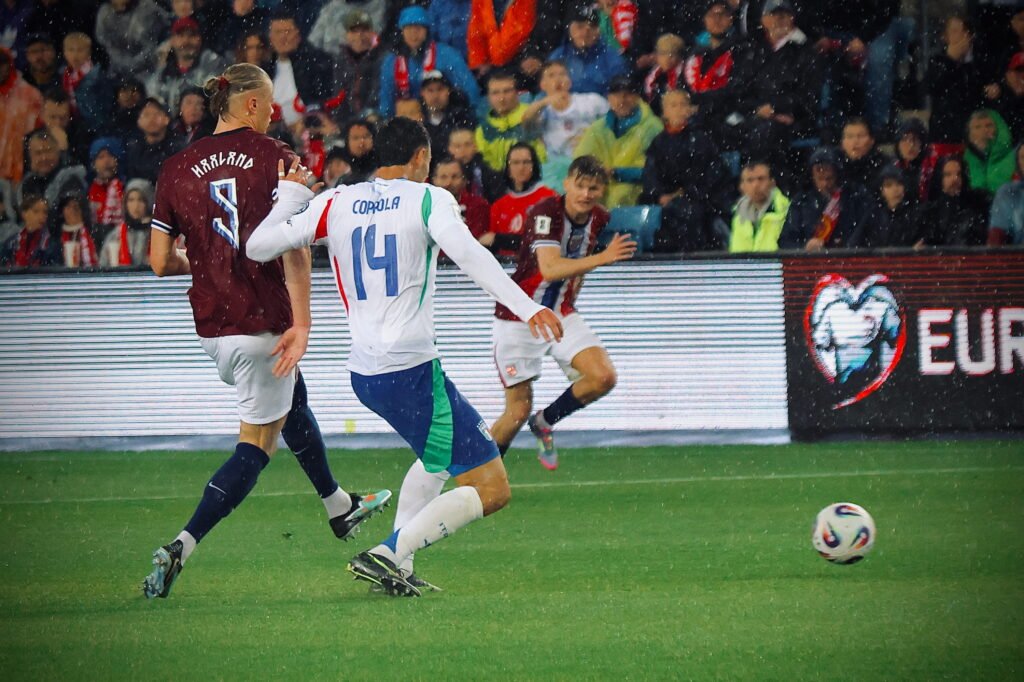
One of the quieter, less-told chapters in Haaland’s career involves the moments when his body — almost impossibly robust in most circumstances — has forced him to stop.
During the 2023-24 season, a foot injury disrupted his second half of the campaign at Manchester City, limiting his appearances at a crucial stage. He returned to form, ultimately winning the Golden Boot, but the spell out served as a reminder that even the most physically dominant players operate on the edge of fragility.
In 2024-25, a Premier League slump in December was joined by a Spring injury that prevented him from keeping pace with Mohamed Salah in the Golden Boot race — one of the few individual prizes that, in that season, escaped him.
What’s notable about how Haaland responds to injury is the lack of drama. He returns, and he scores. No extended readjustment period. No confidence crisis. He simply reinserts himself into the clinical routine that defines everything he does.
For Norway’s coaching staff, arriving at the 2026 World Cup with him at full fitness is non-negotiable. The tournament’s outcome — at least for Norway — flows almost entirely through him.
Norway’s World Cup History — The 28-Year Wait
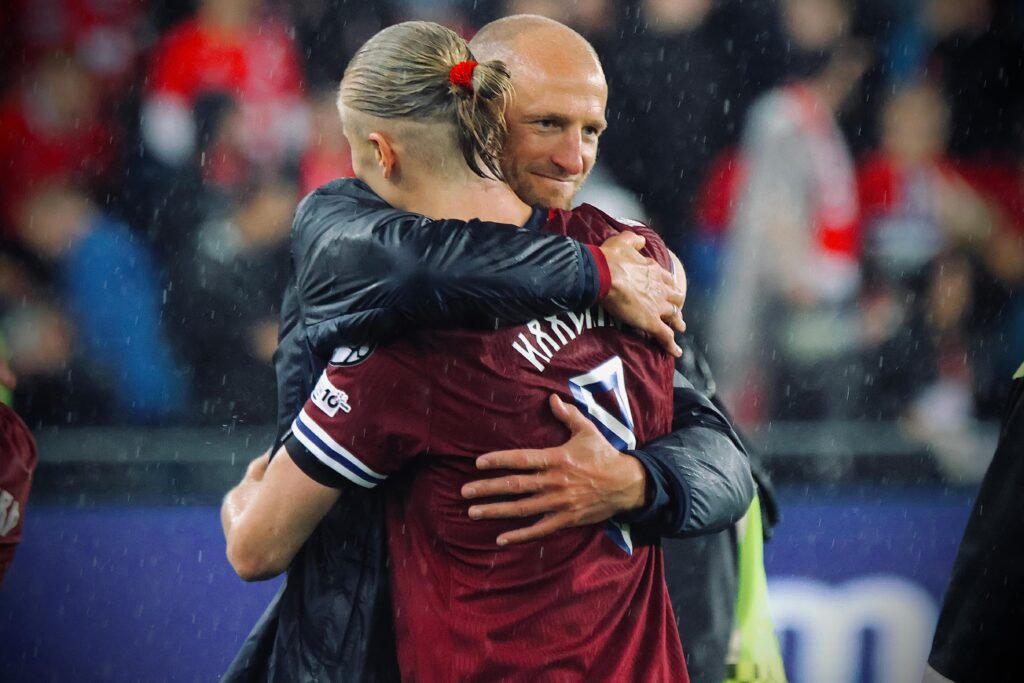
Norway’s World Cup history is brief but unforgettable in its moments. They qualified in 1938, 1994, and 1998 — only three appearances in total before 2026. Their finest hour came in France 1998, where they shocked the world by beating Brazil 2-1 in the group stage — one of the greatest upsets in World Cup history. They reached the Round of 16 before being eliminated by Italy.
After 1998, Norway fell away. Years of near-misses, painful playoff defeats, and the gradual sense that the qualifying drought might never end.
Norway hadn’t played a World Cup since France 1998, a tournament that took place before Haaland was even born.
That detail is worth sitting with. The country’s greatest-ever player was born after their last World Cup. He has spent his entire life never once experiencing what it means for Norway to compete on football’s main stage. Until now.
The Qualifying Campaign That Shocked Europe
If you needed one chapter that explains why Norway should be taken seriously at this World Cup, it’s their qualifying campaign.
Norway completed a perfect qualifying campaign with eight wins in eight matches and scored 37 goals — one of the best attacking records in Europe.
Norway were the best attacking side in the UEFA qualifying for the FIFA World Cup with a staggering 37 goals across eight matches.
The defining night? Norway secured its ticket to the 2026 World Cup with a stunning 1–4 victory over Italy in Milan — a historic triumph that brought the Scandinavian nation back to football’s elite. The night belonged to Erling Haaland, who delivered a decisive brace.
Italy — a four-time World Cup champion — was beaten, in their own stadium, by a country they hadn’t considered a real threat. Haaland was clinical, composed, unstoppable.
Haaland netted 16 goals in just eight qualifying games — twice as many as any other player in European qualifying.
No European player came close. It was a one-man masterclass spread across eight months — and it is, without exaggeration, one of the greatest individual qualifying campaigns in football history.
Erling Haaland World Cup 2026 — Norway’s Group, and What Comes Next
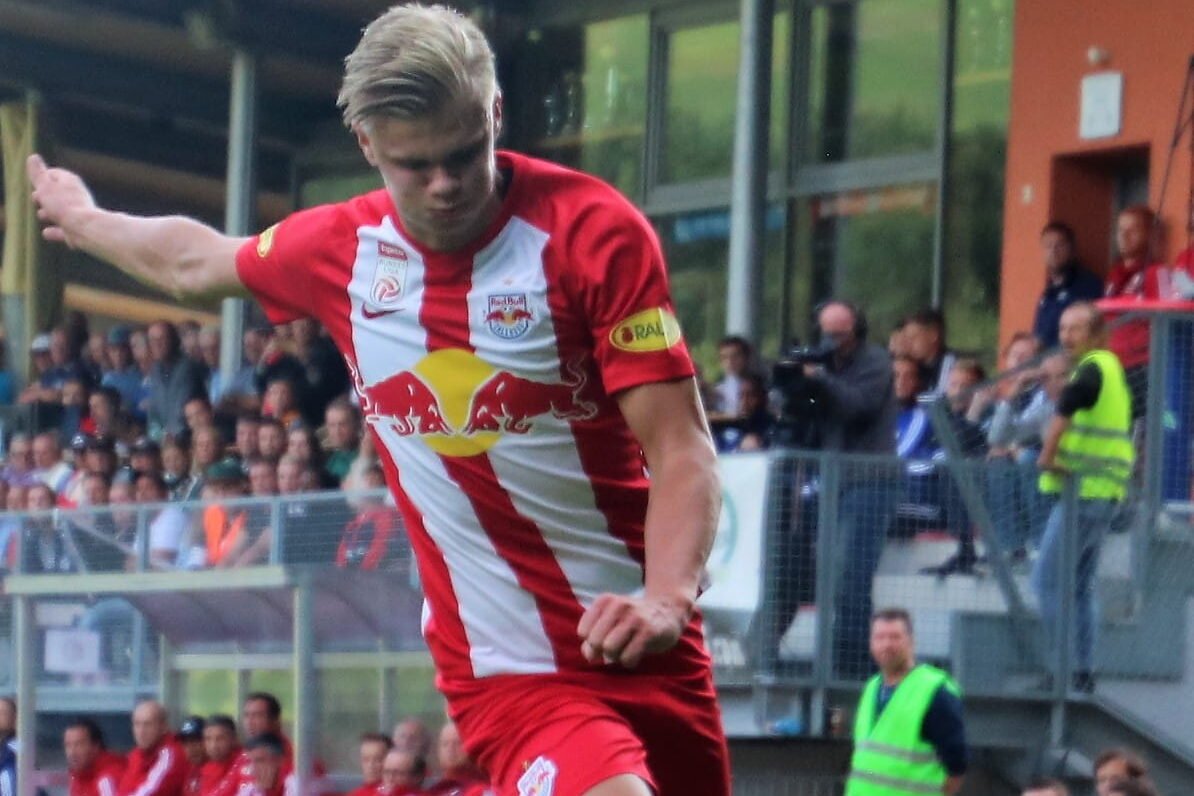
This is where the story gets genuinely complicated.
Norway find themselves in Group I alongside two-time world champions France, African heavyweights Senegal, and Iraq.
Norway finished UEFA World Cup qualifying with a perfect record (8W-0D-0L) but entered the draw as a Pot 3 team due to being ranked 29th in the world by FIFA. The result of that seeding was the kind of draw that makes broadcasters reach for the phrase “group of death.”
France are among the tournament’s genuine title contenders. Senegal are physical, organized, and dangerous. Even Iraq cannot be entirely dismissed in a 48-team tournament where every group contains at least one unpredictable element.
And yet — this is also where the opportunity lives.
With stars such as Erling Haaland, Martin Ødegaard, and Alexander Sørloth, Norway will attempt to become one of the biggest surprises of the tournament and bring the country back into the global football spotlight.
The 1998 team beat Brazil. History has shown that Norwegian football can produce shocks on the biggest stages. And this generation — with a deeper squad, a world-class striker, and a perfect qualifying record — is arguably better than any Norway side that came before it.
Erling Haaland World Cup 2026: Norway’s Great Hope ultimately rests on one scenario: Haaland staying healthy, the squad functioning as a unit, and the machine getting enough ball to remind the world what he’s capable of. If those three conditions are met, Norway reaching the knockout rounds isn’t optimism. It’s the reasonable expectation.
The question — as it always is with Haaland — isn’t whether he can score. It’s whether, on the biggest stage in football, Norway can support him well enough to let history happen.
Career and International Stats
Club Career — Key Season Stats (All Goals, All Competitions)
| Season | Club | Apps | Goals | Assists |
|---|---|---|---|---|
| 2017–18 | Bryne FK / Molde | 39 | 14 | 6 |
| 2018–19 | Red Bull Salzburg | 27 | 29 | 10 |
| 2019–20 | Salzburg + Dortmund | 29 | 29 | 6 |
| 2020–21 | Borussia Dortmund | 41 | 41 | 12 |
| 2021–22 | Borussia Dortmund | 29 | 29 | 8 |
| 2022–23 | Manchester City | 53 | 52 | 9 |
| 2023–24 | Manchester City | 38 | 36 | 7 |
| 2024–25 | Manchester City | 35 | 26 | 4 |
| 2025–26 | Manchester City | 35+ | 35+ | 10+ |
Norway International Career Stats
| Stat | Figure |
|---|---|
| International Caps | 80+ |
| International Goals | 55+ (Norway all-time top scorer) |
| World Cup Qualifying Goals (2026) | 16 — Most in Europe |
| World Cup Qualifying Games | 8 |
| World Cup Appearances (before 2026) | 0 |
Premier League Records
| Record | Detail |
|---|---|
| Fastest to 50 PL goals | 48 games (beat Andy Cole by 17) |
| Most PL goals in a debut season | 36 goals (2022-23) |
| Premier League Golden Boots | 3 (2022-23, 2023-24, 2025-26) |
| Total PL goals | 107 in 126 appearances |
Fun Facts About Erling Haaland
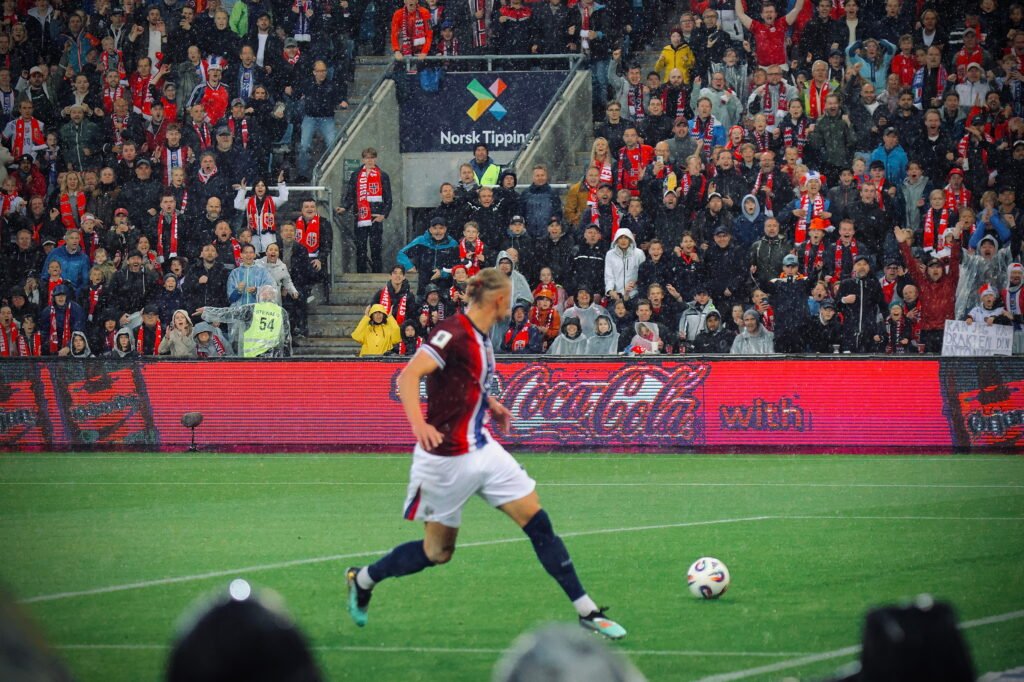
- He was born in Leeds — the city where his father Alfie was playing for Leeds United at the time. The famous Roy Keane tackle in 2001 that ended Alfie’s career is one of the most controversial moments in Premier League history. Erling has spoken about his father’s injury without bitterness, but with an unmistakable awareness of what it represented.
- He is left-footed, but his right-foot goals and headers account for a significant portion of his career total — a genuinely three-dimensional finisher.
- He reportedly meditates and wears blue-light glasses before matches to regulate sleep and mental preparation — an approach unusual enough in elite football to have become something of a talking point among sports scientists.
- He is already Norway’s all-time leading international scorer, having surpassed Jørgen Juve’s long-standing record while still in his early 20s.
- He wore the number 9 for Norway during qualifying — a number that, in the country’s football history, had never been worn by anyone quite like him.
- Yoga is a key part of his training routine, which he credits for maintaining the flexibility and mobility that prevents the kind of muscle injuries that would typically affect a striker of his height and physical profile.
The Legacy Still Being Built
There are players who define club football. Trophies, records, Golden Boots — Haaland has accumulated those at a pace that makes most careers look slow by comparison. A Champions League. Multiple Premier Leagues. The fastest ever to 50 Premier League goals. By 25, he has already earned a place in conversations about the greatest strikers of his generation, and perhaps beyond it.
But international football doesn’t care about club trophies. It has its own currency, its own logic, its own cruelty. Ronaldo and Messi spent entire careers under the shadow of what they hadn’t won internationally — before eventually breaking through. Lewandowski never got his World Cup moment at all.
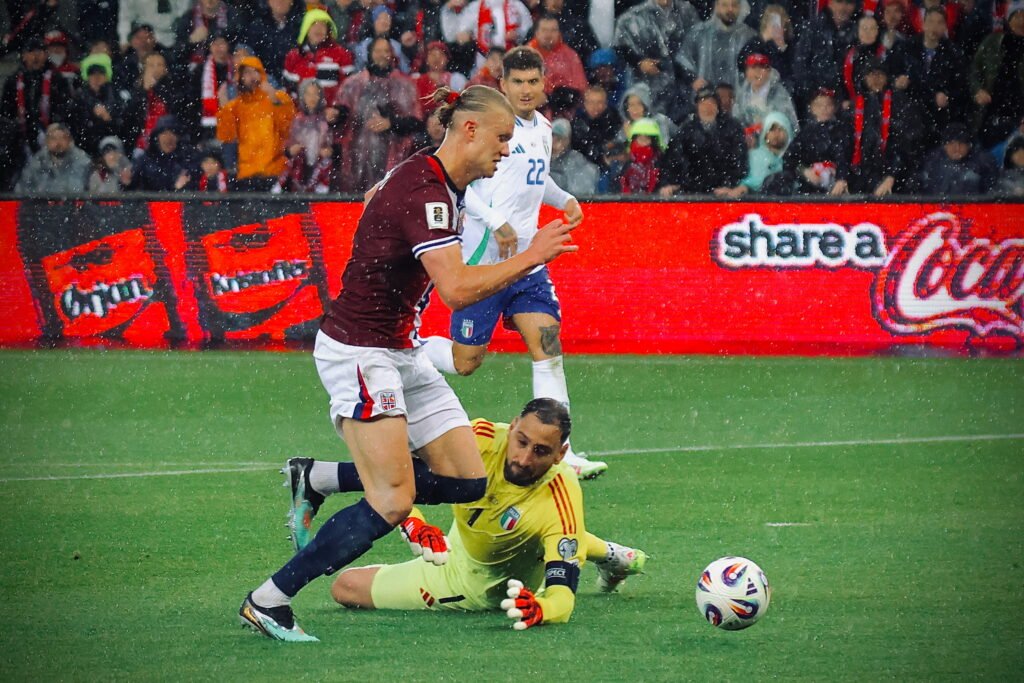
Haaland is now standing at the entrance to that same story. A country of 5 million people is travelling to North America with him. A squad that earned their place through eight perfect qualifying victories — that beat Italy 4-1 on their own turf — is ready to show the world what Norwegian football has become.
And at the centre of it all is a 25-year-old who was born after Norway’s last World Cup, who scored his way to this tournament almost single-handedly, who carries more goals in his legs than almost any player in the tournament.
The wait was 28 years. The man who ended it now has the chance to define what comes next. Whether he lifts a trophy or not — whether Norway go deep or fall early — this chapter of Norwegian football begins and ends with him.
Erling Haaland’s World Cup story is just starting. And football, when it comes to strikers of this quality, tends to reward those who arrive with everything to prove.
Frequently Asked Questions — Erling Haaland and FIFA World Cup 2026
No. FIFA World Cup 2026 will be Erling Haaland’s first-ever World Cup appearance. Norway failed to qualify for both Russia 2018 and Qatar 2022, meaning this tournament represents his long-awaited debut on football’s biggest stage.
Haaland scored 16 goals in 8 qualifying matches during UEFA’s 2026 World Cup qualifying campaign — the highest total of any European player in the qualification process. Norway won all eight of their group games and scored 37 goals overall.
Norway are in Group I at FIFA World Cup 2026, alongside France, Senegal, and Iraq. It is widely regarded as one of the tournament’s most competitive groups.
Yes. Erling Haaland is Norway’s all-time leading international goalscorer, having surpassed the previous record with over 55 international goals by the time the 2026 World Cup begins.
More Queries
Haaland was born on July 21, 2000. He will be 25 years old throughout the 2026 World Cup, which runs from June into July 2026 — placing him at the physical peak of his career.
Haaland has won the UEFA Champions League (2022-23), the Premier League (2022-23 and 2023-24), the FA Cup (2022-23 and 2025-26), the EFL Cup (2025-26), the FIFA Club World Cup (2023), the Community Shield (2024-25), and multiple domestic trophies with Red Bull Salzburg and Borussia Dortmund.
While Norway are not among the pre-tournament favourites, they are one of the strongest dark-horse nations at FIFA World Cup 2026. Their perfect qualifying record, 37 goals scored in eight games, and the presence of Haaland and Ødegaard make them capable of reaching the knockout stages and causing major upsets. A run to the quarterfinals would represent the greatest achievement in Norwegian football history.
Norway’s key players alongside Haaland include Martin Ødegaard (Arsenal, creative midfielder), Alexander Sørloth (striker), Antonio Nusa (wide attacker), and Jørgen Strand Larsen. The team is coached by Ståle Solbakken.