
Cape Verde World Cup 2026 marks the Blue Sharks’ historic first appearance on football’s biggest stage.
Furthermore, picture an island chain of ten volcanic rocks rising from the Atlantic Ocean. 600,000 people. No professional domestic league of any significance. Players scattered across Portugal, France, the Netherlands, the United States and the UAE — connecting by phone and gathering a handful of times a year to represent a nation most football fans could not place on a map.
Nevertheless, they came back. They always came back.
And then, on October 13, 2025, a 3-0 home win over Eswatini, combined with Cameroon drawing 0-0 against Angola, sealed it. Street celebrations erupted nationwide — hailed as the biggest day in Cape Verde since independence. Furthermore, the historic qualification campaign gave the country a defining football moment and lifted national pride across the islands and the diaspora.
Consequently, the Cape Verde FIFA World Cup 2026 campaign is unlike anything else at this tournament. Moreover, it is not the story of a great football nation returning to its rightful place. Instead, it is the story of a tiny island nation — smaller than most cities — achieving something that generations of players and coaches and fans spent their entire lives working towards.
With a population of just over half a million people, Cape Verde is one of the smallest nations ever to play at the FIFA World Cup. Furthermore, they qualified by winning their group — defeating Cameroon and Angola along the way. Above all, they did not just qualify. They qualified as group winners. They earned this.
And now, in Group H alongside Spain, Uruguay and Saudi Arabia, the Blue Sharks are ready for the biggest stage on earth.
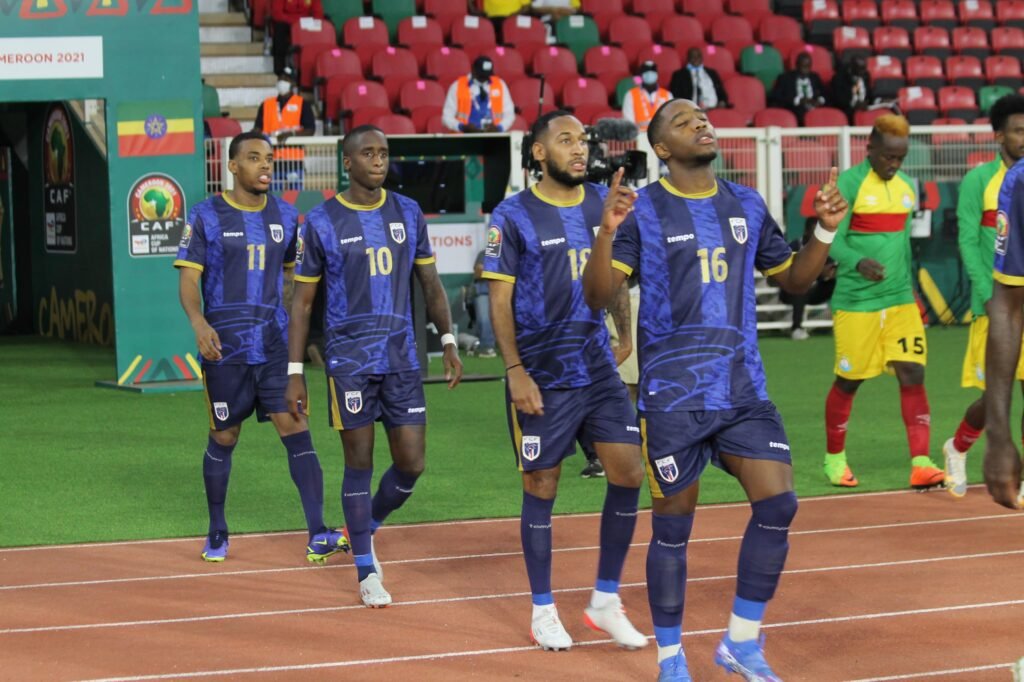
Quick Facts
| FIFA Ranking | #69 | Coach | Bubista |
| Group | Group H | Captain | Ryan Mendes |
| World Cup Appearances | 1 (first ever) | CAF Coach of Year | Bubista — 2025 |
| First Match | June 15 vs Spain | Star Player | Dailon Livramento |
Cape Verde FIFA World Cup 2026 Key Players
Ryan Mendes — The Captain Who Never Stopped Believing
There are captains who wear the armband because they are the best player. Furthermore, there are captains who wear it because of what they represent. Ryan Mendes represents both simultaneously — and at 36 years old, he arrives at this World Cup carrying the weight of every player who came before him and never got the chance he is about to take.
Team captain Ryan Mendes is the natural leader of this team. The 36-year-old is the country’s all-time leader in both caps — 94 appearances — and goals — 22 in total. Furthermore, he made his international debut 16 years ago. Moreover, he has been present for every qualification campaign that came close and fell short. As a result, nobody in this squad understands what this moment means more completely than he does.
Nevertheless, at 36, questions about his physical sharpness in a tournament of this intensity are legitimate. However, Mendes has never relied solely on pace. Instead, he relies on intelligence — reading positions, finding space, delivering the right pass at the right moment. Furthermore, his experience of playing across Portugal, Turkey and the lower European leagues means that nothing about the World Cup environment will overwhelm him. Consequently, when Cape Verde need calm leadership in the moments that define the tournament, Mendes will provide it.
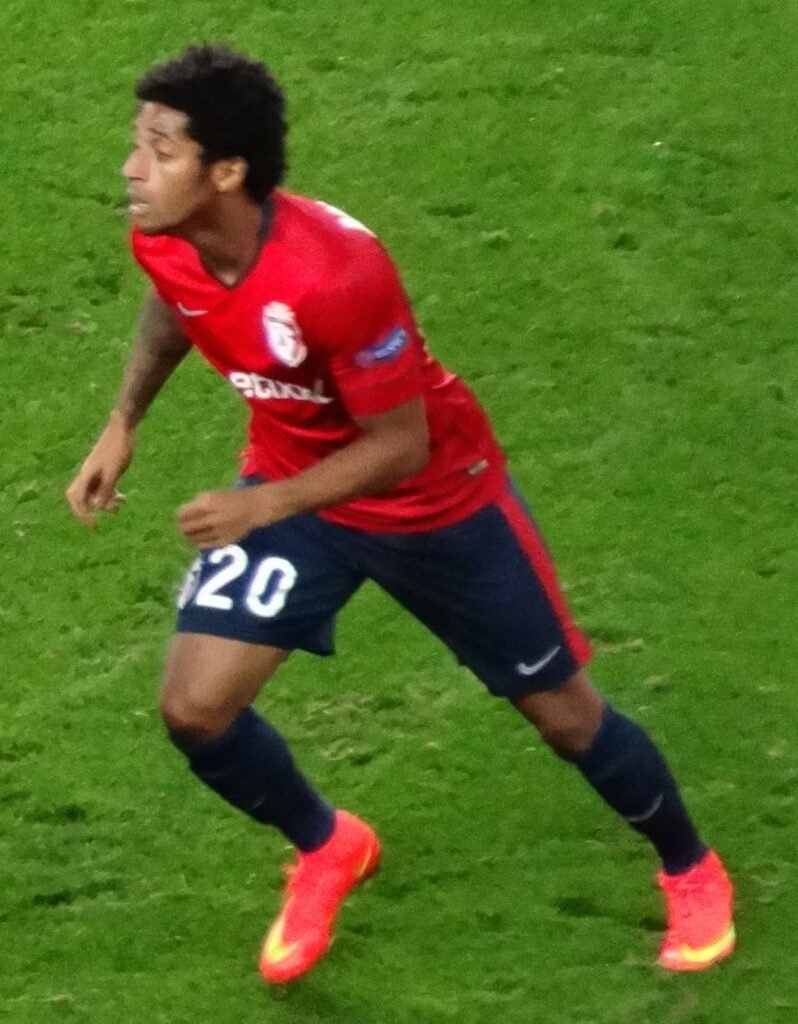
Dailon Livramento — The 24-Year-Old Who Carried Cape Verde to the World Cup
If Mendes is the heart of this Cape Verde squad, Dailon Livramento is the engine. Furthermore, the young Casa Pia striker was the man who scored the goals that actually made this World Cup possible.
Forward Dailon Livramento was Cape Verde’s highest scorer during qualification with four goals. Moreover, at just 24 years old, Livramento scored decisive goals against Cameroon and opened the scoring in the decisive match against Eswatini, establishing himself as the biggest offensive hope for the Blue Sharks.
Furthermore, what makes Livramento genuinely exciting as a World Cup prospect is his fearlessness. He does not play like a player from a 69th-ranked nation. Instead, he plays like a player who believes he belongs among the best. As a result, when Cape Verde face Spain on June 15 and the whole world is watching, Livramento will be the player most likely to produce the moment that makes people sit up.
Moreover, Livramento is the Blue Sharks’ reliable source of goals — the main attacking reference for Bubista’s system. Consequently, everything Cape Verde do going forward flows through his runs, his movement and his clinical finishing.
Logan Costa — Cape Verde’s European Elite Defender
Logan Costa of Villarreal is the only player in this squad playing club football in Europe’s top five leagues. Furthermore, that fact alone tells you something important about this squad. Moreover, Costa’s experience in La Liga — competing against Lamine Yamal, Vinícius Júnior and the best attackers in Europe every week — gives Cape Verde’s defence a quality benchmark that the rest of the squad can build around.
As a result, when Spain’s Nico Williams runs at Cape Verde’s backline in Atlanta, Costa will be the player tasked with stopping him. Furthermore, he has been doing exactly this kind of job at Villarreal for two full seasons. Consequently, while the quality gap between Cape Verde and Spain is enormous, it is not as large as the ranking difference suggests.
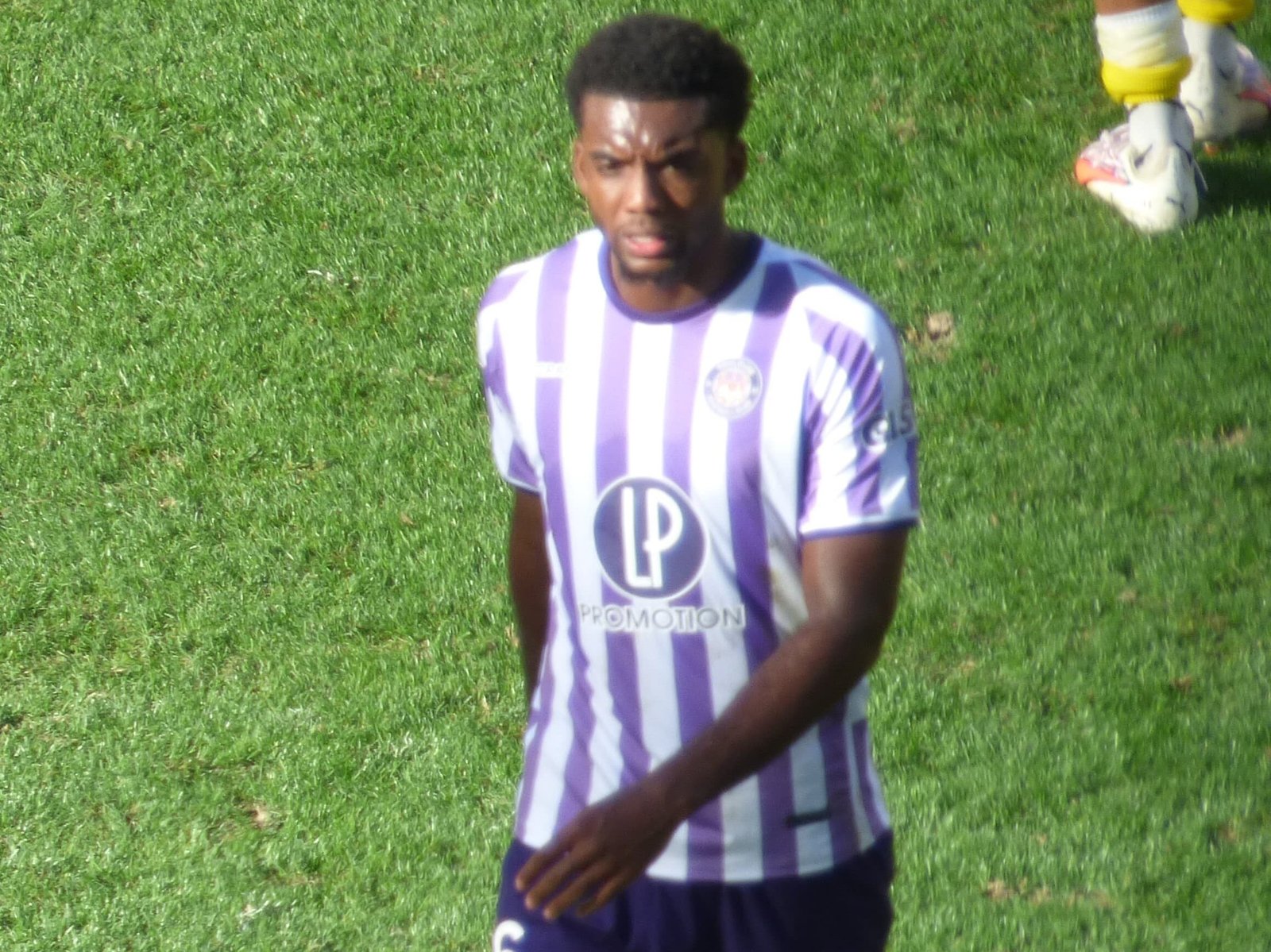
Vozinha — The 39-Year-Old Goalkeeper and Living Legend
Goalkeeper Vozinha is the oldest player in the squad at 39 years old. He is the vice-captain of the team. Furthermore, his presence in this squad is one of the most extraordinary stories at the entire tournament. He has been Cape Verde’s goalkeeper for years. Moreover, he has made errors that cost qualification campaigns. He has made saves that kept campaigns alive.
Nevertheless, above all, Vozinha represents the idea that belief does not have an age limit. Furthermore, his squad unity propelled their CAF qualification campaign as much as any individual save or goal. Moreover, at 39, standing in goal at a World Cup — in Atlanta, Miami and Houston — will be the defining moment of an extraordinary career. Consequently, nobody in football will be watching that moment with anything other than complete respect.
Roberto Lopes — The Shamrock Rovers Defender Living His Dream
Republic of Ireland-born Pico will represent Shamrock Rovers on the international stage at this tournament. Furthermore, Roberto Lopes — who plays his club football in the League of Ireland — becoming a World Cup participant is one of the most remarkable individual stories at the entire 2026 tournament.
Moreover, it is a reminder that Cape Verde’s squad is built from players across multiple continents, multiple leagues, multiple levels of the football pyramid — united by blood, by heritage and by the desire to represent an island chain that most people cannot find on a map. As a result, when Lopes walks out onto the pitch at a World Cup, he carries the hopes not just of Cape Verde — but of every lower-league player in the world who ever dared to dream big.
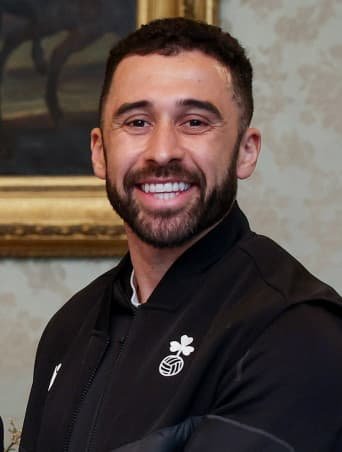
Jamiro Monteiro — The Midfield Organiser at the Heart of Everything
Midfielder Jamiro Monteiro was one of the players who scored two goals during Cape Verde’s qualification campaign. Furthermore, his ability to control the tempo of matches from central midfield, win the ball and distribute it quickly gives Cape Verde’s system the structure that Bubista’s tactics depend on. Moreover, his experience in the Belgian Pro League with Union Saint-Gilloise means he has competed at a level far above what Cape Verde’s ranking suggests.
Consequently, when Cape Verde defend deep against Spain and Uruguay — as they will for long periods of both matches — Monteiro’s ability to organise, recycle and relieve pressure will be crucial. Furthermore, in the moments when Cape Verde counter-attack, his quick distribution to Livramento and Mendes will create the dangerous transitions that have defined the Blue Sharks throughout qualifying.
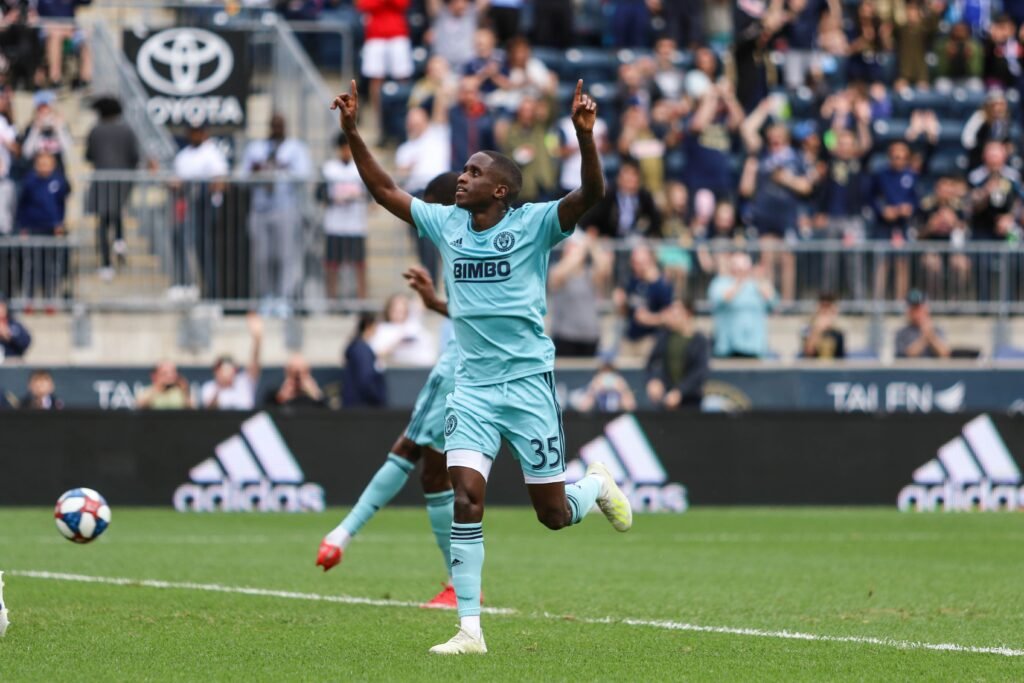
The Extraordinary Coach — Bubista and His Place in Football History
Before discussing Cape Verde’s tactics and World Cup chances further, one story deserves its own section entirely. Furthermore, it is the most inspiring coaching story at the entire 2026 tournament.
Bubista — Pedro Leitão Brito — was named the 2025 CAF Men’s Coach of the Year for guiding Cape Verde to their first-ever World Cup qualification. It is one of African football’s greatest coaching achievements of the decade. Moreover, he played for Cape Verde in the 1990s and early 2000s before taking over as coach in 2020. As a result, he is not simply the man who qualified Cape Verde for a World Cup. He is a former Cape Verde player who qualified his own country — the place he represented as a footballer — for the biggest tournament in the world.
Furthermore, Bubista has taken Cape Verde to three major tournaments and has an impressive 48% win rate as manager. Moreover, that win rate is achieved against African opposition of significantly higher quality and resources. Consequently, it represents a coaching achievement of the highest order given the limitations — financial, logistical and structural — that Cape Verde football operates within.
Cape Verde World Cup 2026 Tactics and Formation
Understanding how Cape Verde will play requires, above all, understanding one fundamental truth. Furthermore, they cannot beat Spain or Uruguay through possession or technical dominance. They know this. Bubista knows this. Everyone knows this.
Cape Verde has spread the national team net wide — with starters based in Portugal, the Netherlands, the United States and the UAE. Moreover, the squad is built on collective organisation rather than individual brilliance. As a result, Bubista’s system is built around defensive compactness, hard pressing at the right moments and rapid transitions through Livramento’s pace when possession is won.
Furthermore, with a mixture of national pride, European-based talent and one of the most inspiring stories of the tournament, Cape Verde arrives determined to prove that their historic qualification was no accident. In other words — they will defend deep, stay organised, make it difficult for Spain and Uruguay to create high-quality chances, and then exploit the transitions that every possession-heavy team eventually gives away.
Nevertheless, the tactical challenge is significant. Moreover, Spain ranked number one in the world press relentlessly and create chances from wide areas constantly. Consequently, Bubista must find a way to make his team compact enough to absorb that pressure without being overwhelmed — while staying brave enough to attack when opportunities present themselves.
Group Stage Analysis — Group H
Group H Full Breakdown
| Team | FIFA Ranking | Strength Level | Key Player | Cape Verde’s Honest Assessment |
|---|---|---|---|---|
| 🇪🇸 Spain | #1 | ⭐⭐⭐⭐⭐ | Lamine Yamal | The most difficult match — however a historic occasion on June 15 |
| 🇺🇾 Uruguay | #19 | ⭐⭐⭐⭐ | Federico Valverde | The second hardest match — Uruguay are physical and dangerous |
| 🇸🇦 Saudi Arabia | #56 | ⭐⭐⭐ | Salem Al-Dawsari | The most achievable result — a point here would be historic |
| 🇨🇻 Cape Verde | #69 | ⭐⭐ | Dailon Livramento | Debutants — every minute on this stage is a victory |
Cape Verde Group H Fixtures and Predictions
| Match | Date | Venue | Prediction | Why |
|---|---|---|---|---|
| 🇪🇸 Spain vs 🇨🇻 Cape Verde | June 15, 2026 | Mercedes-Benz Stadium, Atlanta | Spain 3–0 | Spain’s class is overwhelming — however Livramento creates genuine danger |
| 🇺🇾 Uruguay vs 🇨🇻 Cape Verde | June 21, 2026 | Hard Rock Stadium, Miami | Uruguay 2–0 | Valverde controls the match entirely — Cape Verde defend heroically |
| 🇨🇻 Cape Verde vs 🇸🇦 Saudi Arabia | June 26, 2026 | NRG Stadium, Houston | Draw 1–1 | The greatest result in Cape Verde football history — Livramento scores |
Predicted Group H Final Standings
| Pos | Team | Played | W | D | L | GF | GA | Pts |
|---|---|---|---|---|---|---|---|---|
| 🥇 1st | 🇪🇸 Spain | 3 | 3 | 0 | 0 | 8 | 0 | 9 |
| 🥈 2nd | 🇺🇾 Uruguay | 3 | 2 | 0 | 1 | 5 | 2 | 6 |
| 3rd | 🇸🇦 Saudi Arabia | 3 | 0 | 1 | 2 | 2 | 5 | 1 |
| 4th | 🇨🇻 Cape Verde | 3 | 0 | 1 | 2 | 1 | 9 | 1 |
One-line verdict: Cape Verde are in one of the toughest groups in the tournament — facing Spain, Uruguay and Saudi Arabia. Nevertheless, a draw against Saudi Arabia on June 26 in Houston would be the single greatest result in Cape Verde football history. Furthermore, finishing with one point from Group H is not failure. It is a foundation for everything that comes next.
Cape Verde World Cup 2026 Strengths and Weaknesses
| ✅ Strengths | ❌ Weaknesses |
|---|---|
| Bubista — 2025 CAF Coach of the Year, one of the finest coaching achievements in African football history | Ranked 69th — significant quality gap against all three group opponents |
| Livramento — young, fearless striker who scored the goals that made this possible | Only one player — Logan Costa — plays in Europe’s top five leagues |
| Collective spirit — a squad built entirely on unity, belief and national pride | Spain ranked number one in the world in the opening match — the hardest possible start |
| Logan Costa — La Liga experience defending against elite attackers every week | Limited tournament experience — no player in this squad has played at a World Cup before |
| Ryan Mendes — 94 caps, 22 goals, 16 years of experience at international level | Group H draws Spain and Uruguay — two of the toughest opponents in the tournament |
| Four of the last six AFCON qualifications — consistent, proven African tournament performers | Vozinha at 39 — an ageing goalkeeper facing the most demanding matches of his career |
Cape Verde World Cup History — Seven Attempts and the Day Everything Changed
After seven attempts, Cape Verde finally secured their first-ever World Cup qualification. Furthermore, that sentence contains more emotion than any set of statistics can capture.
Moreover, the qualification journey itself was a masterpiece of resilience. Cape Verde started the qualification with a goalless draw at home against Angola. After a win against Eswatini, they lost 4-1 in Yaoundé against Cameroon. A historic first World Cup appearance seemed like a distant dream. But a four-match winning run, combined with Cameroon drawing against Angola and Eswatini, allowed the Blue Sharks to take over first place by a single point.
Furthermore, the final day of qualifying — October 13, 2025 — was the most dramatic in Cape Verdean football history. A 3-0 home win over Eswatini sealed it, while Cameroon drew 0-0 against Angola. Street celebrations erupted nationwide — hailed as the biggest day since independence.
Moreover, the victory over Cameroon away from home was the result that told the football world this was not an ordinary qualification. Standout wins included a 1-0 victory over Cameroon away and a 3-0 victory over Mauritius. As a result, Cape Verde did not simply benefit from favourable circumstances. They earned every point — and consequently every minute of this World Cup belongs to them completely.
Furthermore, the Blue Sharks have qualified for four of the last six Africa Cup of Nations tournaments and reached the quarter-finals twice, establishing themselves as a consistent presence on the continental stage. In other words — this is not a team that happened to qualify. This is a team that has been building towards this moment for years.
The 600,000 People Behind This Squad
Before concluding, one number must be acknowledged. Furthermore, it is the most remarkable number associated with any team at the entire 2026 World Cup.
With a population of just over half a million people, it is one of the smallest nations ever to play at the Cape Verde FIFA World Cup 2026. Moreover, Iceland — with 370,000 people — reached the quarter-finals of Euro 2016 and the World Cup in 2018. Furthermore, those performances changed how the world thinks about small nation football entirely. As a result, Cape Verde’s appearance in 2026 carries the same symbolic weight — the proof that passion, organisation and collective belief can overcome the enormous structural advantages that larger, wealthier footballing nations possess.
Nevertheless, there is something even more remarkable about Cape Verde’s story. Moreover, most of their players grew up watching the World Cup from the diaspora — in Lisbon, in Rotterdam, in Boston — dreaming of the day they could represent their islands on that stage. Consequently, when Ryan Mendes walks out in Atlanta on June 15 and the Cape Verde national anthem plays before a match against the world’s number one team, the 600,000 people on those islands will not simply be watching a football match.
They will be watching the realisation of a dream that took seven attempts and a generation of belief to achieve.
Can Cape Verde Cause a Shock? — Our Verdict
Reaching the Round of 32 is extremely unlikely. Furthermore, the group draw is as difficult as any team in the tournament faces — Spain, Uruguay and Saudi Arabia represent three very different kinds of challenge. Moreover, finishing with one point from that group would represent a genuinely excellent debut campaign.
Nevertheless, above all the rankings and tactical analysis, one truth about this Cape Verde squad dominates every other consideration. They beat Cameroon away from home. Furthermore, they topped a qualifying group containing Cameroon and Angola. Moreover, despite having one of the most inexperienced squads at the tournament, there will be a celebratory atmosphere in all of Cape Verde’s fixtures.
Furthermore, Bubista — the 2025 CAF Coach of the Year — did not spend five years building this team simply to make up the numbers at a World Cup. In other words, every player in this squad believes they can cause a shock. Consequently, when Saudi Arabia face Cape Verde in Houston on June 26, the Saudi players will be favourites. However, Saudi Arabia beat Argentina in 2022 when they were massive underdogs.
Football never promised the bigger team would win. That is precisely why we watch.
Our Prediction
Spain beat Cape Verde 3-0 in Atlanta. Furthermore, Uruguay win 2-0 in Miami — however Cape Verde defend heroically for 70 minutes before two late goals end the resistance. Then, on June 26 in Houston, Cape Verde face Saudi Arabia. Furthermore, it is a match between two teams that need a result. In the 58th minute, Dailon Livramento receives the ball from Monteiro, turns his marker inside the penalty area and drives it into the bottom corner.
Cape Verde 1-0 Saudi Arabia.
Moreover, they defend that lead for 25 minutes with everything they have. Al-Dawsari equalises in the 83rd minute. The final score is 1-1.
Cape Verde finish with one point. They go home. Nevertheless, they go home having drawn at a World Cup. They go home having scored a World Cup goal. They go home having shown 600,000 people on ten Atlantic islands that the dream was not just possible — it was real.
Furthermore, somewhere in Praia, in Mindelo, in São Vicente, people who stayed up all night to watch it understand simultaneously that Cape Verde football will never be the same again.
The Blue Sharks have arrived. And above all — they are never going back to the outside.
Frequently Asked Questions About Cape Verde World Cup 2026
Q: Is this Cape Verde’s first World Cup?
Yes. Cape Verde qualified for their first-ever FIFA World Cup after winning CAF Group D in October 2025, marking the biggest achievement in the nation’s football history.
Q: Who is Cape Verde’s coach at the 2026 World Cup?
Bubista (Pedro Leitão Brito) is Cape Verde’s head coach. He led the team to historic World Cup qualification and won the 2025 CAF Men’s Coach of the Year award.
Q: What group is Cape Verde in at the 2026 World Cup?
Cape Verde are in Group H alongside Spain, Uruguay and Saudi Arabia. Their first match is against Spain on June 15, 2026.
Q: Who is Cape Verde’s best player at the 2026 World Cup?
Dailon Livramento is Cape Verde’s main attacking threat, while captain Ryan Mendes provides experience, leadership and goals.
Q: How did Cape Verde qualify for the 2026 World Cup?
Cape Verde topped CAF Group D with 23 points, finishing ahead of Cameroon to secure automatic qualification for the tournament.
Q: What are Cape Verde’s chances at the 2026 World Cup?
Reaching the knockout stage will be difficult in a group with Spain and Uruguay, but Cape Verde hope to compete strongly and target points against Saudi Arabia.