
The DR Congo World Cup 2026 story does not begin in a training ground or a boardroom. It begins in the rain-soaked streets of Kinshasa at midnight.
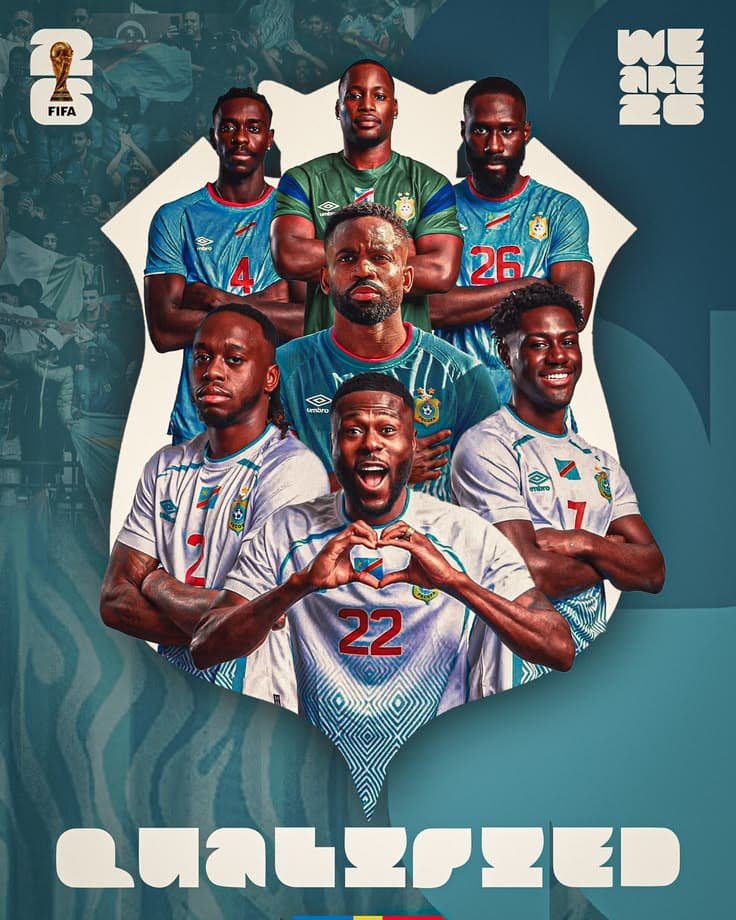
When Axel Tuanzebe’s header went in during the 100th minute of the very last qualifying game against Jamaica in Guadalajara — when that ball crossed the line and confirmed that DR Congo had qualified for the 2026 FIFA World Cup — thousands of people poured into the rain-soaked streets of Kinshasa and simply could not stop screaming.
Furthermore, those people were not just celebrating a football result. They were celebrating the end of 52 years of waiting. They were celebrating the return of a nation — a country of 100 million people, a country with football running through its blood, a country that had been watching the World Cup from the outside since 1974 — to the stage where it belongs.
Moreover, the qualification story itself is one of the most extraordinary in the entire history of the tournament. DR Congo qualified through three separate stages — the CAF group stage, the CAF play-offs and the inter-confederation playoff. In the CAF play-offs alone, they beat Cameroon in the semi-final and then defeated Nigeria — after 120 minutes and a 1-1 draw — on penalties. Furthermore, the Leopards ironically became the very last side to complete the 2026 tournament’s 48-team roster — the final piece of the puzzle, confirmed with a 100th-minute header that will be replayed in DR Congo for generations.
Consequently, the DR Congo World Cup 2026 campaign is not simply a sporting event. It is a national moment. It is a country telling the world — after five decades of waiting, after beating Cameroon and Nigeria on the way — that the Leopards are back. And they did not come all this way simply to make up the numbers.
Quick Facts
| FIFA Ranking | #48 | Coach | Sébastien Desabre |
| Group | Group K | Captain | Chancel Mbemba |
| World Cup Appearances | 2 (1974, 2026) | Last Appearance | 52 years ago as Zaire |
| First Match | June 17 vs Portugal | Star Player | Yoane Wissa |
DR Congo World Cup 2026 Key Players
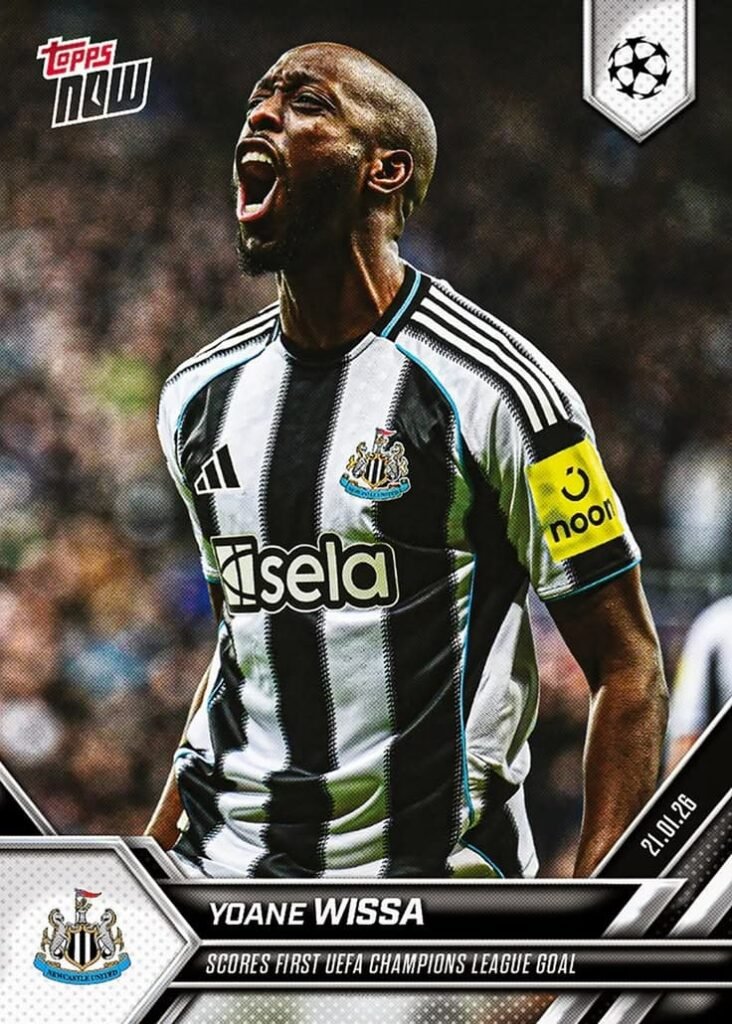
Yoane Wissa — The Newcastle United Forward Ready to Announce Africa to the World
There are players who carry nations. Moreover, there are players who define eras. At 28 years old, Yoane Wissa is being asked to do both simultaneously — and based on everything he has shown at Newcastle United over the past two seasons, he is ready for exactly that challenge.
Wissa will arrive at the 2026 World Cup as one of DR Congo’s main attacking weapons and one of the most dangerous African forwards in the tournament. The Congolese attacker, currently playing for Newcastle United, has established himself at the elite level of European football thanks to his speed, movement and ability to constantly create danger in the final third. His Premier League experience has also made him one of the offensive leaders of this Congolese generation.
Furthermore, what makes Wissa so genuinely dangerous is the variety in his attacking game. He is not simply a fast winger who runs in straight lines — he is a complete forward who drops deep to receive the ball, spins in tight spaces, drives at defenders and arrives in the penalty box at exactly the right moment. Moreover, his ability to play across the front three gives Desabre tactical flexibility that most coaches with a squad of this ranking simply do not have.
As a result, when DR Congo need a moment against Portugal on June 17 — when everything is tense and tight and 90 million Congolese people are watching simultaneously — Wissa is the player most likely to produce it. Consequently, he is also the player Ronaldo and Bruno Fernandes will be most aware of from the very first whistle.
Chancel Mbemba — The Captain Who Made the Impossible Possible
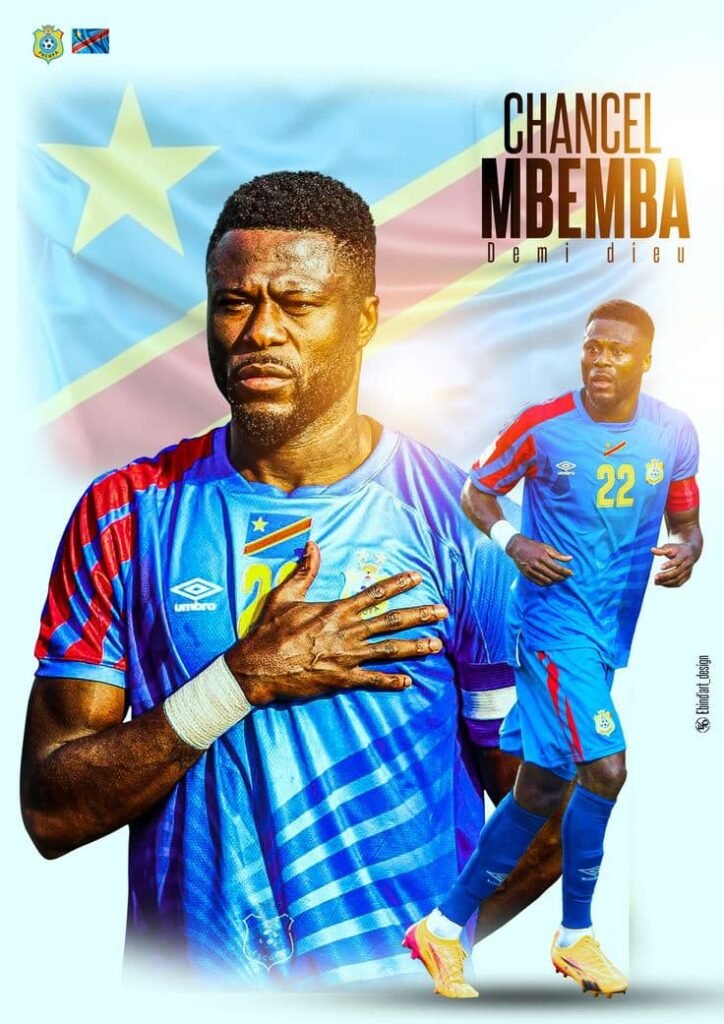
The captain and absolute leader of the team is Chancel Mbemba. The 31-year-old defender holds the record for the most caps for DR Congo with 107 appearances. Furthermore, it was Mbemba who scored the goal in injury time against Cameroon during the CAF play-offs — the goal that sent DR Congo to the inter-confederation playoff, the goal without which this entire World Cup story does not exist.
Moreover, the emotional weight he carries into this tournament is extraordinary. He has given 107 appearances to a national team that had not qualified for a World Cup since before he was born. He has captained his country through the most demanding qualifying campaign in African football. And now, on June 17 at NRG Stadium in Houston, he will lead his nation onto a World Cup pitch for the first time in 52 years.
Nevertheless, beyond the emotion, Mbemba is a world-class defender in the most practical sense. Furthermore, his experience at Porto in the Champions League — competing against the best attackers in Europe week after week — means that facing Ronaldo and Raphinha in Group K will not overwhelm him. As a result, his calmness and authority in the dressing room are the foundation upon which Desabre’s entire defensive structure is built.
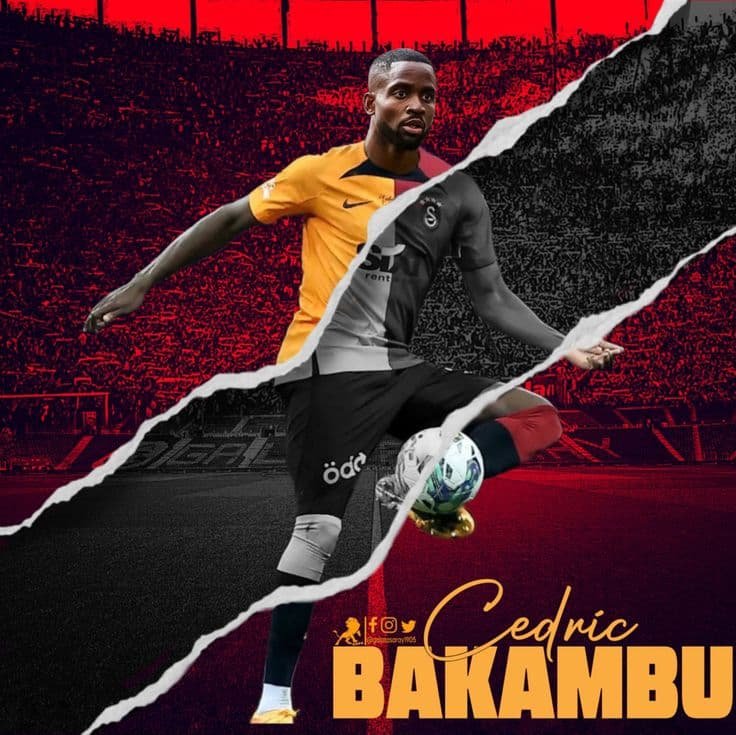
Cedric Bakambu — The Veteran Striker Who Brings Big-Game Experience
Veteran striker Cédric Bakambu brings the experience and big-game nous this young squad needs. Furthermore, with 21 goals for his country, the Real Betis player is only one goal behind all-time top scorer Dieumerci Mbokani. Moreover, those 21 international goals represent a career of consistent scoring for the national team across multiple qualifying campaigns — the record of a player who performs when performance matters most.
In addition, Bakambu’s leadership alongside Mbemba gives this DR Congo squad an experienced core that balances the younger European-based talent around it. Consequently, when a match against Portugal becomes difficult — when it is 0-0 in the 70th minute and everyone is nervous — Bakambu’s calm, his experience and his understanding of what it takes to score at this level will be the qualities that Desabre calls upon.
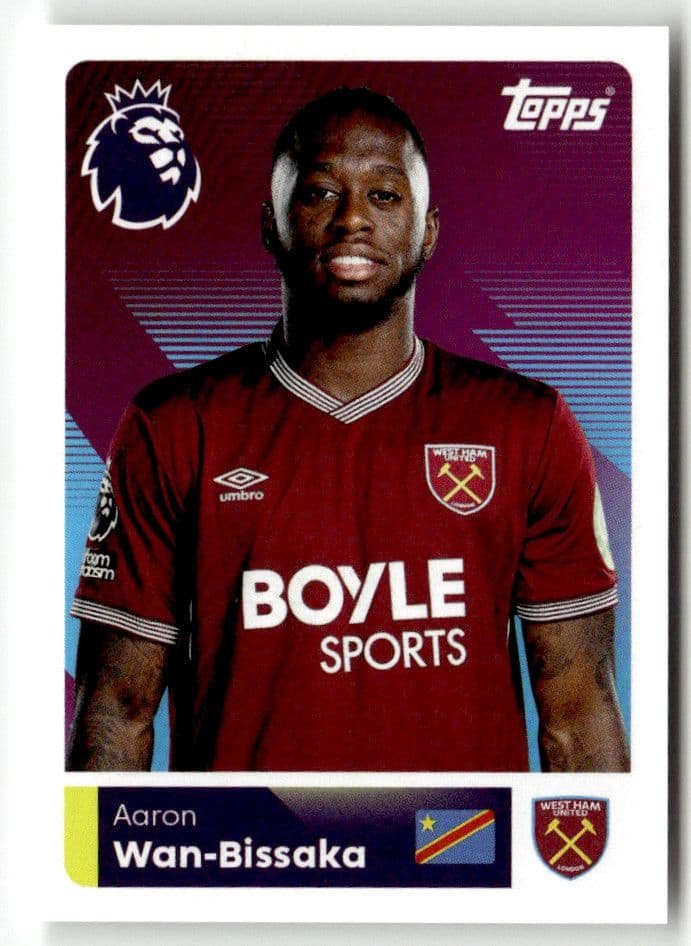
Aaron Wan-Bissaka — The West Ham Defender Who Chose His Roots
Aaron Wan-Bissaka of West Ham United is one of the well-known players in the DR Congo squad. Furthermore, his decision to represent DR Congo at international level — having been born in England and previously considered a potential England international — adds a fascinating dimension to this squad’s identity.
Moreover, as a physically imposing, defensively disciplined right-back with Premier League experience at both Manchester United and West Ham, Wan-Bissaka gives Desabre’s defensive unit something genuinely valuable — European tactical intelligence and the ability to contain the kind of wide forwards that Portugal and Colombia will throw at DR Congo in Group K. As a result, his form going into this tournament is one of the key factors in how well DR Congo defend across their three group matches.
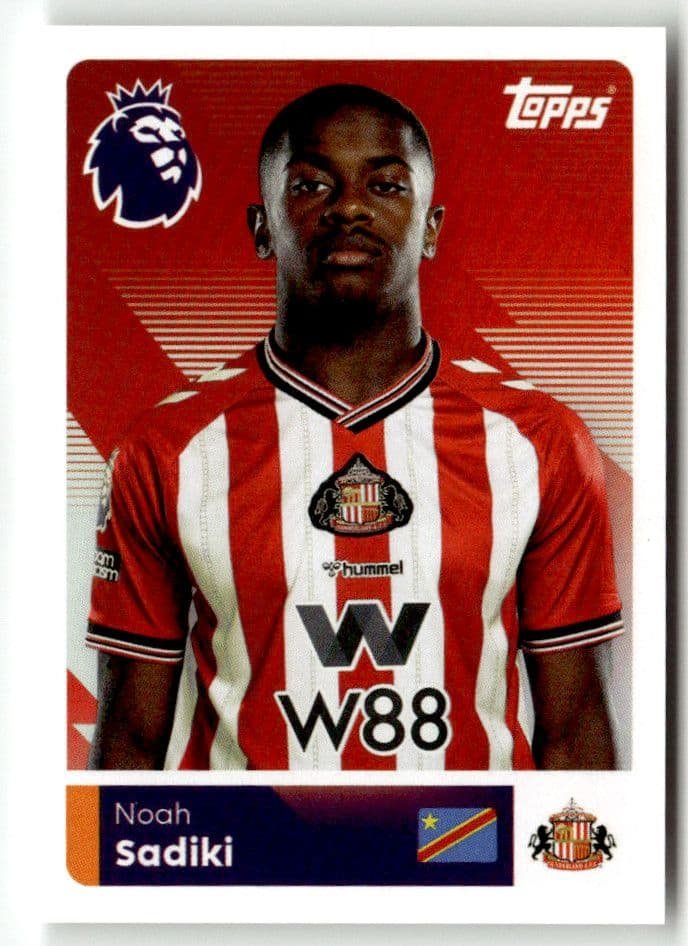
Noah Sadiki — The Midfield Engine Driving DR Congo’s Future
Do not sleep on the dynamic Noah Sadiki — a box-to-box central midfielder known for his tireless work rate, explosive ball-carrying and tactical maturity — who said that “this qualification must be the beginning of getting our great country at every World Cup going forward.”
Furthermore, that statement captures exactly the spirit that makes this DR Congo squad so compelling. They are not here simply for 2026. They are here to establish a precedent — to prove to themselves, to their federation and to 100 million people at home that this is the beginning of something sustained. Moreover, Sadiki’s midfield energy, pressing intensity and ability to carry the ball through lines of opposition midfielders makes him one of the most exciting young players in the entire African contingent at this tournament.
The Extraordinary Qualification Story — From Zaire to the World
Before discussing DR Congo’s tactics and World Cup chances further, it is essential to understand the full weight of what this qualification represents. Because it is genuinely one of the most extraordinary sporting stories of the decade.
The Democratic Republic of the Congo, then known as the Republic of Zaire, played three group matches in 1974. They lost all three matches with a goal difference of 0-14. Furthermore, that 1974 campaign is remembered not for any of their performances — but for one of the most controversial moments in World Cup history. In a match against Brazil, a Zaire player ran out of the wall and kicked a free kick before the referee’s whistle — an act that has been debated, analysed and mythologised ever since.
Moreover, in the 52 years since that tournament, the country went through civil war, political upheaval, economic collapse and multiple changes of name and identity. Nevertheless, through all of it, football survived. Furthermore, the passion for the game in DR Congo — played in every neighbourhood, every village, every schoolyard — never diminished.
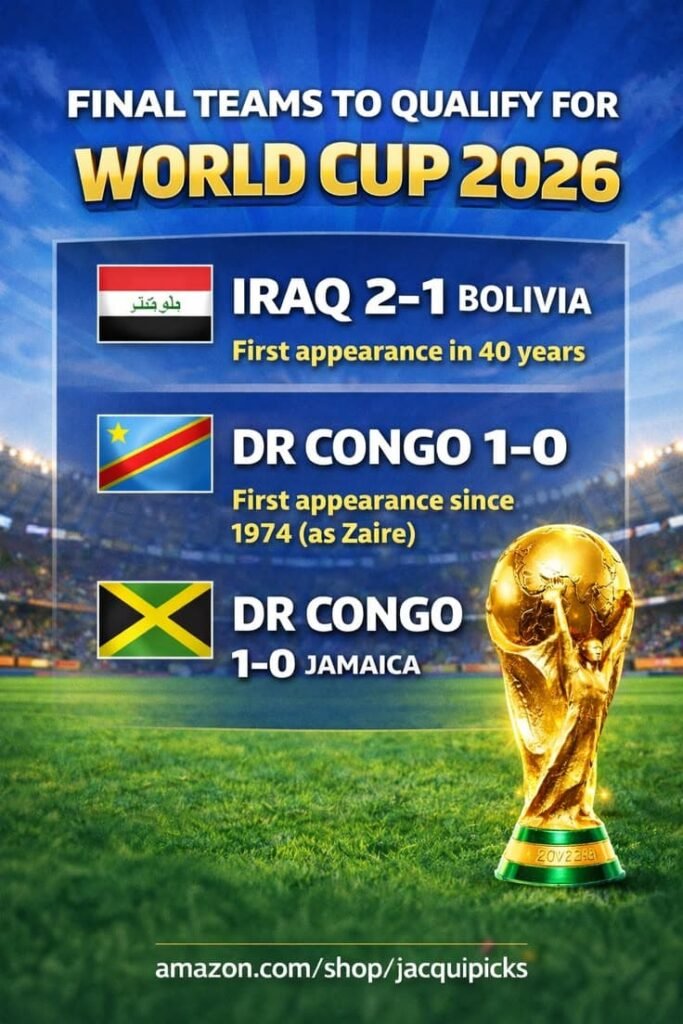
DR Congo sealed qualification on March 31, 2026, beating Jamaica 1-0 after extra time in the inter-confederation playoff — and consequently, the Leopards became the last team confirmed for the tournament and simultaneously one of its most compelling stories. Moreover, beating Cameroon and Nigeria — two of Africa’s most powerful footballing nations — on the way to qualification gave the achievement an additional layer of meaning. In other words, this was not a fortunate qualification through an easy path. It was a campaign won by defeating giants.
DR Congo World Cup 2026 Tactics and Formation
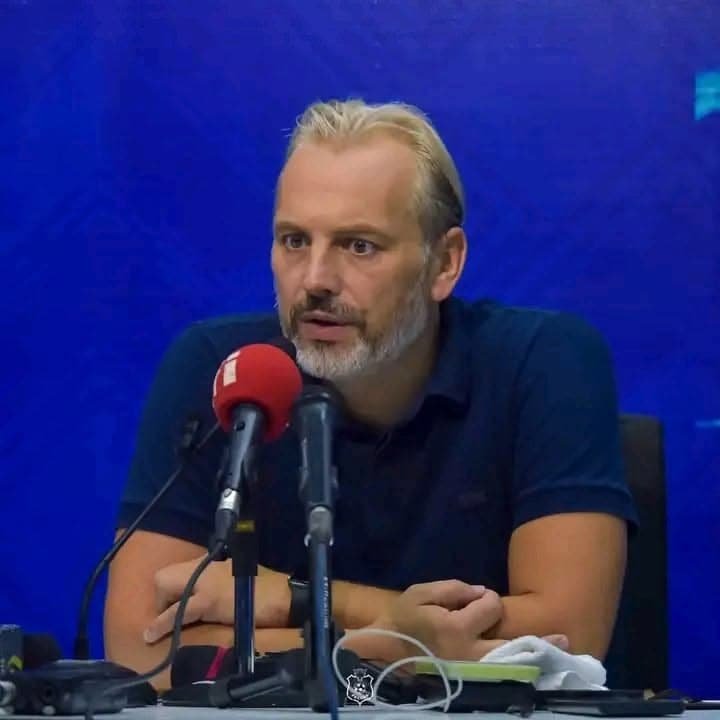
Understanding how DR Congo will approach the DR Congo FIFA World Cup 2026 requires, above all, understanding what Sébastien Desabre has built over four years in charge.
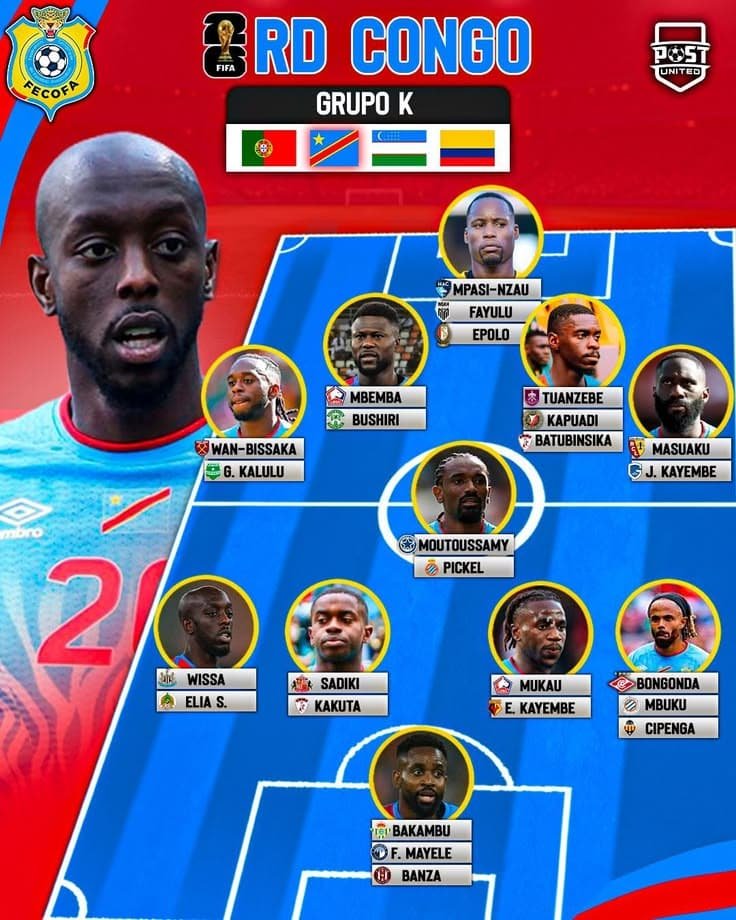
He prefers structured set-ups and tactical discipline over free-flowing football — and given the opponents that DR Congo are set to take on in the group stages, that may be the best approach. Furthermore, the probable setup still points to a 4-2-3-1 as the clearest base structure — a formation that gives DR Congo defensive compactness, midfield protection and the ability to release Wissa and Bakambu into dangerous counter-attacking positions.
Moreover, Desabre took charge in 2022 with the mission of rebuilding the Leopards and ultimately became one of the key figures behind the team’s return to the World Cup after more than 50 years. His experience across African football — having managed in Ivory Coast, Cameroon, Tunisia, Egypt, Uganda and Morocco — gives him a tactical toolkit broader than almost any other coach at this tournament.
In other words — DR Congo will defend deep, stay compact, protect Mbemba and Wan-Bissaka’s backline, and then release Wissa at pace whenever possession is won. As a result, they will be most dangerous in the transitions — exactly the moments when Portugal and Colombia, both of whom prefer to build possession slowly, will be most vulnerable. Consequently, if DR Congo execute their game plan against Uzbekistan and earn even a point against Colombia, the group stage becomes genuinely interesting.
Group Stage Analysis — Group K
Group K Full Breakdown
| Team | FIFA Ranking | Strength Level | Key Player | DR Congo’s Honest Assessment |
|---|---|---|---|---|
| 🇵🇹 Portugal | #6 | ⭐⭐⭐⭐⭐ | Cristiano Ronaldo | The hardest match — nevertheless Mbemba and Wan-Bissaka can make it uncomfortable |
| 🇨🇴 Colombia | #27 | ⭐⭐⭐⭐ | Luis Diaz | The crucial second match — three points here would be historic |
| 🇨🇩 DR Congo | #48 | ⭐⭐⭐ | Yoane Wissa | Dark horse — the qualification story gives this squad belief beyond their ranking |
| 🇺🇿 Uzbekistan | #74 | ⭐⭐ | Eldor Shomurodov | Must-win — three points essential and expected |
DR Congo Group K Fixtures and Predictions
| Match | Date | Venue | Prediction | Why |
|---|---|---|---|---|
| 🇵🇹 Portugal vs 🇨🇩 DR Congo | June 17, 2026 | NRG Stadium, Houston | Portugal 3–0 | Ronaldo’s class too much — however Wissa creates genuine danger throughout |
| 🇨🇩 DR Congo vs 🇨🇴 Colombia | June 23, 2026 | Estadio Akron, Guadalajara | Draw 1–1 | The biggest result in DR Congo football history — Wissa scores the equaliser |
| 🇨🇩 DR Congo vs 🇺🇿 Uzbekistan | June 27, 2026 | NRG Stadium, Houston | DR Congo 2–0 | Bakambu scores twice — DR Congo finish third with four points |
Predicted Group K Final Standings
| Pos | Team | Played | W | D | L | GF | GA | Pts |
|---|---|---|---|---|---|---|---|---|
| 🥇 1st | 🇵🇹 Portugal | 3 | 3 | 0 | 0 | 8 | 1 | 9 |
| 🥈 2nd | 🇨🇴 Colombia | 3 | 1 | 1 | 1 | 4 | 3 | 4 |
| 3rd | 🇨🇩 DR Congo | 3 | 1 | 1 | 1 | 3 | 4 | 4 |
| 4th | 🇺🇿 Uzbekistan | 3 | 0 | 0 | 3 | 0 | 7 | 0 |
One-line verdict: DR Congo finish third in Group K with four points — consequently, as one of the eight best third-placed teams, they could advance to the Round of 32. Moreover, a draw against Colombia would be the greatest result in Congolese football history and would send shockwaves across the entire tournament.
DR Congo World Cup History2026 Strengths and Weaknesses
| ✅ Strengths | ❌ Weaknesses |
|---|---|
| Wissa — one of the most dangerous African forwards at this tournament | Portugal and Colombia in the same group — two of the tournament’s strongest teams |
| Mbemba — experienced captain, 107 caps, Champions League pedigree with Porto | Only second World Cup appearance ever — 52-year gap means no tournament experience in the squad |
| Wan-Bissaka — Premier League experience defending against elite wide forwards | Playing Portugal in the opening match is the hardest possible start to a tournament |
| Bakambu — 21 international goals, big-game experience, calm in front of goal | FIFA ranking of 48 — significant quality gap against Portugal and Colombia |
| Desabre built a tactical structure that produced consistent results throughout qualifying | Goal difference of 0-14 in their only previous World Cup — the psychological shadow of Zaire 1974 |
| The qualification journey itself — beating Cameroon and Nigeria builds collective belief | Limited depth beyond the first eleven — squad options thin when key players are unavailable |
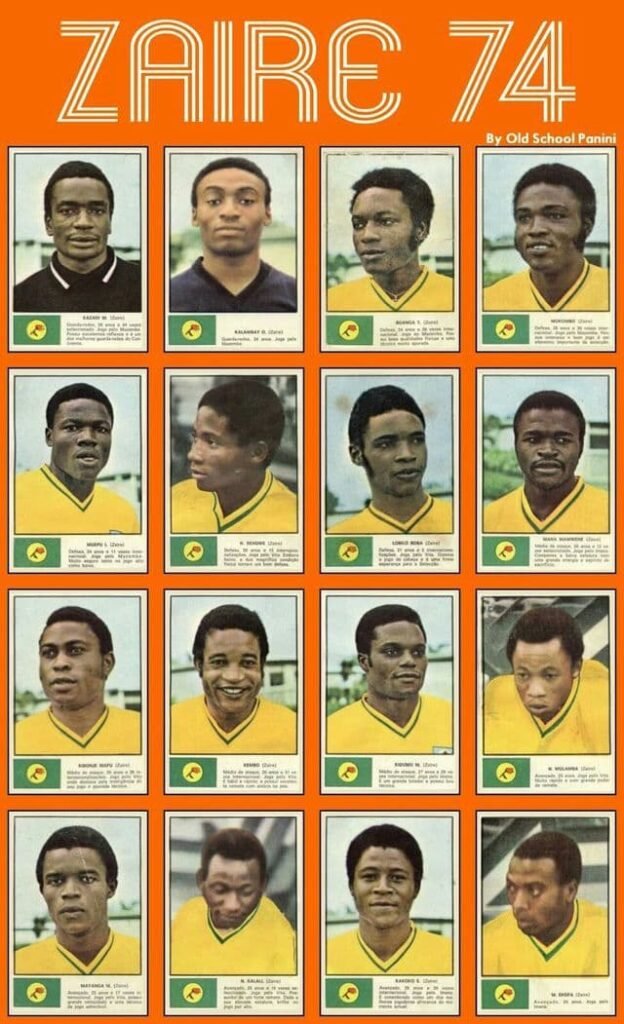
DR Congo World Cup History — Zaire 1974 and the Weight of a Name
The DR Congo’s World Cup history is unique in the entire tournament — because it is not simply the story of a football team. It is the story of a country that competed under a completely different name.
The Democratic Republic of the Congo, then known as the Republic of Zaire, played three group matches in 1974 in West Germany. Furthermore, they became the first sub-Saharan African team ever to qualify for a World Cup — a historic achievement that deserves to be remembered far more than the results suggest. Moreover, they faced Brazil, Scotland and Yugoslavia — three of the most powerful footballing nations of that era — and consequently lost all three matches.
Nevertheless, the 1974 campaign produced one moment that transcended the results entirely. In the match against Brazil, as the South Americans lined up for a free kick, a Zaire defender named Mwepu Ilunga broke from the wall and kicked the ball downfield before the whistle. The whole world laughed. However, decades later, journalists and historians revealed that the players had been threatened by the government before the tournament — told that if they lost to Yugoslavia by more than three goals, the delegation would not be allowed to return home. Consequently, what looked like incompetence was, in reality, something far more complicated and far more human.
Moreover, in the 52 years since that tournament, the country changed its name, survived civil war and political violence, and built a football culture of extraordinary depth and passion. Furthermore, the current generation of Congolese players — born after 1974, some born after the country changed its name in 1997 — carries that history forward without having lived it themselves. As a result, for them, 2026 is not about erasing the past. It is about writing something completely new.
Can DR Congo Make History at the 2026 World Cup? — Our Verdict
Reaching the Round of 32 is the realistic and achievable target. Furthermore, it is the explicit minimum that the coaching staff have set. Moreover, beating Uzbekistan and earning a point against Colombia would give DR Congo four points — enough, in most scenarios, to advance as one of the eight best third-placed teams.
Nevertheless, the Portugal match on June 17 will define the psychological tone of the entire campaign. The coaching staff have set ambitious targets — at minimum progressing from the group stage and showing compelling football. Furthermore, how DR Congo perform against Ronaldo and Bruno Fernandes will tell the world — and more importantly, the Congolese players themselves — whether the belief they built during the qualification campaign translates to the World Cup stage.
Moreover, above all the tactical analysis and the ranking comparisons, one truth about this squad must be acknowledged. The Congo beat Cameroon. They beat Nigeria on penalties. They qualified as the very last team — through the hardest possible route — having spent 52 years waiting for this moment. Consequently, the belief in this dressing room is not manufactured. It is earned. And in tournament football, earned belief is more valuable than any ranking.
Our Prediction
Portugal beat DR Congo 3-0 in Houston — however Wissa scores a late consolation goal that sends the Congolese contingent in the stadium into absolute frenzy. DR Congo then draw 1-1 with Colombia in Guadalajara — Wissa scoring the equaliser in the 65th minute in the greatest result in Congolese football history. They beat Uzbekistan 2-0 in their final group match with Bakambu scoring both goals. DR Congo finish third in Group K with four points.
As one of the eight best third-placed teams, they advance to the Round of 32. In that match, they face Argentina. Messi plays. For 60 breathtaking minutes, DR Congo defend brilliantly — Mbemba organising, Wan-Bissaka winning tackles, the whole defensive unit playing the match of their lives. Argentina win 1-0 in the 78th minute.
But DR Congo go home having done what no Congolese team has done in 52 years. They went to a World Cup. Congos competed. They drew with Colombia. They advanced from the group. And in Kinshasa, at 3am, 100 million people who stayed up to watch every second of it understand simultaneously that football in their country will never be the same again.
Frequently Asked Questions
Q: When did DR Congo last play at a World Cup?
DR Congo last appeared at the FIFA World Cup in 1974 under the name Zaire. Their return in 2026 ends a 52-year absence from the tournament.
Q: Who is DR Congo’s captain at the 2026 World Cup?
Chancel Mbemba captains DR Congo at the 2026 World Cup. The experienced defender is the nation’s most-capped player and one of the leaders of the squad.
Q: What group is DR Congo in at World Cup 2026?
DR Congo are in Group K alongside Portugal, Colombia and Uzbekistan. Their opening match is against Portugal on June 17 in Houston.
Q: How did DR Congo qualify for the 2026 World Cup?
DR Congo qualified through the CAF play-offs and later defeated Jamaica in the inter-confederation playoff to secure their place at the tournament.
Q: Who is DR Congo’s best player at the 2026 World Cup?
Yoane Wissa is regarded as DR Congo’s main attacking threat, while Mbemba and Cedric Bakambu add leadership and experience.
Q: Has DR Congo ever won a World Cup match?
No — DR Congo lost all three matches in their only previous World Cup appearance in 1974 and are still searching for their first win.