
The Saudi Arabia FIFA World Cup 2026 story starts not in 2026 — but at 8:53pm on November 22, 2022, in a stadium in Lusail, Qatar.
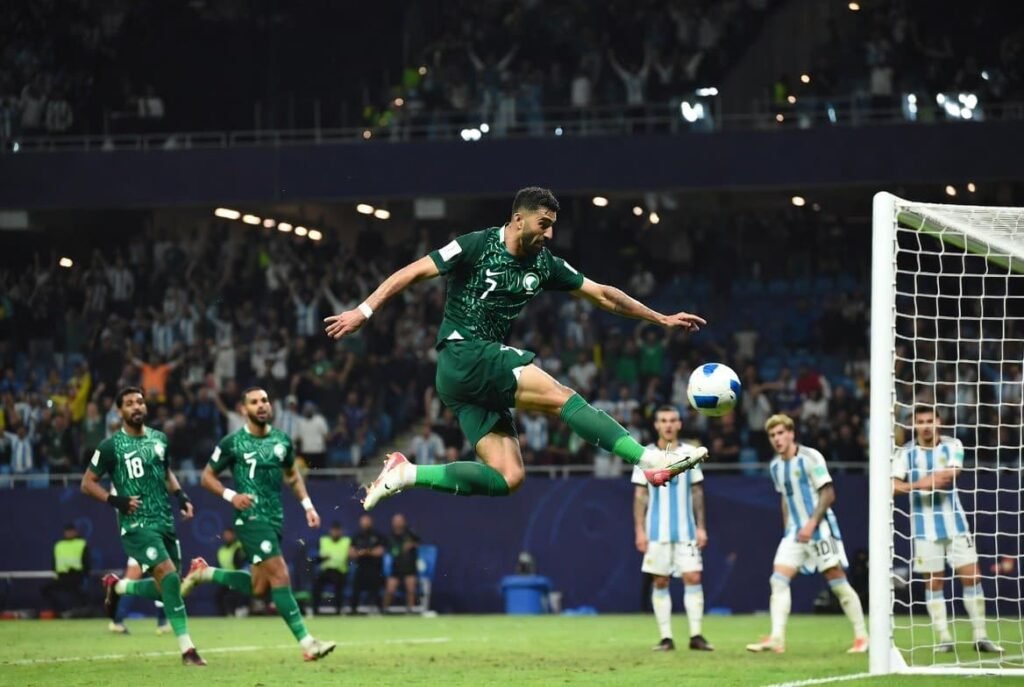
Salem Al-Dawsari received the ball 25 yards from goal. Around him, Argentina — the eventual world champions, on a 36-match unbeaten run, ranked third in the entire world — were completely in control of the match. Messi had already scored. Three Saudi goals had been ruled offside in the first half. The whole world had already decided this match was over.
Then Al-Dawsari turned. He dropped his shoulder, moved past one defender, drifted past another, and drove a shot inside the far post with a precision that made every goalkeeper on earth wonder whether they had chosen the right profession.
Saudi Arabia led Argentina 2-1. The Saudis were suddenly knocking on the door of one of the biggest World Cup upsets ever. Furthermore, they did not just hold that lead — they defended it with a heroism and organisation that left the football world completely speechless. Goalkeeper Mohammed Al-Owais made save after save — diving to his right in the 83rd minute, then leaping as high as he possibly could in stoppage time to deny Argentina an equaliser.
Consequently, when the final whistle blew, an entire nation stopped breathing and then started screaming simultaneously.
Now, in the Saudi Arabia FIFA World Cup 2026, the question is simple. Can they do it again? Moreover, can they go further?
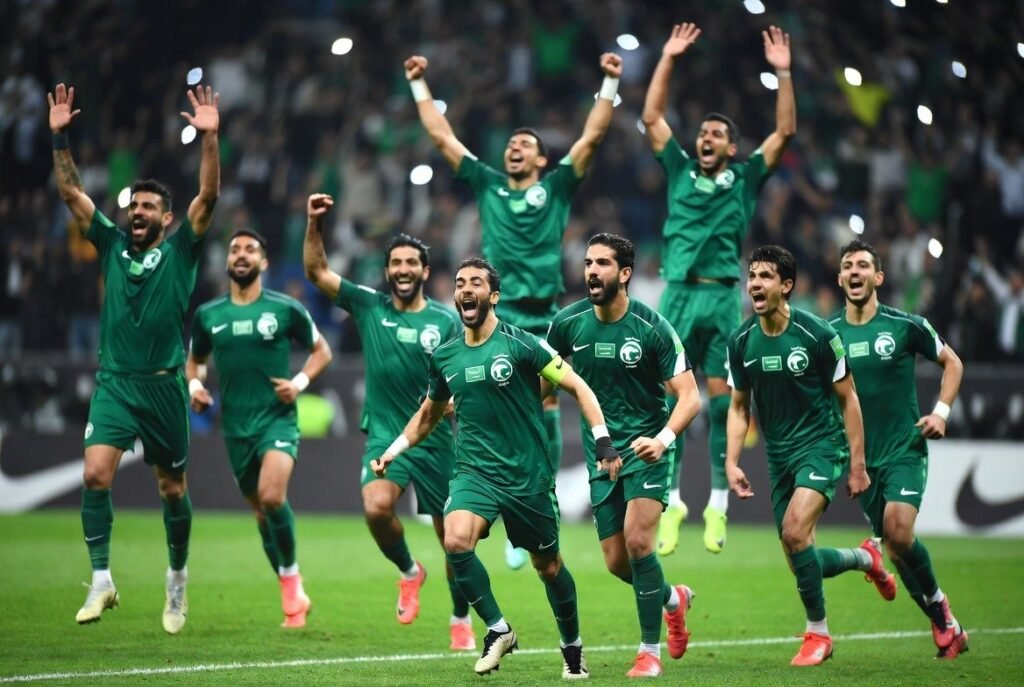
Quick Facts
| FIFA Ranking | #56 | Coach | Georgios Donis |
| Group | Group H | Captain | Salem Al-Dawsari |
| World Cup Appearances | 7 | Best Result | Round of 16 (1994) |
| First Match | June 15 vs Uruguay | Star Player | Salem Al-Dawsari |
Saudi Arabia FIFA World Cup 2026 Key Players
Salem Al-Dawsari — The Man Who Scored That Goal and Never Stopped Running
There are goals that win matches. There are goals that win tournaments. And then, very rarely, there are goals that change how a nation sees itself — goals that land in the cultural memory of an entire people and never leave.
Salem Al-Dawsari scored one of those goals in 2022. Furthermore, he has carried the weight and the glory of that moment for four years — and instead of being crushed by the expectation it created, he has grown into it completely.
Now captain for both club and country, Al-Dawsari heads into another World Cup as Saudi Arabia’s most influential attacking player and still one of Asian football’s leading lights. Four years after scoring the winning goal against Argentina, he remains central to the Green Falcons’ hopes of progress from the group stage in North America.
Moreover, at 34 years old, Al-Dawsari is in the final chapter of a magnificent career. Nevertheless, his pace, his directness and his ability to produce moments of magic in tight spaces have not diminished. In addition, the experience of having performed on the biggest stage imaginable — of having scored a goal that the whole world watched — means that nothing in Group H will intimidate him. Its not Uruguay. Not Spain. Not the pressure of an entire nation watching from thousands of miles away. As a result, when Saudi Arabia need a moment in 2026, Al-Dawsari is still the man most likely to provide it.

Saud Abdulhamid — Saudi Arabia’s European Weapon
While most of Saudi Arabia’s squad plays in the Saudi Pro League, Saud Abdulhamid represents something different and increasingly important — a Saudi footballer competing at the highest level of European football week after week.
The France-based full-back recently won the Coupe de France with RC Lens — a significant achievement for a player from a footballing culture that is still building its European presence. Furthermore, his experience of playing in Ligue 1 against technically excellent opposition every weekend gives him a tactical intelligence that purely domestic players simply cannot develop in the same way.
Moreover, as a marauding right back, Abdulhamid gives Saudi Arabia a genuine threat down the right flank — overlapping runs, quality crosses and the defensive awareness to track back effectively against Spain’s Nico Williams on June 21. Consequently, his form going into this tournament will be one of the key factors in how far the Green Falcons go.
Firas Al-Buraikan — Saudi Arabia’s Lethal Finisher
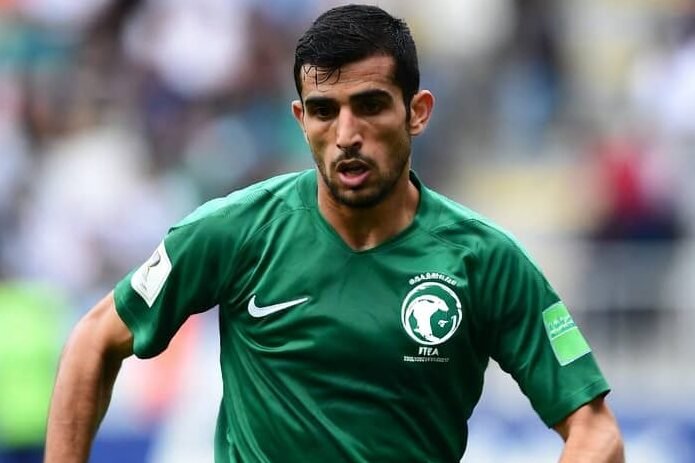
Firas Al-Buraikan was part of the iconic starting eleven that defeated Argentina in 2022 — and returns in 2026 as one of the key attacking figures in Donis’s squad. Furthermore, his movement in the penalty box, his pace in behind defensive lines and his clinical finishing in one-on-one situations make him the striker that opposing defenders are most afraid to face. Moreover, when Al-Dawsari creates from wide and Al-Buraikan arrives late into the box — that combination, which caused Argentina so many problems four years ago, is still the most dangerous attacking partnership Saudi Arabia possess.
Hassan Al-Tambakti — Saudi Arabia’s Defensive Spine
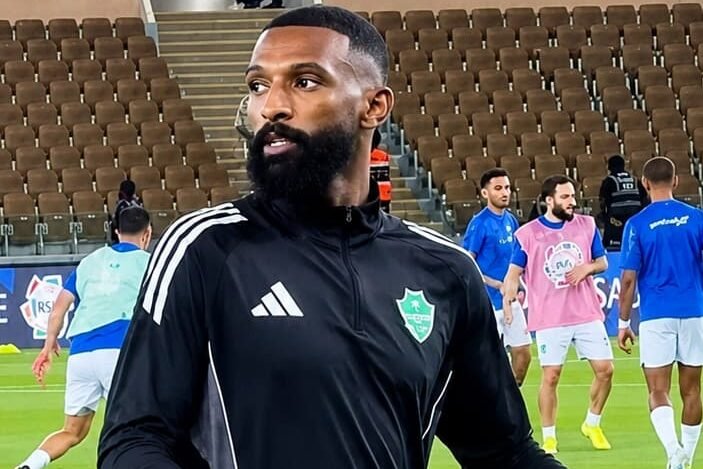
Hassan Al-Tambakti is among the seven players from the Argentina-beating starting eleven who return for the 2026 campaign. Furthermore, as the leader of Saudi Arabia’s back line, his ability to organise, communicate and stand firm under sustained pressure from elite attacks is what makes Saudi Arabia genuinely difficult to beat when their defensive shape is right. Moreover, against Spain and Uruguay, that shape will be tested to its absolute limit — and Al-Tambakti’s leadership will consequently be the difference between a brave exit and a historic qualification
Mohamed Kanno — Saudi Arabia’s Midfield Controller
Mohamed Kanno is another survivor from the famous Argentina victory — returning for his second World Cup as one of the most important midfield players in the squad. Furthermore, his ability to win the ball, protect the back line and recycle possession under pressure gives Saudi Arabia the defensive midfield foundation that every organised team needs. As a result, when Saudi Arabia defend deep and counter-attack quickly — which is precisely how they beat Argentina — Kanno is the player who makes the transitions happen efficiently and with purpose.
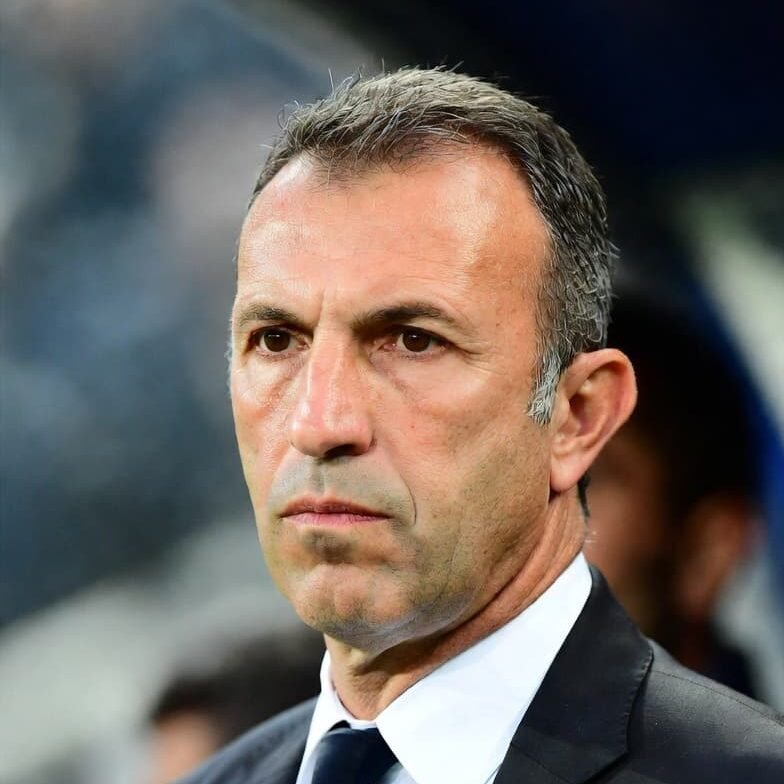
The New Coach — Georgios Donis and the Weight of Expectation
Before discussing Saudi Arabia’s tactical approach further, it is important to understand the coaching situation — because it adds a layer of uncertainty to this campaign that cannot be ignored.
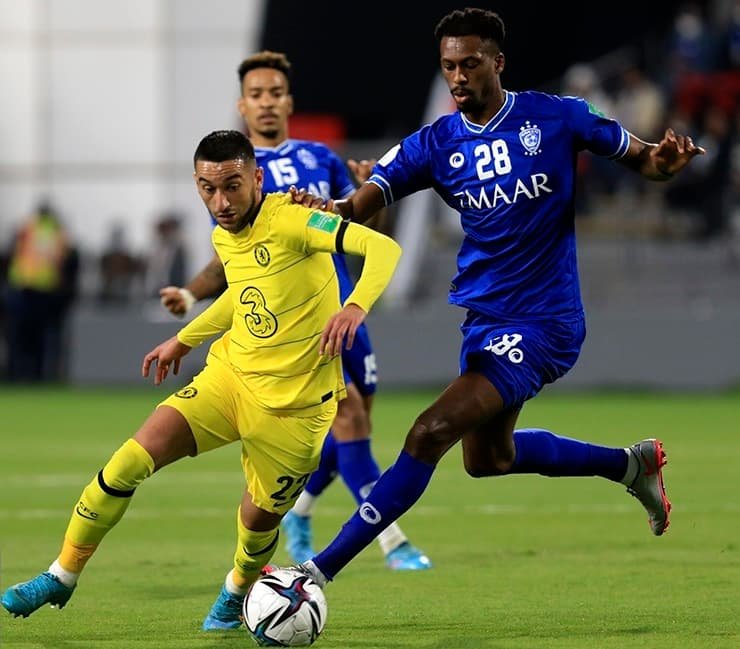
Georgios Donis is the recently appointed Saudi Arabia head coach — taking charge with his first major tournament side. Furthermore, he faces the immediate challenge of preparing a squad for a World Cup while still learning the players, the culture and the specific tactical requirements of international tournament football. Moreover, heis working against a tight timeline — training camps in New York and Texas followed by friendlies against Ecuador, Puerto Rico and Senegal before the tournament begins on June 15.
Nevertheless, Donis brings genuine coaching quality to the role. Moreover, his experience across Greek and European football gives him a tactical toolkit broad enough to adapt to the very different challenges that Uruguay, Spain and Cape Verde present in three consecutive group matches. As a result, while the coaching change introduces uncertainty, it also introduces fresh ideas and a new perspective that could be exactly what Saudi Arabia need after the trauma of failing to qualify automatically for this tournament.
Saudi Arabia FIFA World Cup 2026 Tactics and Formation
Understanding how Saudi Arabia will play at this World Cup requires, above all, understanding one thing — the 2022 miracle was not luck. It was tactical genius executed to perfection.
The team is expected to stay organised first and then attack with more speed once the shape is set — a defence-first approach that releases Al-Dawsari and Al-Buraikan intodangerous spaces on the counter-attack. Furthermore, this is precisely the system that worked against Argentina four years ago — a high defensive line in the first half, a compact mid-block, and then explosive transitions through Al-Dawsari’s pace when possession was won.
Moreover, the squad largely prioritises continuity and Saudi Pro League experience over radical change — meaning that Donis is working with a group of players who know each other extremely well, have played together in the most important matches of their careers, and share the collective memory of what it felt like to beat the defending world champions.
In other words — Saudi Arabia will not try to outplay Spain. They will not attempt to dominate Uruguay with possession. Instead, they will defend with discipline, stay compact, frustrate opponents into mistakes, and then attack at speed through Al-Dawsari, Al-Buraikan and Abdulhamid when the opportunity arrives. Consequently, if that plan works even once in the knockout stages, Saudi Arabia become the story of the tournament all over again.
Group Stage Analysis — Group H
Group H Full Breakdown
| Team | FIFA Ranking | Strength Level | Key Player | Saudi Arabia’s Honest Assessment |
|---|---|---|---|---|
| 🇪🇸 Spain | #1 | ⭐⭐⭐⭐⭐ | Lamine Yamal | The hardest match — however Saudi Arabia beat Argentina ranked 3rd in 2022 |
| 🇺🇾 Uruguay | #19 | ⭐⭐⭐⭐ | Darwin Núñez | Physical and dangerous — opening match must not be underestimated |
| 🇸🇦 Saudi Arabia | #56 | ⭐⭐⭐ | Salem Al-Dawsari | Dark horse — the team that shocked the world before |
| 🇨🇻 Cape Verde | #69 | ⭐⭐ | Ryan Mendes | Must-win — three points required and expected |
Saudi Arabia Group H Fixtures and Predictions
| Match | Date | Venue | Prediction | Why |
|---|---|---|---|---|
| 🇺🇾 Uruguay vs 🇸🇦 Saudi Arabia | June 15, 2026 | Miami Stadium, Miami | Draw 1–1 | Saudi Arabia defend brilliantly — Al-Dawsari scores a stunning equaliser |
| 🇸🇦 Saudi Arabia vs 🇪🇸 Spain | June 21, 2026 | Mercedes-Benz Stadium, Atlanta | Spain 2–0 | Spain too strong — however Saudi Arabia make them work hard for every goal |
| 🇸🇦 Saudi Arabia vs 🇨🇻 Cape Verde | June 26, 2026 | NRG Stadium, Houston | Saudi Arabia 2–0 | Al-Buraikan scores twice — Saudi Arabia qualify with maximum points from two winnable games |
Predicted Group H Final Standings
| Pos | Team | Played | W | D | L | GF | GA | Pts |
|---|---|---|---|---|---|---|---|---|
| 🥇 1st | 🇪🇸 Spain | 3 | 3 | 0 | 0 | 8 | 1 | 9 |
| 🥈 2nd | 🇺🇾 Uruguay | 3 | 1 | 1 | 1 | 4 | 3 | 4 |
| 3rd | 🇸🇦 Saudi Arabia | 3 | 1 | 1 | 1 | 3 | 3 | 4 |
| 4th | 🇨🇻 Cape Verde | 3 | 0 | 0 | 3 | 0 | 8 | 0 |
One-line verdict: Saudi Arabia finish third in Group H — consequently, their World Cup 2026 campaign ends in the group stage. Nevertheless, a draw against Uruguay and a victory over Cape Verde represents a respectable campaign that keeps the belief alive heading into 2030. Moreover, as one of the eight best third-placed teams, they could still qualify for the Round of 32 — and if they do, anything becomes possible.
Saudi Arabia FIFA World Cup 2026 Strengths and Weaknesses
| ✅ Strengths | ❌ Weaknesses |
|---|---|
| Al-Dawsari — a proven world-class performer who has scored on the biggest stage | Failed to qualify automatically — needed play-offs to reach 2026, suggesting declining Asian form |
| Seven survivors from the Argentina-beating starting eleven — collective memory is priceless | Georgios Donis — completely new and untested at senior international tournament level |
| Al Ahli’s five players plus quality from Al Qadsiah and NEOM SC — squad depth improving significantly | Spain in Group H — ranked number one in the world and the toughest possible group opponent |
| Abdulhamid — European experience that gives tactical intelligence beyond domestic players | FIFA ranking of 56 — significant gap in quality against Spain and Uruguay |
| Compact defensive organisation — genuinely hard to break down when the shape is right | Over-reliance on Al-Dawsari — when he is stopped, Saudi Arabia’s attack loses its main threat |
| The Argentina miracle mentality — this squad knows it can beat anyone on its best day | Most of the squad plays in Saudi Pro League — limited exposure to European elite football |
Saudi Arabia World Cup History — Seven Tournaments and One Night That Changed Everything
The Saudi Arabia’s World Cup history is a story of two very different eras. Their greatest achievement came in 1994, when they reached the Round of 16 in their first-ever FIFA World Cup appearance in the United States. That team introduced Saudi football to the global stage with fearless performances and moments of individual brilliance that still define the country’s football identity today.
However, the years after 1994 were far less successful. Saudi Arabia regularly qualified for World Cups but struggled to compete consistently, suffering several group-stage exits with few memorable results. As a result, expectations before Qatar 2022 were very low, with many predicting another early elimination.
Then came one of the biggest shocks in World Cup history. On November 22, 2022, Saudi Arabia defeated eventual champions Argentina 2-1 in Lusail, ending Argentina’s 36-match unbeaten run. Goals from Saleh Al-Shehri and Salem Al-Dawsari, combined with outstanding goalkeeping from Mohammed Al-Owais and a disciplined tactical setup, produced one of the tournament’s most iconic upsets.
Nevertheless, Saudi Arabia still failed to progress from the group stage after losing their next two matches. Consequently, the challenge for the 2026 World Cup is no longer about producing one historic result — it is about maintaining consistency across the entire tournament and turning isolated moments into genuine progress.
The Argentina Miracle — What That Night Really Meant
It would be impossible to write about the Saudi Arabia FIFA World Cup 2026 campaign without returning, one more time, to the match that defined an entire nation’s football story.
Argentina’s 36-match unbeaten run ended at Lusail Stadium on November 22, 2022. The win rivals historic World Cup upsets like Senegal’s victory over France in 2002 and the United States beating England in 1950. Furthermore, in the context of modern football — where the gap between elite European and South American nations and the rest of the world is supposedly wider than ever— the victory carried a significance that went beyond sport entirely.
Moreover, it told every smaller football nation on earth something important. It told them that preparation, organisation, tactical intelligence and collective belief can overcome individual quality on any given day. As a result, Saudi Arabia did not just win a football match that night. They won an argument about what football is supposed to be.
Seven of the starting eleven from that famous victory are back for 2026 — and consequently, the memory of what they achieved together lives inside every single match this squad plays. In other words, when the pressure peaks against Uruguay or Spain, these players do not need to imagine what it feels like to perform under impossible expectations. They already know. They have done it before.
Can Saudi Arabia Qualify From Group H? — Our Verdict
Honestly — it is extremely difficult. Furthermore, Group H is one of the most challenging draws Saudi Arabia could have received.
Nevertheless, above all of the tactical analysis and the ranking comparisons, one truth about this Saudi Arabia squad must be acknowledged. Whether this squad can give the World Cup another shock is the question Saudi football is asking itself and hoping Donis can answer. Moreover, the ingredients for another surprise are present — seven survivors from the Argentina miracle, a world-class captain in Al-Dawsari, a defensive organisation that is genuinely difficult to break down, and the collective memory of having done the impossible before.
However, Spain ranked number one in the world, Uruguay with Darwin Núñez, and a new untested coach make the path to the knockout rounds extremely narrow. As a result, qualifying in the top two from Group H is unlikely. In contrast, earning a draw against Uruguay and beating Cape Verde to finish third — then hoping to be among the eight best third-placed teams — is a realistic and achievable target.
Furthermore, even if Saudi Arabia exit in the group stage, the Saudi Arabia FIFA World Cup 2026 campaign will matter for reasons that go beyond the scoreline. Because every match this team plays in 2026, Salem Al-Dawsari will line up wearing the captain’s armband — four years older, four years wiser, and carrying the knowledge that he once scored a goal that the whole world will never forget.
Our Prediction
Saudi Arabia draw 1-1 with Uruguay in Miami — Al-Dawsari scoring from outside the box in the 70th minute to earn a point that makes an entire nation erupt. They then lose 2-0 to Spain despite a disciplined defensive performance. Finally, they beat Cape Verde 2-0 in Houston to finish their group stage campaign with four points. They fall just short of the Round of 32 as a third-placed team — eliminated on goal difference by another group’s third-place finisher.
Nevertheless, when the final whistle blows in Houston, Al-Dawsari stands on the pitch for a long moment — head bowed, hands on his knees, the captain of a team that gave everything it had.
And somewhere in Riyadh, millions of people watch him and feel nothing but pride. Because this is a team that taught the world in 2022 that miracles are possible. Moreover, in 2026, they reminded everyone that the belief never left.
Frequently Asked Questions
Q: Who is Saudi Arabia’s captain at the 2026 World Cup?
Salem Al-Dawsari is Saudi Arabia’s captain at the 2026 World Cup. The Al Hilal winger remains the team’s biggest star after scoring the famous winner against Argentina in 2022.
Q: What group is Saudi Arabia in at World Cup 2026?
Saudi Arabia are in Group H alongside Spain, Uruguay and Cape Verde. Their opening match is against Uruguay on June 15 in Miami.
Q: Did Saudi Arabia really beat Argentina at the World Cup?
Yes — Saudi Arabia defeated Argentina 2-1 at the 2022 World Cup in Qatar, producing one of the biggest upsets in tournament history. Saleh Al-Shehri and Salem Al-Dawsari scored the goals.
Q: Who is Saudi Arabia’s coach at the 2026 World Cup?
Georgios Donis is Saudi Arabia’s head coach for the 2026 World Cup. The Greek manager took charge ahead of the tournament and announced his preliminary squad in May 2026.
Q: How did Saudi Arabia qualify for the 2026 World Cup?
Saudi Arabia qualified through the fourth round of AFC qualifiers after failing to secure automatic qualification in the previous stage.
Q: What are Saudi Arabia’s chances at the 2026 World Cup?
Saudi Arabia are underdogs in a difficult group with Spain and Uruguay, but they could still challenge for a best third-placed qualification spot.