Some players pass the ball beautifully. Some defend with elite discipline. But the greatest strikers of all time do something more primal — they score goals that stop time. Goals that entire nations remember exactly where they were standing when they happened. Goals that define careers, tournaments, and eras in one single moment.

| # | Player | Country | Career | Goals |
|---|---|---|---|---|
| 1 | Pelé | Brazil | 1956–1977 | 765+ |
| 2 | Ronaldo Nazário | Brazil | 1993–2011 | 352+ |
| 3 | Gerd Müller | Germany | 1965–1981 | 735+ |
| 4 | Marco van Basten | Netherlands | 1981–1995 | 277+ |
| 5 | Romário | Brazil | 1985–2008 | 772+ |
| 6 | Eusébio | Portugal | 1957–1979 | 733+ |
| 7 | Ferenc Puskás | Hungary/Spain | 1943–1966 | 729+ |
| 8 | Thierry Henry | France | 1994–2012 | 360+ |
| 9 | Luis Suárez | Uruguay | 2005–2023 | 520+ |
| 10 | Robert Lewandowski | Poland | 2006–present | 650+ |
| 11 | Cristiano Ronaldo | Portugal | 2002–present | 900+ |
| 12 | Alfredo Di Stéfano | Argentina/Spain | 1945–1966 | 487+ |
| 13 | Gabriel Batistuta | Argentina | 1988–2005 | 333+ |
| 14 | Didier Drogba | Ivory Coast | 1999–2018 | 363+ |
| 15 | Zlatan Ibrahimović | Sweden | 1999–2023 | 570+ |
How We Ranked the Greatest Strikers of All Time
Ranking the greatest strikers of all time across different eras is never simple. Different leagues, different defences, different tactical systems — comparing Pelé in the 1960s to Lewandowski in the 2020s requires more than just counting goals. This list weighs ten factors equally to produce a fair, honest ranking:
- Goal-scoring ability — volume, consistency, and conversion rate
- Finishing technique — left foot, right foot, header, long-range
- Peak performance — how dominant at their absolute best
- Club achievements — league titles, European trophies
- International achievements — World Cups, continental titles
- Individual awards — Ballons d’Or, Golden Boots, Player of the Year
- Performance in important matches — finals, knockouts, derbies
- Tactical importance — what the team lost without them
- Consistency across seasons — sustained excellence, not one great year
- Influence on football history — did they change how the position is understood
The 15 Greatest Strikers of All Time
1. Pelé — The King of Football and the Greatest Striker of All Time

Three World Cups. Three. No striker in history has come close. Pelé scored 77 goals in 92 appearances for Brazil, dominated two decades of global football, and combined pace, aerial ability, two-footed finishing, and creativity in a way that seemed genetically unfair. The debate about who is the greatest always starts and ends here.
Key achievements: Three FIFA World Cups (1958, 1962, 1970), three São Paulo State Championships, two Copa Libertadores with Santos Why No.1: The only player in history to win three World Cup titles
2. Ronaldo Nazário — O Fenômeno and the Most Naturally Gifted Striker in Football History

Before the knee injuries stole his prime years, R9 was completely untouchable. Two quick touches and the game was over. His 1998 World Cup showed the promise. His 2002 World Cup — eight goals, Golden Boot, Brazil’s fifth title — delivered the legend. Two Ballons d’Or, two World Cup titles, and a style of striking that nobody in football history has replicated.
Key achievements: Two FIFA World Cups (1994, 2002), two Ballons d’Or, two UEFA Cup titles, Copa del Rey Why No.2: The most naturally gifted goal-scorer most football coaches have ever seen
3. Gerd Müller — The Ultimate Goal Poacher and Most Clinical Finisher in Football History

They called him Der Bomber. He did not beat defenders with skill or score from impossible angles. He simply found positions nobody else discovered — and finished with machine-like precision every single time. Sixty-eight goals in 62 international appearances. His 40 Bundesliga goals in 1971-72 stood as a record for exactly 40 years until Lewandowski broke it.
Key achievements: FIFA World Cup 1974, UEFA Euro 1972, four Bundesliga titles, three European Cups with Bayern Munich Why No.3: 68 goals in 62 international games — one of the greatest ratios in football history
4. Marco van Basten — The Complete Finisher Whose Career Ended Tragically Early

That volley in the 1988 European Championship Final against the Soviet Union. Right-angled. Near-impossible. Scored anyway. Van Basten had everything — towering height, soft first touch, finishing from every position imaginable. Three Ballons d’Or. A cruel ankle injury forced his retirement at just 28 years old. Football never fully recovered from losing him at his peak.
Key achievements: Three Ballons d’Or (1988, 1989, 1992), UEFA Euro 1988, three Serie A titles, two European Cups with AC Milan Why No.4: Arguably the most technically complete striker who ever lived
5. Romário — The Clinical Goalscorer Brazil Produced at His Most Lethal
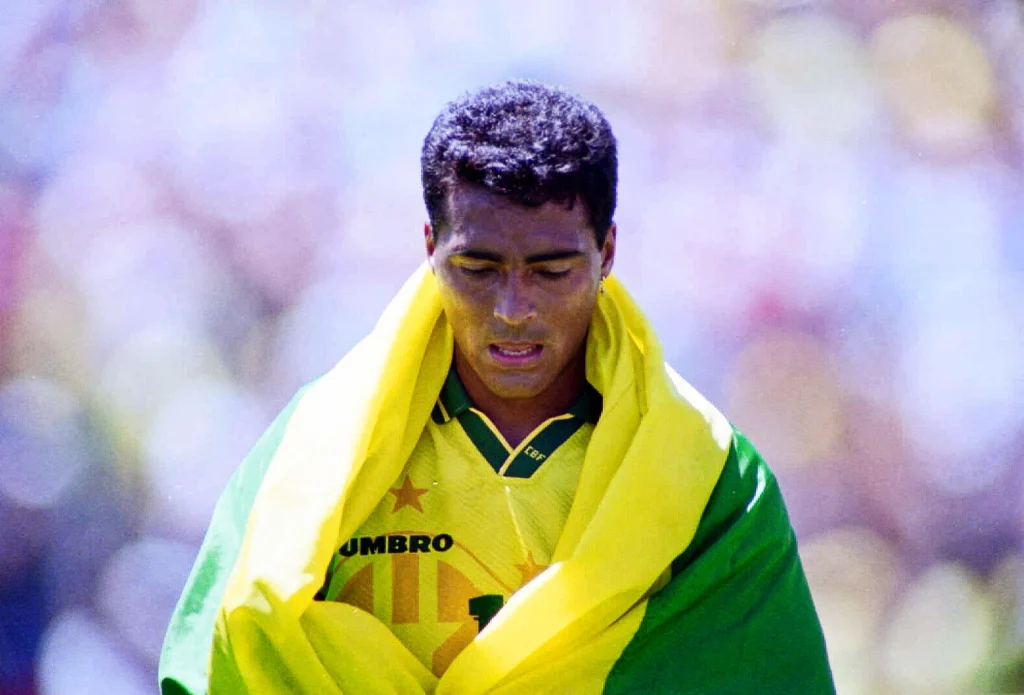
Small, supremely confident, absolutely brilliant. Romário could not be bothered with the parts of football that did not involve scoring — and that was fine, because when he scored, it was pure art. Fifty-five goals in 70 appearances for Brazil. Lethal inside the penalty area, impossible to mark, and fully aware he was the best player in every room he entered.
Key achievements: FIFA World Cup 1994, La Liga title with Barcelona, Brazilian Championship with Flamengo, Copa Libertadores with Vasco Why No.5: The 1994 World Cup belonged to him — best striker at that tournament, no serious debate
6. Eusébio — The Black Panther and Portugal’s Greatest Legendary Goalscorer

Portugal’s first global football superstar. Eusébio played with an explosive power that defenders in the 1960s had no real answer for. Nine European Cup goals in a single 1962 final. Nine goals at the 1966 World Cup — including four in one match against North Korea after falling 3-0 behind. The most electric goal-scorer European football produced before the modern era.
Key achievements: 1966 World Cup Golden Boot, seven Primeira Liga titles with Benfica, European Cup 1962, 1965 European Golden Boot Why No.6: 473 goals in 440 Benfica appearances. A record that defined an entire club’s identity
7. Ferenc Puskás — The Legendary Left Foot That Scored Over 700 Goals
Puskás had one elite weapon — his left foot — and it was enough to place him among the most iconic strikers in football history. Eighty-four goals in 85 international appearances for Hungary. He then switched nationality to Spain and immediately started scoring goals at the same rate for Real Madrid. The FIFA Goal of the Year award carries his name permanently.
Key achievements: 1960 European Cup with Real Madrid, five La Liga titles, Olympic gold with Hungary (1952) Why No.7: 84 goals in 85 international caps — a ratio that remains almost mythological
8. Thierry Henry — The Elegant Forward Who Made Arsenal Completely Untouchable

Pace plus skill plus composure plus Arsenal’s greatest-ever season. Henry scored 228 goals for Arsenal alone and won the Premier League without losing a single match in 2003-04. His style — the languid left-foot finish, the outside-of-the-boot cross-shot from wide — made football look like something it normally never is: beautiful and effortless simultaneously.
Key achievements: FIFA World Cup 1998 with France, two Premier League titles, two FA Cups, La Liga title with Barcelona, Arsenal’s all-time top scorer Why No.8: Part of France’s 1998 World Cup and Euro 2000 double — and the best player of the Invincibles season
9. Luis Suárez — The Relentless Striker Who Never Slowed and Never Accepted Defeat

One of the most complete forwards in the history of the game. Controlling, linking, pressing, and finishing with equal ferocity. Eighty-two goals in 133 appearances for Uruguay, three La Liga titles with Barcelona, and a 2013-14 Premier League season of 31 league goals that still looks statistically impossible. Controversial throughout his career. Brilliant throughout his career. Both always simultaneously true.
Key achievements: Three La Liga titles, Copa del Rey, UEFA Champions League with Barcelona, Premier League with Liverpool Why No.9: Best player in the world in 2015. The 2015 Champions League-winning Barcelona squad considered him their best player that season
10. Robert Lewandowski — The Modern Goal Machine Rewriting Football Records
The most clinical striker of the last decade and one of the most consistent greatest goal scorers in football history. Forty-one Bundesliga goals in a single 2020-21 season — breaking Gerd Müller’s 49-year-old record with ruthless efficiency. At 38, he still scores regularly for Barcelona and Poland. Fifteen consecutive seasons of 20+ goals at elite level. Every conversation about the best number 9s of all time includes him.
Key achievements: Eight Bundesliga titles, UEFA Champions League 2020 with Bayern Munich, two Ballons d’Or runner-up, 2020 UEFA Best Player, FIFA Best Men’s Player 2020 and 2021 Why No.10: 41 Bundesliga goals in one season. Müller’s record fell. Nothing else needs saying
11. Cristiano Ronaldo — The Record-Breaking Goalscorer Who Made Impossible Numbers Normal

Nine hundred-plus career goals. The most international goals ever scored — 135 for Portugal. Five Ballons d’Or. Five UEFA Champions League titles across three different clubs. Ronaldo built his body into the most optimised physical machine in football history and then scored at a rate that statisticians still struggle to process meaningfully. The numbers belong to no one else in the history of the sport.
Key achievements: Five UEFA Champions Leagues, three Premier League titles, two La Liga titles, UEFA Euro 2016, UEFA Nations League 2019, all-time international top scorer Why No.11: 900+ career goals. The record belongs to him permanently
12. Alfredo Di Stéfano — The Complete Forward Who Built Real Madrid’s Dynasty From Scratch

Before Messi and Ronaldo dominated the conversation, football spoke about Di Stéfano the way it now speaks about them. Five consecutive European Cups with Real Madrid. Goals, assists, defensive pressing, and positional covering — he did everything across every position when required. The most complete player of his generation. One of the most tactically advanced forwards football has ever produced.
Key achievements: Five European Cups with Real Madrid (1956–1960), eight La Liga titles, two Intercontinental Cups, Ballon d’Or 1957 and 1959 Why No.12: Five consecutive European Cups. Johan Cruyff called him the greatest player he ever saw
13. Gabriel Batistuta — The Powerful Argentine Finisher Serie A Feared for a Decade
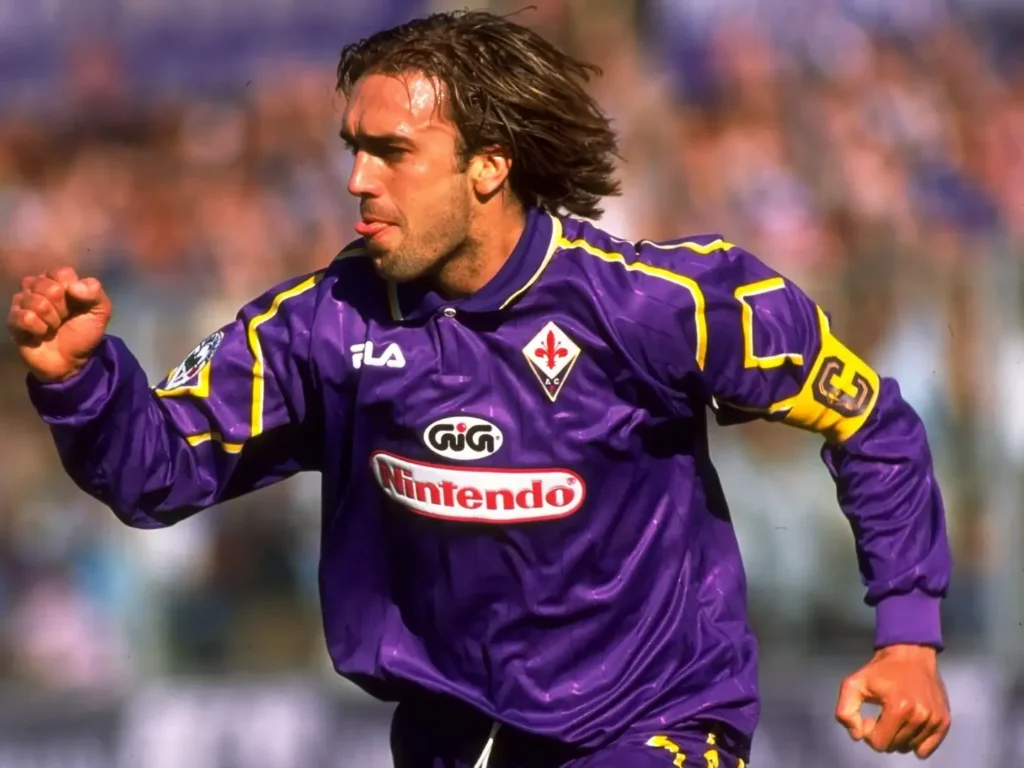
Batigol. The name carries instant authority. Batistuta scored 168 Serie A goals — most of them for Fiorentina, a club he loved enough to refuse leaving for years despite the absence of major trophies. Powerful, lethal from distance, and technically superior to most strikers of his era. His 10 World Cup goals for Argentina remain one of the most feared individual tournament scoring records in history.
Key achievements: Serie A title with Roma (2000-01), Copa América with Argentina (1991, 1993), FIFA World Cup appearances 1994, 1998, 2002 Why No.13: Fiorentina’s all-time top scorer. Ten World Cup goals. The most physically imposing striker Serie A ever faced
14. Didier Drogba — The Big-Game Striker Chelsea Built Their Greatest Era Around
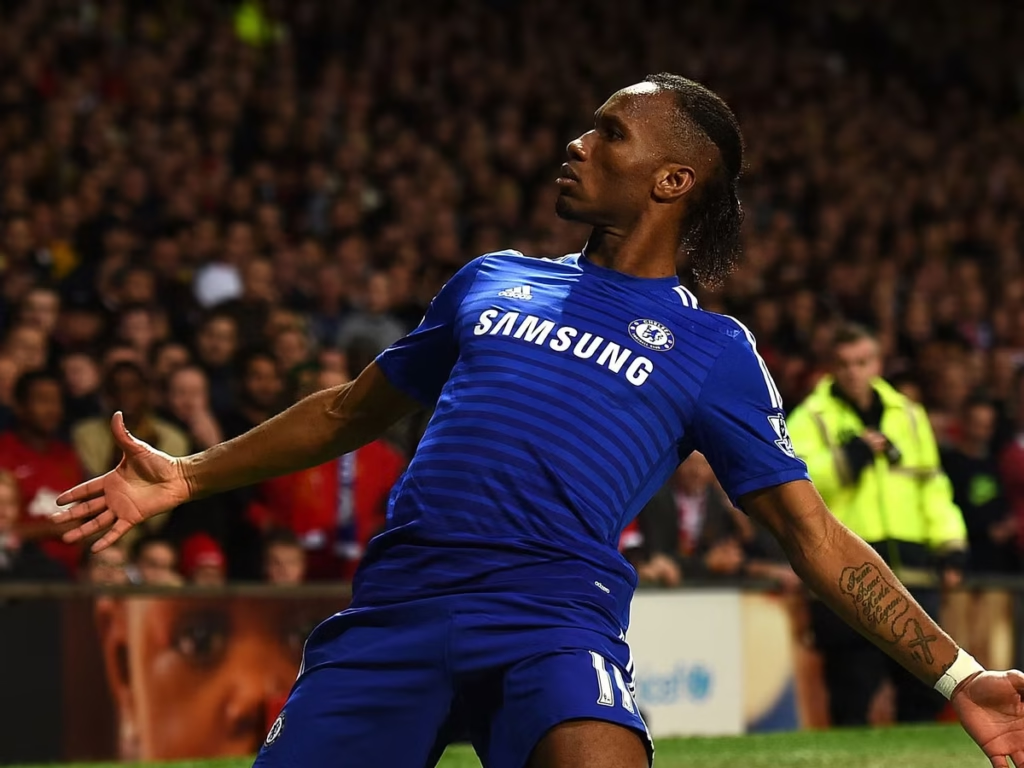
Four Premier League titles. Four FA Cups. Eight goals in eight FA Cup Finals. A Champions League winner’s header in the 90th minute, then the winning penalty in the shootout — against Bayern Munich, in their own stadium. Drogba did not simply perform in big matches. He grew significantly larger whenever the occasion demanded something extraordinary.
Key achievements: Four Premier League titles, four FA Cups, UEFA Champions League 2012 with Chelsea, Africa Cup of Nations 2015 with Ivory Coast Why No.14: The 2012 Champions League Final performance alone earns this entry. In his own stadium. Against the hosts.
15. Zlatan Ibrahimović — The Unforgettable Football Icon Who Played Entirely by His Own Rules
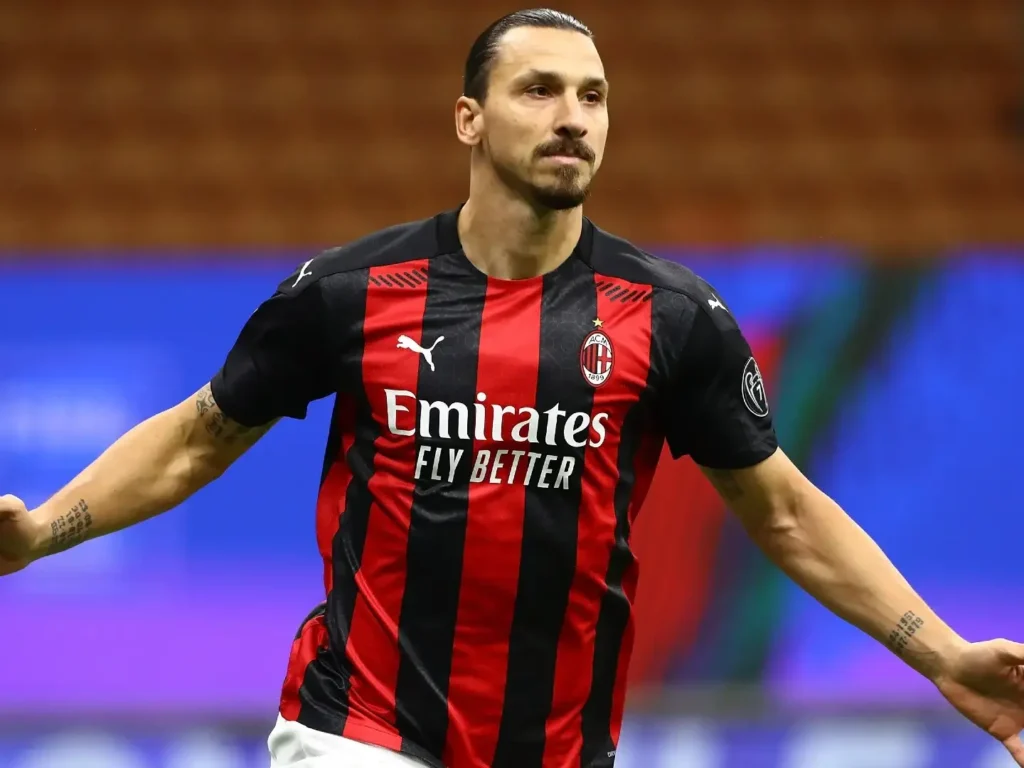
Eleven league titles across six different countries. That overhead bicycle kick goal against England from 30 yards — scored for Sweden in a friendly that nobody has stopped discussing since. The quotes. The personality. The complete refusal to be ordinary for a single second of a 24-year professional career. Zlatan was not simply a famous football striker — he was a phenomenon the sport produces once per generation.
Key achievements: Eleven league titles across six countries (Netherlands, Italy, Spain, France, England, USA), Swedish Player of the Year 11 times, Serie A titles with Juventus, Inter, and AC Milan Why No.15: 11 league titles in 6 countries. The most individual trophy collection any striker in football history assembled
What Makes a Striker One of the Greatest?
The legendary football strikers on this list share several qualities that separate them permanently from everyone else. Goals alone are not enough — Lewandowski proved that pure volume without trophies leaves something missing. Trophies alone are not enough — Di Stéfano won five European Cups but scored across every position, not purely as a centre-forward.
The greatest goal scorers in football history combine clinical finishing with tactical influence. They score in finals. perform when the pressure is at its maximum. They make their teammates better by how they move, how they press, and how defenders must organise around them — even in moments when they never touch the ball.
What separates Pelé from the rest is not his total of 765 goals. It is three World Cup winner’s medals. What separates Drogba is not his 163 Premier League goals. It is a 90th-minute Champions League Final header. The best football forwards ever understood that the moment mattered as much as the method.
Who Is the Greatest Striker of All Time?
Pelé is counted in greatest strikers of all time. Three World Cup titles across three different tournaments remain an achievement that no other player in football history has matched or approached. Ronaldo Nazário was arguably the more naturally gifted pure striker when fully fit. Gerd Müller produced the most statistically dominant single seasons. Cristiano Ronaldo owns the most career goals.
However, for the majority of football historians and coaches, the combination of Pelé’s individual brilliance, his team success at the absolute highest level, and his total domination of two complete decades of the sport places him above everyone else in the conversation. The greatest strikers of all time debate always circles back to the same name.
Frequently Asked Questions About the Greatest Strikers of All Time
Who Is the Greatest Striker of All Time?
Pelé (Brazil) is the most widely recognised answer among football historians, coaches, and former players. His three FIFA World Cup titles across 1958, 1962, and 1970 — combined with 77 international goals and total dominance of two decades — give him an unmatched combination of individual brilliance and collective achievement.
Who Scored the Most Goals in Football History?
Cristiano Ronaldo holds the record for the most career goals in professional football history with 900+ goals across clubs and international football. He also holds the all-time men’s international goals record with 135 goals for Portugal — a record previously held by Ali Daei of Iran.
Who Is the Best Number 9 in Football History?
Among the best number 9s of all time, Ronaldo Nazário carries the strongest argument for the pure number nine profile — a central striker relying on pace, movement, and finishing in the penalty area. Gerd Müller holds the strongest statistical claim. Pelé’s versatility means he transcends the traditional number nine definition entirely.
Is Ronaldo Nazário the Best Striker Ever?
Many coaches and former players — including multiple Ballons d’Or winners — consider Ronaldo Nazário the most naturally gifted striker in football history. His combination of pace, low centre of gravity, two-footed finishing, and penalty-box intelligence was unique. However, injury reduced his peak to fewer than five full seasons, which ultimately places him second behind Pelé in most assessments.
Who Was Better — Gerd Müller or Pelé?
Pelé won three World Cups. Gerd Müller produced a goals-per-game ratio across both club and international football that no centre-forward in history has matched at sustained elite level. Pelé’s superiority in individual awards and international achievement edges this debate — but Müller’s case for pure finishing efficiency is entirely legitimate and deserves full respect.
What Makes a Striker Legendary?
The most iconic greatest strikers of all time in football history share five non-negotiable qualities: they score in the matches that matter most, they perform at their peak under maximum pressure, they maintain elite consistency across multiple seasons, they make their teammates more dangerous through movement alone, and they leave the position permanently different from how they found it.